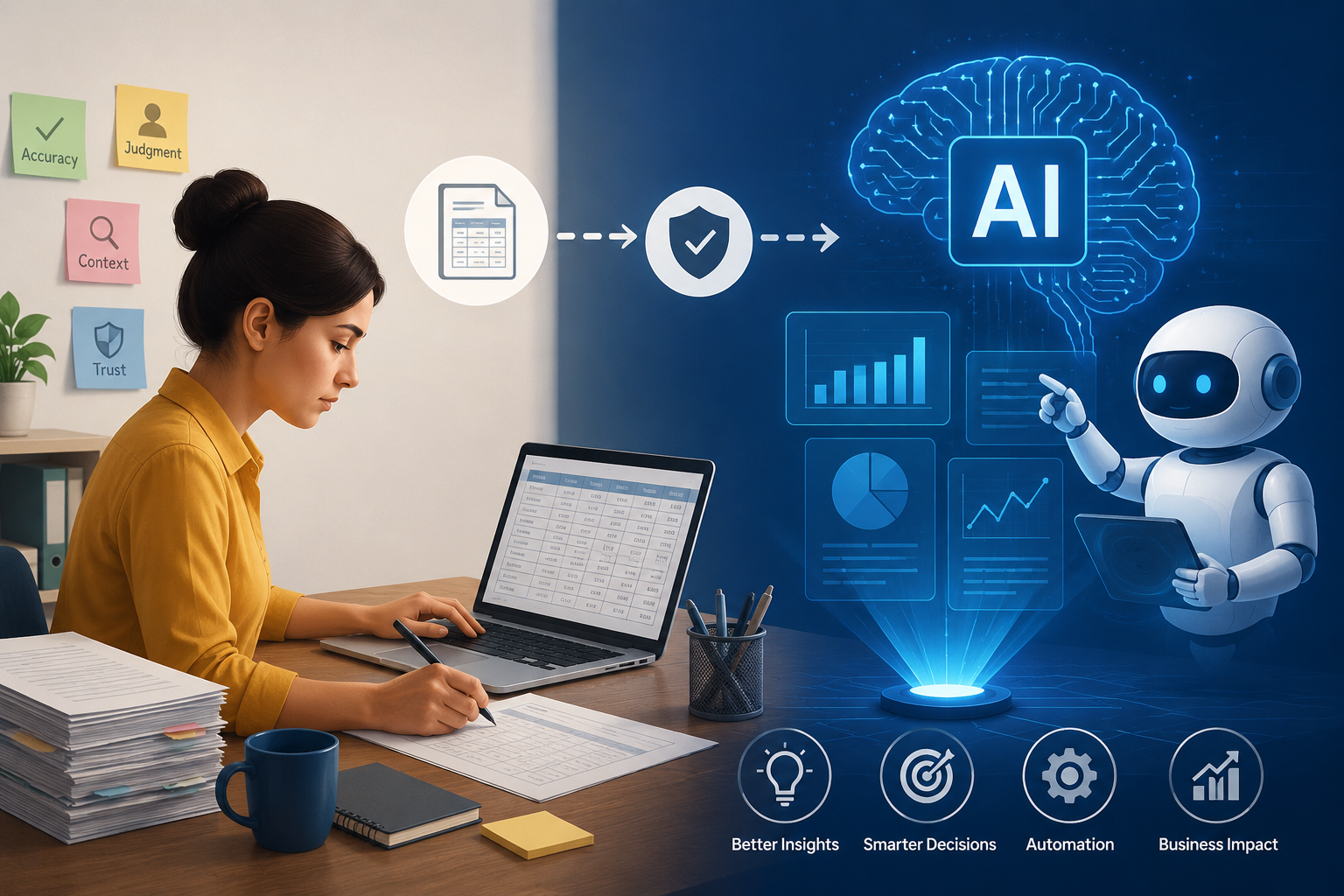
Artificial intelligence and automation technologies continue transforming modern business operations. Companies now use AI-powered systems to process information, automate workflows, analyze customer behavior, and improve operational efficiency faster than ever before.
Despite these technological advancements, manual data management remains an essential part of many business processes. Organizations still rely heavily on professional data entry services to ensure accuracy, maintain quality control, and provide human verification for sensitive and complex business data.
While AI can automate repetitive tasks, human expertise continues to play a critical role in maintaining reliable and accurate information systems.
🤖 The Rise of AI in Data Management
AI-powered technologies now help businesses:
- Process large datasets quickly
- Automate repetitive workflows
- Organize digital records
- Extract information from documents
- Generate reports and analytics
- Improve operational efficiency
Automation tools have become valuable for businesses managing:
- Large databases
- E-commerce platforms
- CRM systems
- Financial records
- Customer information
However, AI systems are not always capable of handling every data management scenario accurately without human oversight.
⚠️ The Limitations of AI in Data Entry
Although automation improves speed, AI systems can still struggle with:
- Inconsistent formatting
- Complex handwritten information
- Incomplete records
- Context interpretation
- Duplicate detection errors
- Unstructured data
- Industry-specific terminology
AI systems rely heavily on predefined rules and patterns. When data becomes inconsistent or unusual, automated systems may produce inaccurate results.
This is why human verification remains essential for maintaining reliable business data.
📊 Why Manual Data Entry Still Matters
✅ Human Verification Improves Accuracy
Human specialists can identify inconsistencies, missing details, and formatting issues that automated systems may overlook.
✅ Better Quality Assurance
Manual review processes help maintain cleaner and more reliable databases.
✅ Contextual Understanding
Humans can interpret information based on context, something AI still struggles to do accurately in many cases.
✅ Error Detection & Correction
Experienced data entry professionals can identify duplicate records, incomplete information, and inaccurate entries more effectively.
✅ Support for Complex Data
Certain industries require careful manual handling of sensitive and detailed information that automated systems cannot fully manage alone.
Businesses exploring broader outsourcing and operational support solutions often also rely on services available through the OBI Services homepage.
⚙️ How Human Verification Supports AI Systems
Rather than replacing manual work entirely, AI and human support often work best together.
Many businesses now use a hybrid approach where:
- AI handles repetitive processing
- Humans perform verification and quality checks
- Specialists correct inconsistencies
- Teams review sensitive information
- Data professionals maintain database accuracy
This combination improves both efficiency and reliability.
Human oversight helps ensure that automation systems continue producing accurate and high-quality results over time.
🏢 Industries That Still Rely on Manual Data Entry
Many industries continue to depend on human-led data management processes.
Healthcare
Healthcare organizations require accurate patient records and sensitive information management.
Finance & Accounting
Financial businesses need careful verification of invoices, reports, and customer records.
E-commerce
Online businesses maintain product listings, inventory updates, and catalog management.
Legal Services
Legal organizations handle complex documentation and confidential records.
Logistics & Supply Chain
Businesses manage shipment records, inventory systems, and operational databases.
In each case, accuracy and quality assurance remain critical operational priorities.
For more insights into outsourcing, business operations, and digital support services, businesses can explore this related business blog.
📈 The Importance of Quality Assurance in Data Management
Poor-quality data can negatively affect:
- Business reporting
- Customer experiences
- Financial operations
- Inventory management
- Strategic decision-making
Manual quality assurance processes help businesses:
- Maintain clean databases
- Improve operational accuracy
- Reduce costly errors
- Support reliable reporting systems
- Increase overall efficiency
This level of precision remains difficult for fully automated systems to achieve independently.
🌐 The Future of Data Entry in the AI Era
As automation technologies continue evolving, the role of human specialists will remain highly valuable.
The future of data management will likely combine:
- AI-powered automation
- Human verification
- Manual quality assurance
- Intelligent workflow systems
- Data accuracy monitoring
Businesses that balance automation with skilled human oversight will be better positioned to maintain reliable operations and accurate business information.
Rather than eliminating manual data entry, AI is transforming it into a more strategic support role focused on accuracy, quality control, and operational reliability.