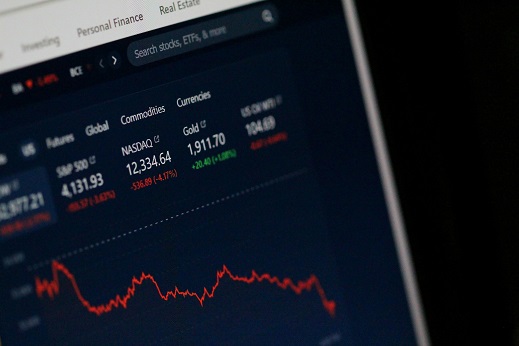
Market volatility refers to the frequency and magnitude of price fluctuations in financial markets. It is a reflection of the uncertainty and risk associated with investments, which can be driven by various factors such as economic data releases, geopolitical events, and changes in investor sentiment. In the context of global markets, understanding volatility is crucial as it influences decision-making for both individual investors and policymakers. The significance of market volatility cannot be overstated. For investors, volatility represents both opportunities and risks. Rapid price movements can lead to substantial gains, yet they can also result in considerable losses. Policymakers, on the other hand, must monitor volatility to assess the overall health of the economy and to implement measures that can stabilize financial markets during periods of excessive fluctuations.
A variety of factors contribute to market volatility, including macroeconomic indicators such as inflation and unemployment rates, shifts in monetary policy, and significant news events affecting specific industries or countries. For instance, unexpected changes in interest rates or central bank policies can lead to abrupt price adjustments in equity and bond markets. Similarly, geopolitical tensions or natural disasters can introduce uncertainty that heightens volatility across various asset classes.
In today’s economic climate, where globalization amplifies the interconnectedness of financial markets, understanding market volatility has become increasingly imperative. Investors must develop strategies that accommodate potential price swings, while policymakers should craft targeted interventions to cushion the economy from market shocks. By grasping the complexities of market volatility, stakeholders can better navigate the challenges and opportunities inherent within the contemporary financial landscape.
Key Factors Driving Current Market Volatility
The landscape of global markets is increasingly characterized by volatility, driven by a complex interplay of various factors. One of the primary contributors to recent market fluctuations is the dynamic nature of inflation rates. Many economies, particularly those emerging from pandemic-related stagnation, are grappling with rising consumer prices. Central banks, in response, have adjusted monetary policies, influencing investment and spending behaviors. The tightening of monetary policy through increased interest rates can lead to significant market adjustments, as investors anticipate changes in economic conditions.
Interest rates themselves have become a focal point of market concerns. As central banks raise rates to combat inflation, borrowing costs for consumers and businesses also rise. This can dampen economic growth and potentially lead to an increased risk of recession. Market volatility tends to escalate during periods of uncertainty surrounding interest rate decisions, as investors reassess asset values in light of their expected direction.
Fiscal policies are another crucial determinant of market stability. Government responses, such as stimulus measures or changes in taxation, directly impact consumer confidence and spending. Unpredictable fiscal policy announcements can exacerbate investor anxiety, leading to sudden shifts in market sentiment. Additionally, geopolitical tensions—including trade disputes, military conflicts, and diplomatic sanctions—further contribute to market instability. The lack of clarity surrounding these geopolitical events keeps investors on edge, prompting rapid adjustments in investment strategies.
In conclusion, the current volatility experienced in global markets results from a multifaceted set of drivers, including inflationary pressures, interest rate adjustments, fiscal policies, and geopolitical uncertainities. A comprehensive understanding of these factors is essential for investors aiming to navigate the challenges presented by volatile markets effectively.
Impact of Global Events on Market Sentiment
The sensitivity of global markets to significant events is a pervasive aspect of financial systems, where investor sentiment can drastically shift in response to conflicts, pandemics, or natural disasters. These events often serve as catalysts that can inspire both caution and optimism in the market, leading to notable volatility.
Recent examples illustrate this phenomenon vividly. For instance, the outbreak of the COVID-19 pandemic in early 2020 induced an unprecedented wave of panic among investors, triggering sell-offs in various asset classes. Markets reacted sharply to news regarding lockdowns, travel restrictions, and healthcare challenges, showing how public health crises can alter market stability. The initial reaction led to bear markets globally, emphasizing how quickly sentiments can pivot in response to emerging threats.
Similarly, geopolitical conflicts tend to have significant repercussions on market performance. For example, the ongoing tensions between major economies can lead to fears of trade wars or military confrontations, which typically exacerbate uncertainty among investors. In such scenarios, stock prices might plummet as investors seek safer assets, such as gold or government bonds. This relationship underscores the impact of geopolitical stability on market confidence.
Natural disasters represent another class of impactful events that can influence market dynamics. For instance, Hurricanes or earthquakes can lead to supply chain disruptions, causing companies reliant on affected regions to adjust their forecasts and operations. The resultant economic costs are often reflected in stock market performance, as traders react to news of infrastructural damage and estimated recovery timelines.
In conclusion, the interplay between global events and market sentiment is profound. Investors must remain vigilant to news from around the world, as the implications of such events are consistently felt across stock indices and commodity prices, shaping both short-term volatility and long-term market trends.
Technological Influences on Trading Behavior
The landscape of global financial markets has been profoundly altered by significant advancements in technology, particularly through the introduction of algorithmic trading and high-frequency trading (HFT). At their core, these technologies deploy complex algorithms to execute trades at speeds and volumes previously unattainable, resulting in both enhanced efficiency and increased market volatility.
Algorithmic trading utilizes mathematical models and automated pre-programmed trading instructions to execute orders at optimal conditions. By leveraging data and trading signals, algorithms can react to market movements in real time, thereby facilitating rapid responses to fluctuations. This rapid processing capability can lead to pronounced volatility as large volumes of trades can be executed in fractions of a second, potentially exacerbating market reactions to news and significant events.
High-frequency trading further intensifies this phenomenon, employing high-speed data feeds and dedicated servers located close to exchange infrastructure to reduce latency. HFT strategies often capitalize on very short-term market inefficiencies, executing thousands, if not millions, of trades within microsecond intervals. While HFT can provide liquidity to the markets, it also contributes to sudden and extreme price movements. When these systems react simultaneously to new information or changing market conditions, the overall market may experience heightened volatility.
The interplay between automated trading technologies and human behavior is critical to understanding contemporary market dynamics. Investors often exhibit heightened sensitivities to rapid price changes influenced by algorithmically determined buy and sell signals. Consequently, market participants find themselves in a landscape where their trading behavior must adapt to technological advancements, and the ramifications of such adaptations can significantly amplify market volatility. This complex interaction highlights the necessity for vigilant monitoring and regulation in technological trading practices to ensure stability in global markets.
The Role of Central Banks in Stabilizing Markets
Central banks play a crucial role in managing and stabilizing markets, especially during times of volatility. Their primary responsibility is to implement monetary policies that promote economic stability and growth. One of the primary tools at their disposal is interest rate adjustments. By lowering interest rates, central banks aim to stimulate borrowing and investments, which can help counteract the adverse effects of market fluctuations. Conversely, raising interest rates can help curb inflation and stabilize an overheating economy.
Another effective tool employed by central banks is quantitative easing (QE). This unconventional monetary policy involves the purchase of financial assets, such as government bonds, from the market to increase liquidity and lower long-term interest rates. By injecting capital into the financial system, central banks encourage lending and investment, which can foster economic growth. The implementation of QE has increased in popularity during periods of significant volatility, as it can help stabilize asset prices and provide support to the economy.
The effectiveness of these policies is contingent upon the specific economic context. For instance, during a financial crisis, aggressive monetary easing might be necessary to restore confidence in the markets. However, such measures can also lead to unintended consequences, including asset bubbles and increased inflation if not monitored closely. Additionally, central banks must carefully balance their interventions with the potential long-term effects on economic productivity and financial stability.
Ultimately, the actions taken by central banks in response to market volatility can have profound implications for both national and global economies. Their ability to adapt and respond to changing conditions is essential in maintaining market stability, ensuring that economies can recover and grow in the face of uncertainty.
Investor Psychology and Market Volatility
The dynamics of financial markets are not solely driven by historical data or economic fundamentals; they are significantly influenced by human emotions and psychological factors. During periods of market volatility, the behavior of investors often diverges from logical reasoning, leading to actions dictated by fear, greed, and emotional responses. Understanding these psychological phenomena is essential to comprehend current market trends and fluctuations.
One of the primary emotions affecting investors during volatile times is fear. When market conditions become uncertain, many investors may resort to panic selling to mitigate perceived losses, thereby exacerbating market declines. This reaction can lead to a vicious cycle of declining prices and increased fear among other investors, further contributing to market volatility.
Herd behavior is another critical aspect of investor psychology that plays a pivotal role during turbulent times. Investors tend to follow the actions of others, rather than making independent assessments based on thorough analysis. If a significant number of investors start to sell their holdings, others may follow suit, fearing they will miss the chance to exit before further drops in value. This collective behavior can amplify market movements, creating disproportionate price swings that do not necessarily align with the underlying fundamentals of the assets involved.
Additionally, market psychology extends to concepts of overconfidence and loss aversion. Some investors, buoyed by recent successes, may exhibit overconfidence in their investment choices, resulting in an increased risk appetite. Conversely, the fear of losing invested capital can lead to excessive caution, causing delays in decision-making and potential missed opportunities. Overall, these psychological factors contribute to the complexities of market volatility, highlighting the intricate interplay between emotions and investment behavior. Understanding these influences can better prepare investors to navigate uncertain market conditions effectively.
Historical Context: Lessons from Past Volatility
Understanding the current volatility in global markets requires a thorough examination of historical instances. Over the past century, financial markets have experienced significant downturns, each serving as a critical lesson in investor behavior, economic resilience, and policy response. One prominent example is the 1929 stock market crash, which triggered the Great Depression. This event illustrated how speculative investment practices can lead to unsustainable market bubbles, ultimately resulting in catastrophic failures when investor confidence evaporates.
Another historical episode worth noting is the dot-com bubble of the late 1990s and early 2000s. The rapid rise and subsequent crash of technology stocks during this period shed light on the dangers of irrational exuberance and the importance of fundamental analysis. Investors are often swayed by short-term gains, but the eventual downturn emphasized the necessity for a more cautious approach grounded in realistic valuations.
The 2008 financial crisis further exemplifies the ramifications of systemic risk and the interconnectedness of global markets. Triggered by the collapse of the housing market in the United States, this crisis exposed vulnerabilities in banking systems and financial instruments worldwide. It underscored the critical role of regulatory frameworks in maintaining market stability and protecting against excessive risk-taking by financial institutions.
In juxtaposing these historical events with today’s market dynamics, several lessons emerge. Firstly, the importance of investor sentiment and psychology remains a constant; fear and greed can amplify volatility. Additionally, the need for robust regulatory measures to mitigate systemic risks is as pertinent today as it was in the past. Lastly, embracing diversification and maintaining a long-term investment perspective can help investors navigate periods of market turbulence. The lessons from history continue to resonate and offer valuable insights for today’s market participants.
Strategies for Navigating Volatile Markets
In the ever-changing landscape of global markets, investors face the challenge of managing their portfolios amid volatility. To effectively navigate through these turbulent waters, several strategies can be employed to mitigate risk and capitalize on potential opportunities.
One of the fundamental approaches is diversification. By spreading investments across various asset classes, industries, and geographical regions, investors can reduce the overall impact of market fluctuations on their portfolios. This strategy helps to ensure that the performance of any single investment will have less effect on the total investment outcome, thus enhancing stability during periods of volatility.
Another critical strategy involves implementing risk management techniques. Investors should establish clear risk tolerance levels and utilize tools such as stop-loss orders, which automatically trigger a sale at a predetermined price to limit potential losses. Regularly reviewing and adjusting asset allocation based on changing market conditions can also be a vital component of risk management. For instance, during heightened volatility, investors may choose to reduce exposure to higher-risk assets in favor of more stable options.
Moreover, adopting a long-term investing approach can be particularly beneficial in overcoming the noise created by short-term price fluctuations. By maintaining a focus on fundamentals, including company performance and economic indicators, investors can make more informed decisions that align with their financial goals. Historically, markets have shown resilience over the long term, and investors who remain patient are often rewarded.
These strategies, when thoughtfully implemented, can serve as effective tools for managing risks and navigating through volatile markets. By remaining disciplined and informed, investors can enhance their ability to weather fluctuations while positioning themselves for future growth.
Conclusion and Future Outlook
As we navigate through the current volatility in global markets, it is imperative to acknowledge the various factors influencing this unrest. The interplay between inflationary pressures, geopolitical uncertainties, and changing monetary policies has led to unprecedented fluctuations, impacting investor sentiment and asset valuations. In light of these elements, it becomes evident that understanding market dynamics is crucial for developing effective investment strategies.
Looking forward, potential trends in the global markets may emerge from the adaptation of businesses to evolving economic conditions and consumer preferences. Technological advancements, particularly in sectors such as renewable energy and digital finance, are likely to shape future market movements. Investors may benefit from diversifying their portfolios across various asset classes to mitigate risks associated with heightened market volatility.
Moreover, the role of central banks will be critical in determining the trajectory of market conditions. As institutions adopt policies aimed at stabilizing economies, the interplay between interest rates and inflation will also influence market performance. Investors should remain vigilant and monitor central bank communications closely to gain insights into potential future adjustments.
In conclusion, the landscape of global markets remains uncertain yet ripe with opportunities for those equipped with knowledge and a long-term perspective. By staying informed on market trends and adopting a proactive approach, investors can better position themselves to navigate the complexities of a volatile financial environment effectively. Maintaining a balanced portfolio and being receptive to emerging trends will be essential strategies in the face of global market fluctuations.