Every great construction project starts long before the first brick is laid. It starts with the land itself — the trees, brush, and uneven terrain that stand between a vision and a finished structure. For property owners in growing communities, transforming a raw, overgrown lot into a safe, buildable space is often the most overlooked yet critical step in any development plan.
At Cypress Edge Construction, we’ve seen firsthand how the right groundwork sets the tone for everything that follows. A poorly prepared site can lead to drainage issues, structural instability, and costly delays down the road. A properly cleared and graded lot, on the other hand, gives builders a clean slate to work with — one that supports faster timelines, stronger foundations, and fewer surprises during construction.
This post explores why proper site preparation matters so much, what the process typically involves, and how partnering with experienced professionals can make all the difference in the success of your next project.
Why Site Preparation Matters More Than Most People Think
It’s easy to underestimate how much groundwork impacts a finished build. Homeowners and developers alike often focus their attention on floor plans, materials, and design details, while the condition of the land itself gets pushed to the side.
But the truth is, the land dictates almost everything that comes after it. Soil composition affects foundation type. Drainage patterns determine where water will pool or flow. Existing vegetation can hide uneven grades, unstable soil pockets, or debris that could compromise a structure’s integrity years down the line.
Skipping or rushing this stage often leads to expensive fixes later. A foundation poured on improperly prepared ground may crack or shift. Poor drainage planning can result in flooding around a new structure. These aren’t just inconveniences — they’re the kinds of issues that can turn a dream project into a financial headache.
What Goes Into Preparing a Property for Construction
Getting a piece of property ready for building involves more than simply removing what’s growing on it. It’s a multi-step process that requires careful planning, the right equipment, and a solid understanding of local terrain and regulations.
Assessing the Land
Before any equipment touches the ground, a thorough site assessment helps identify what the property actually needs. This includes evaluating soil quality, mapping natural drainage paths, and noting any environmental factors — like protected trees or wetlands — that may affect how work can proceed.
Removing Vegetation and Obstructions
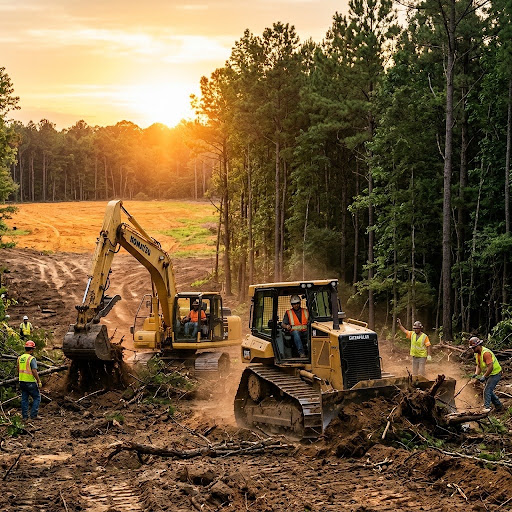
Once the assessment is complete, crews get to work removing trees, shrubs, stumps, and other natural obstructions. This step requires precision. Removing too much vegetation can lead to erosion, while leaving certain root systems in place can interfere with future foundation work.
Grading and Leveling
After the land is cleared, grading levels out the terrain and establishes proper drainage slopes. This step is essential for preventing water from pooling near a future structure and for creating a stable, even surface for construction crews to build on.
Debris Removal and Site Cleanup
The final stage involves hauling away all cleared debris and doing a final cleanup pass. A properly finished site should be free of stumps, rocks, and organic material that could decompose and cause settling issues under a foundation.
The Benefits of Working With Experienced Professionals
Not all site preparation work is created equal. Property owners who attempt this process without the right expertise often run into problems: uneven grading, incomplete stump removal, or drainage systems that don’t account for the region’s rainfall patterns.
Working with a team that handles Land Clearing as part of a broader construction process gives property owners a distinct advantage — the same crew that prepares the site understands exactly what the building phase will require. That continuity reduces miscommunication, minimizes delays, and ensures the finished lot meets the precise specifications needed for a strong, lasting build.
Experienced crews also bring the right equipment for the job. Heavy-duty machinery designed for efficient vegetation removal and grading gets the work done faster and with far less environmental disruption than manual methods. This matters both for timeline efficiency and for preserving the surrounding landscape whenever possible.
There’s also the matter of local knowledge. Soil types, seasonal weather patterns, and municipal regulations vary widely from one region to another. A team familiar with the local landscape can anticipate challenges that an outside contractor might miss entirely, saving property owners time, money, and frustration.
Setting the Foundation for a Successful Build
A construction project is only as strong as the ground it’s built on — quite literally. Investing in thorough, professional site preparation isn’t just a preliminary step; it’s a foundational decision that shapes the durability, safety, and long-term value of any structure that follows.
At Cypress Edge Construction, our approach to site preparation reflects the same standards we bring to every phase of a build: precision, care, and a commitment to doing the job right the first time. Whether you’re planning a new home, a commercial development, or an expansion project, starting with a properly prepared lot puts you on the path toward a smoother, more successful build.
If you’re ready to turn a raw piece of property into a construction-ready site, reach out to our team today to discuss your project’s needs.