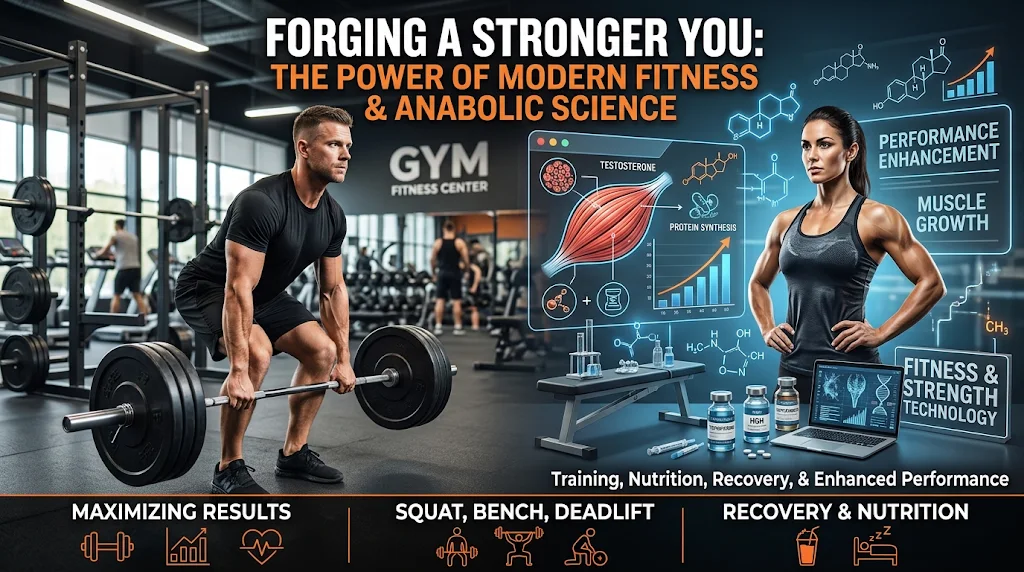
The global fitness culture has undergone a massive transformation over the last few decades. What was once a niche hobby practiced by golden-era bodybuilders in dimly lit basements has evolved into a mainstream, multi-billion-dollar lifestyle movement. Millions of people worldwide step into commercial gyms daily, driven by goals ranging from basic health and longevity to elite physique transformations.
However, as the fitness industry has scaled, so has the pursuit of accelerated results. Alongside natural training regimens, proper nutrition, and legal supplementation, a parallel underground subculture exists centered around performance-enhancing drugs (PEDs), anabolic steroids, and selective androgen receptor modulators (SARMs). Understanding this ecosystem requires looking closely at both the physiological realities of fitness and the underground supply networks—such as online forums, Anabolen Labs, and distribution hubs like Dutch Anabolen—that cater to this market.
The Foundation of Natural Fitness and Muscle Hypertrophy
At its core, natural muscle growth (hypertrophy) is governed by three fundamental pillars:
- Progressive Overload: Gradually increasing the weight, frequency, or number of repetitions in a resistance training routine to continually stress muscle fibers.
- Nutritional Optimization: Consuming adequate protein intake (typically 1.6 to 2.2 grams per kilogram of body weight) paired with a caloric surplus or deficit depending on whether the goal is bulking or cutting.
- Recovery and Sleep: Allowing the central nervous system and muscular tissue 48 to 72 hours to repair, utilizing deep sleep and proper hydration.
For the vast majority of fitness enthusiasts, these natural mechanics yield impressive, sustainable transformations over several years of disciplined training. However, genetic ceilings, time constraints, and the allure of Hollywood physiques lead a subset of the fitness community to explore chemical assistance.
The Role of Anabolic-Androgenic Steroids (AAS) and SARMs
When natural limits are reached, or when individuals seek hyper-accelerated body recomposition, anabolic-androgenic steroids (synthetic derivatives of testosterone) enter the conversation.
How Anabolics Work
Anabolic agents accelerate protein synthesis within skeletal muscle cells while simultaneously reducing the nitrogen excretion rate and inhibiting catabolic hormones like cortisol. This dual action allows athletes to train harder, lift heavier, and recover at a fraction of the normal biological timeframe. Common categories include:
- Injectable Compounds: Such as testosterone enanthate, nandrolone (Deca-Durabolin), and boldenone, which serve as the foundation for traditional bulking or cutting cycles.
- Oral Compounds: Such as Dianabol (methandrostenolone) and Anavar (oxandrolone), favored for rapid strength gains or quick cosmetic changes, though they carry a higher risk of hepatic (liver) strain.
- SARMs (Selective Androgen Receptor Modulators): Newer, non-steroidal compounds like RAD-140 (Testolone), LGD-4033 (Ligandrol), and MK-677 (Ibutamoren) marketed as targeted alternatives that selectively bind to androgen receptors in muscle tissue with fewer systemic side effects—though clinical data on long-term safety remains sparse.
Sourcing and the Underground Economy: Anabolen Labs and Dutch Anabolen
Because anabolic steroids and performance-enhancing substances are strictly regulated substances or outright controlled narcotics in most jurisdictions—including the Netherlands and the broader European Union—they cannot be obtained legally over-the-counter or prescribed for cosmetic bodybuilding. Consequently, users rely entirely on a shadow economy consisting of underground laboratories and specialized online vendors.
- Anabolen Labs: In the clandestine fitness community, “labs” refer to underground operations that raw-import powders, synthesize chemical compounds, and press them into oral pills or oil-based injectables. These clandestine labs often market themselves under specific brand names, using professional packaging, holographic seals, and batch verification codes to build trust within a market built entirely on anonymity.
- Dutch Anabolen: Platforms operating under titles like Dutch Anabolen function as retail distribution hubs tailored to the Dutch and European markets. Operating via encrypted messaging apps, darknet infrastructure, or unlisted clear-web domains, these suppliers bridge the gap between underground manufacturing labs and the end consumer. They typically offer a diverse catalog ranging from injectable testosterone vials and cutting or bulking stacks to various SARMs, promising discreet shipping and rapid delivery.
Risks, Harm Reduction, and the Medical Reality
While online vendors market these substances as straightforward tools for aesthetic perfection, the medical reality is complex and fraught with hazard. Public health institutions and sports authorities consistently warn against unregulated PED usage for several reasons:
- Cardiovascular Strain: Long-term use of anabolics significantly alters lipid profiles—lowering HDL (good cholesterol) and elevating LDL (bad cholesterol)—which spikes the risk of atherosclerosis, left ventricular hypertrophy, and cardiovascular events.
- Hormonal Suppression: Exogenous introduction of testosterone shuts down the body’s hypothalamic-pituitary-testicular axis (HPTA), often leading to natural testosterone cessation, testicular atrophy, and the necessity of rigorous Post-Cycle Therapy (PCT).
- Purity and Contamination Risks: Because products originating from underground labs bypass regulatory oversight (such as FDA or GMP standards), users face the risk of receiving under-dosed, mislabeled, or entirely contaminated compounds that can trigger abscesses, infections, or severe toxic reactions.
In countries like the Netherlands, medical professionals have increasingly adopted a harm-reduction stance rather than purely punitive approaches. Specialized clinics and medical initiatives (such as dedicated information lines and anonymous consultation hours) exist to help individuals navigate health complications arising from use, acknowledging that prohibition often drives users to dangerous experimentation without medical oversight.
Conclusion
The intersection of fitness and anabolic enhancement remains one of the most controversial topics in modern athletics. While disciplined training, nutrition, and recovery remain the golden standard for health and longevity, the demand for shortcut-driven physique enhancement continues to fuel a thriving underground market.
Entities operating within this space—from clandestine Anabolen Labs formulating chemical batches to retail-facing platforms like Dutch Anabolen—satisfy a persistent consumer demand. However, anyone navigating this ecosystem must weigh the short-term cosmetic rewards against the profound, long-term physiological and legal consequences tied to unprescribed performance-enhancing drugs.