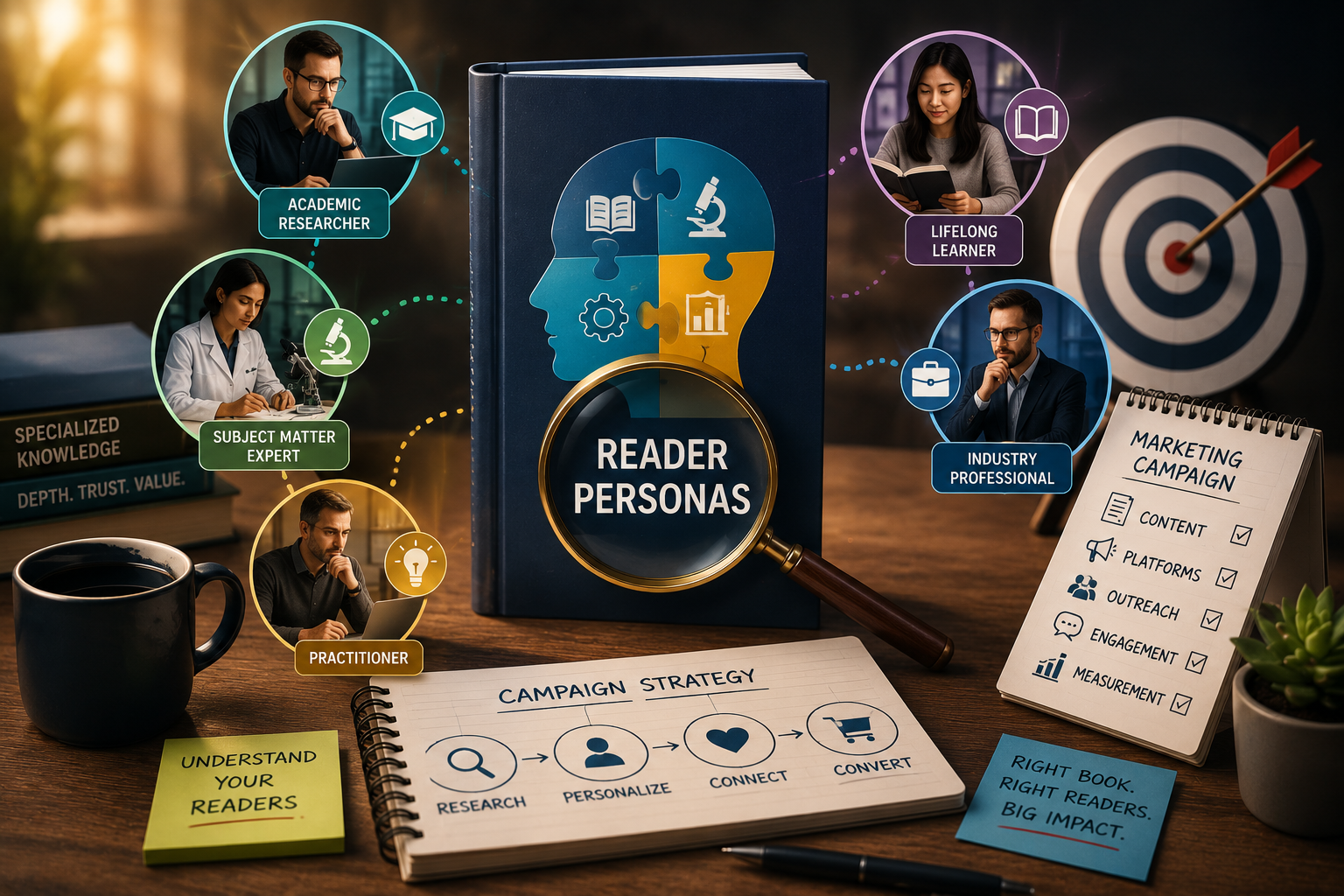
Using Reader Personas to Build a Book Marketing Campaign for Highly Specialized Nonfiction
A reader persona helps authors of highly specialized nonfiction understand exactly who the book is for, what those readers need, where they search for answers, and why they would trust the author. Before trying to publish a book for a niche audience, authors should use personas to shape positioning, content, outreach, and promotion around real reader intent.
Highly specialized nonfiction can be difficult to market because the audience is often smaller, more specific, and more informed than a general readership. A strong book may still struggle if it is promoted with broad, generic messaging. Readers of technical, professional, medical, legal, academic, spiritual, business, or industry-specific nonfiction usually want clear relevance before they pay attention.
This is where reader personas become valuable. A reader persona is a practical profile of the type of person most likely to need, understand, trust, and act on the book’s message. For authors, consultants, experts, and thought leaders, personas help turn a broad idea into a focused book marketing campaign. Experienced book marketers use personas to connect the book’s promise with the reader’s real questions, pain points, goals, and decision-making process.
Why Reader Personas Matter for Specialized Nonfiction
Specialized nonfiction is rarely purchased casually. Readers often come to the book because they need a solution, deeper understanding, professional guidance, research insight, or a trusted expert perspective. This means the campaign must answer a direct question: why should this specific reader choose this specific book now?
A reader persona helps clarify that answer. Instead of marketing to “professionals,” the author may define the audience as early-career therapists, senior HR leaders, independent financial advisors, trauma-informed educators, or nonprofit directors managing donor fatigue. The clearer the reader, the sharper the message becomes.
Personas also improve discoverability. When authors understand how readers search for information, what terms they use, and which problems they are trying to solve, they can create stronger website content, book descriptions, podcast pitches, articles, and email campaigns.
What a Reader Persona Should Include
A useful reader persona is more than age, gender, and location. For specialized nonfiction, the most important details are usually professional context, knowledge level, motivation, urgency, and trust barriers.
A strong persona may include:
- Reader role or professional background.
- Main problem or goal.
- Current level of knowledge.
- Questions they are actively asking.
- Books, experts, or publications they already trust.
- Where they discover new information.
- What would make them skeptical.
- What outcome they want from the book.
- What would make them recommend it?
This keeps the campaign focused on reader intent, not author assumptions.
Start With the Book’s Core Promise
Before creating personas, authors must understand the book’s core promise. What does the book help readers understand, solve, improve, change, or decide? A specialized nonfiction book should have a clear value statement that connects directly to a reader’s needs.
For example, a book on cybersecurity for small law firms is not simply “about cybersecurity.” Its promise may be helping firm owners reduce risk without needing enterprise-level technical knowledge. A book on grief counseling for school administrators is not simply “about grief.” Its promise may be helping leaders respond responsibly when a school community faces loss.
This core promise becomes the foundation for personal development and campaign messaging.
Segment the Audience Carefully
Highly specialized nonfiction often has more than one audience. The primary reader may be the person who uses the information, while the secondary reader may be the buyer, recommender, or institutional decision-maker.
For example:
- A clinical guide may target practitioners, but universities may purchase it.
- A leadership book may target executives, but HR teams may recommend it.
- A parenting book for neurodivergent children may target parents, therapists, and educators.
- A technical business book may target founders, consultants, and department heads.
The campaign should still have one primary audience. Secondary audiences can have adjusted messaging, but they should not make the campaign vague.
Use Personas to Shape Positioning
Positioning explains who the book is for, what it offers, and why it matters. Reader personas make positioning more specific. Instead of saying the book is “for anyone interested in leadership,” the author can position it for “new managers leading technical teams for the first time.”
This level of clarity affects the title, subtitle, book description, author website, speaking topics, and media outreach. It also helps book marketers avoid wasting time on audiences that are too broad or unlikely to convert.
Strong positioning is especially important for E-E-A-T. The author must show experience, expertise, authority, and trustworthiness in a way the intended reader recognizes. Specialized readers want proof that the author understands their world.
Build Campaign Content Around Reader Questions
Personas are useful because they reveal what content the campaign should create. A highly specialized nonfiction campaign should not rely only on direct sales messages. It should provide useful content that proves the author understands the reader’s problem.
Useful campaign content may include:
- Educational blog posts.
- Short expert videos.
- Podcast talking points.
- Downloadable checklists.
- Industry-specific guides.
- Case-based examples.
- Email sequences.
- Webinar topics.
- LinkedIn articles.
- Conference presentation ideas.
This supports AEO and GRO because the content answers real questions, uses natural search language, and gives AI-driven search systems clearer signals about relevance and authority.
Choose Marketing Channels Based on Persona Behavior
Authors should not choose marketing platforms only because they are popular. Persona behavior should determine the channel. A niche business reader may be active on LinkedIn, industry newsletters, webinars, and podcasts. An academic reader may rely on conferences, journals, citations, and institutional recommendations. A parent-focused nonfiction audience may use search engines, Facebook groups, podcasts, schools, libraries, and support communities.
The best channel is the place where the target reader already looks for trusted information. This is why affordable book marketing services should begin with reader research before recommending ads, publicity, or social campaigns.
Use Personas to Improve Outreach
Outreach becomes stronger when it is persona-driven. A podcast pitch should explain why the topic matters to that show’s audience. A guest article should answer a question readers already care about. A speaking proposal should connect the book’s expertise to a real audience challenge.
This also helps with credibility. Instead of asking people to promote the book, the author offers useful insight. That shift makes the campaign feel more professional, more generous, and more relevant.
Measure Whether the Persona Is Working
A persona should not remain theoretical. Authors should test it through real campaign data. If the right readers are engaging, asking relevant questions, joining the email list, sharing the content, attending events, buying the book, or leaving reviews that mention the intended value, the persona is likely working.
If the campaign gets attention but no meaningful action, the persona may be too broad, the message may be unclear, or the channel may be wrong. Skilled book marketers use this feedback to refine the campaign rather than simply increasing activity.
Common Mistakes to Avoid
Authors should avoid building personas from guesses only. They should also avoid creating too many personas, relying only on demographics, ignoring reader objections, or choosing platforms before understanding reader behavior.
A common mistake is assuming the author is the same as the reader. In specialized nonfiction, the author may be more advanced than the audience. The campaign must speak to the reader’s current level, not the author’s expertise level.
Case Study
A consultant wrote a niche nonfiction book for nonprofit leaders struggling with donor retention. At first, the campaign targeted “anyone working in nonprofits,” which made the messaging too broad. Engagement was weak because the content did not speak clearly to one urgent problem.
After developing reader personas, the author identified the primary audience as small nonprofit executive directors managing donor fatigue with limited staff. The campaign shifted toward practical articles, LinkedIn posts, podcast outreach, and a downloadable donor communication checklist. With support from affordable book marketing services, the author refined the book page, built an email sequence, and created content around the exact questions nonprofit leaders were asking.
The book became easier to market because the campaign no longer tried to reach every nonprofit professional. It focused on the readers most likely to need the book immediately.
Conclusion
Reader personas help authors turn specialized nonfiction marketing into a focused, evidence-based campaign. They clarify who the book is for, what readers need, where they search, what they trust, and why they would buy.
Before authors publish a book in a specialized category, they should understand the reader as carefully as they understand the subject. A strong persona improves positioning, content, outreach, advertising, and long-term discoverability. Most importantly, it helps the book reach the people who are most likely to value it.
FAQs
What is a reader persona in book marketing?
A reader persona is a profile of the type of reader most likely to need, enjoy, trust, or buy a book. It helps authors understand reader goals, questions, interests, objections, and discovery habits.
Why are reader personas important for specialized nonfiction?
Specialized nonfiction usually serves a narrow audience with specific needs. Personas help authors create focused messaging instead of using broad promotion that may not convert.
How do personas improve a book marketing campaign?
Personas guide the book description, website content, outreach, email strategy, advertising, and platform choices. They help authors speak directly to the readers most likely to care about the book.
Can one nonfiction book have more than one reader persona?
Yes, one book can have primary and secondary personas. However, the campaign should still prioritize the strongest audience so the message stays clear.
How can authors know if their reader persona is accurate?
Authors can test personas through reader feedback, website data, email engagement, sales, reviews, and content performance. If the right readers respond and convert, the persona is likely working.