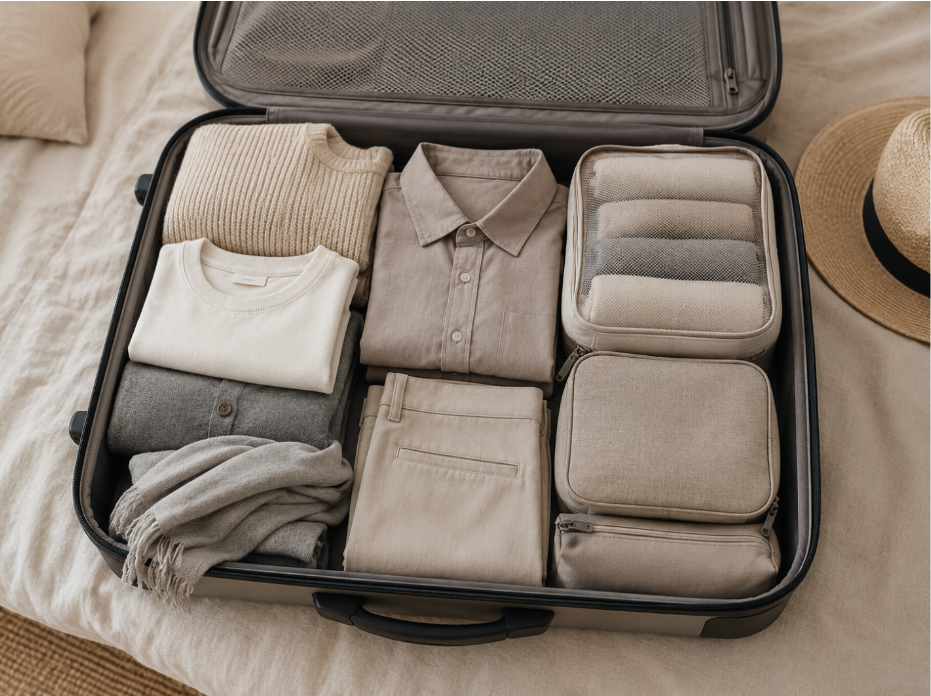
A two-week trip that starts in the mountains and ends on a beach forces an odd kind of math. Packing for the cold and the warm days looks ridiculous. Packing for the warm and the cold days is miserable. Most travellers solve this by adding another bag, then spend the whole trip wrestling oversized luggage through train platforms and hire-car boots. The fix isn’t more clothing. It’s choosing fewer pieces that can actually do more than one job.
Why Packing for Multiple Climates Usually Means Overpacking
The Just-in-Case Trap
Uncertainty is the real driver behind an overstuffed suitcase. When a trip spans a cold city, a warm coastline, and an unpredictable middle leg, the brain treats every possible scenario as a packing requirement. A spare jumper becomes two. One pair of trainers becomes three, just in case the trail gets muddy or the dinner reservation calls for something nicer. None of these extra items gets worn on most trips; they just take up space and weight that could have gone toward versatile pieces. The goal isn’t eliminating uncertainty. It’s building a wardrobe small enough that uncertainty doesn’t matter.
What Most Packing Lists Get Wrong
Search any packing guide and the same items come up again and again: a base layer, a rain jacket, a pair of jeans. The advice isn’t wrong, but it rarely explains why those specific pieces work across climates rather than just listing what to bring. Without understanding the logic, it’s easy to swap in a favourite sweater that looks the part but doesn’t actually layer, dry quickly, or pack down small. The pieces that earn a spot in a multi-climate bag aren’t chosen because they’re popular travel items. They’re chosen because of what they’re made from and how they behave under pressure.
Plan From the Itinerary, Not From the Closet
Mapping Each Leg of the Trip to What You’ll Actually Wear
Before opening a single drawer, lay the itinerary out leg by leg. Note the expected low-to-high temperature range, the main activity, and anything formal or physically demanding for each stop. A trip that moves from hiking trails to a client dinner needs a completely different wardrobe logic than a trip spent entirely outdoors. This step takes ten minutes and prevents the most common packing mistake: building a wardrobe around the climate of day one and hoping the rest works itself out.
Where Most Travellers Skip This Step
Most people skip this mapping step because packing happens the night before a flight, when there’s no time left for planning. The result shows up at the destination: a jacket too heavy for the warm weather, or nothing warm enough for an unexpected cold evening. A short planning pass solves both problems before a single item gets folded. It also makes the next step, choosing the actual pieces, far faster because the requirements are already clear.
The Layering System That Replaces a Dozen Separate Outfits
Three Layers, Endless Combinations
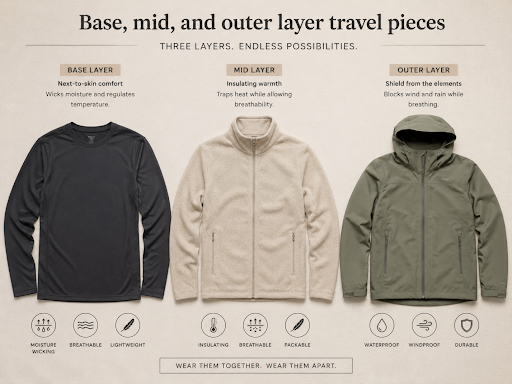
A three-layer system covers nearly every climate combination with far fewer pieces than a wardrobe built outfit by outfit. Each layer has one job, and combining them differently creates dozens of outfits from a handful of items.
| Layer | Job | What to Look For |
| Base | Sits against skin, manages sweat and temperature | Lightweight, breathable, doesn’t cling when damp |
| Mid | Holds warmth without bulk | Compresses small, insulates even when slightly damp |
| Outer | Blocks wind, rain, or sun | Packs flat, sheds water, doesn’t trap heat |
Three or four pieces in each layer, mixed and matched, easily cover a week of changing weather without duplicating a single outfit.
Where Sourcing Your Own Fabric Beats Buying Ready-Made Pieces
Ready-made travel clothing brands often charge extra for the same layering logic described above, and the fit does not always suit a specific route or body shape. This will not matter to every traveller, but frequent travellers who already alter clothing, sew simple pieces, or work with a local tailor may prefer choosing the material first. For base layers, lightweight overshirts, or simple mid-layer tops, the pattern is usually less complicated than the fabric decision. In that case, it can make sense to buy fabric by the yard online and match the weight, stretch, and weave to the layer being built, instead of relying on whatever a travel brand sells that season.
Vetting Each Piece Before It Earns a Spot in the Bag
The Two-Outfit Test
Before any item goes into the bag, it should pass a simple test: can it be worn in at least two different outfit combinations within the layering system? A patterned shirt that only works with one specific pair of trousers fails this test, no matter how much it’s loved at home. A plain button-up that layers under a sweater, works alone in warm weather, and pairs with both pairs of packed trousers earns its spot. Running every item through this filter before zipping the bag closed catches the impulse additions that don’t actually pull their weight.
Why Colour Coordination Saves More Space Than You’d Think
A wardrobe built around two or three coordinating colours multiplies the number of usable combinations without adding a single extra item. Navy, grey, and one accent colour, for example, means every top can be paired with every bottom without a single clash. This isn’t about looking deliberately stylish. It’s a practical shortcut that turns six items into a dozen workable outfits, which matters far more when the suitcase has limited space for a genuine climate range.
Packing for Multiple Climates Gets Easier Once the Fabric Is Right
Quick-Drying Matters More Than Anyone Tells You
A multi-climate trip rarely allows for a full laundry day, which means at least a few pieces need to survive a hotel sink wash and be wearable again quickly. Cotton is often comfortable on the body but slow to dry in a humid hotel bathroom. Lighter synthetic blends, fine merino, and other travel-friendly materials usually handle repeat wear and handwashing more reliably. Travellers piecing together their own base layers from fast-drying fabric for travel pieces can get more use out of fewer items because each piece has a better chance of being ready again before the next leg of the trip.
The One Fabric Mistake That Wrecks a Capsule Wardrobe
The most common fabric mistake isn’t choosing the wrong colour or cut. It’s choosing a fabric for how it looks on a hanger rather than how it behaves after a day of travel. A heavy knit sweater might look perfect in the store, but it takes up disproportionate space in a packing cube, can lose shape under compression, and may not look the same after a long journey. The same warmth, in a lighter-weight fabric, packs smaller and recovers its shape after a long flight. Testing how a piece looks and feels after being rolled tightly for ten minutes is a quick way to catch this mistake before it ruins a carefully planned capsule.
The trip that starts in the mountains and ends on a beach doesn’t actually need two separate wardrobes. It needs a handful of pieces chosen for how they layer, dry, and pack, not for how many different outfits they could theoretically create. Once that shift happens, packing for a wildly different set of climates stops feeling like a math problem and starts feeling like packing for one trip, because that’s exactly what it is.