You’ve just landed after a long flight, checked into your hotel room, and discovered the air conditioning unit sounds like a helicopter taking off — or worse, barely works at all. You crack the window, but the street noise floods in. Sleep feels impossible, and tomorrow’s packed itinerary isn’t going to slow down for exhaustion. Sound familiar? For millions of travelers, managing heat and noise in unfamiliar accommodations is a genuine, recurring frustration.
Finding a cooling solution that’s truly portable, whisper-quiet, and reliable enough to carry across time zones is harder than it sounds. Most options are either too bulky, too loud, or drain out before the night ends. This raises a surprisingly practical question: can a black small fan actually solve the travel cooling puzzle?
Compact, rechargeable, and designed for on-the-go use, black small fans are quietly becoming a favorite among savvy travelers. Their discreet profile fits into carry-on bags without a second thought, their USB charging makes power accessible anywhere, and their low-noise operation keeps hotel rooms peaceful. Whether you’re a light sleeper, a frequent flyer, or simply someone who runs warm, this guide explores whether this understated little device deserves a permanent spot in your travel kit.
The Growing Demand for Quiet Travel Cooling Solutions
Frequent travelers know the frustration all too well: you book a hotel room expecting comfort, only to find the AC unit rattles through the night, or the tropical climate overwhelms what little ventilation exists. Personal cooling has become a genuine priority for road warriors, business travelers, and vacation-goers alike. According to hospitality surveys, inconsistent room temperature ranks among the top complaints guests report, and for those who travel regularly, relying solely on hotel infrastructure simply isn’t a reliable strategy.
Noise sensitivity adds another layer of complexity. Light sleepers often find themselves caught between two bad choices — running a loud AC unit or sweating through the night in silence. Neither supports the quality rest that demanding travel schedules require. This is pushing travelers to seek independent solutions they can control personally, regardless of what a room’s built-in systems offer.
The result is a noticeable shift toward compact, rechargeable personal cooling devices. Quiet cooling solutions that can slip into a carry-on, charge via USB, and run silently through the night are no longer a niche novelty — they’re becoming standard gear for the prepared traveler. Rechargeable handheld fans, in particular, have carved out a strong following because they address multiple pain points simultaneously: they’re self-powered, lightweight, and designed with noise reduction in mind. As travel culture continues to prioritize smarter packing and greater personal comfort, the demand for these discreet, effective devices shows no sign of slowing down.
What is a Black Small Fan and Why It’s Gaining Popularity
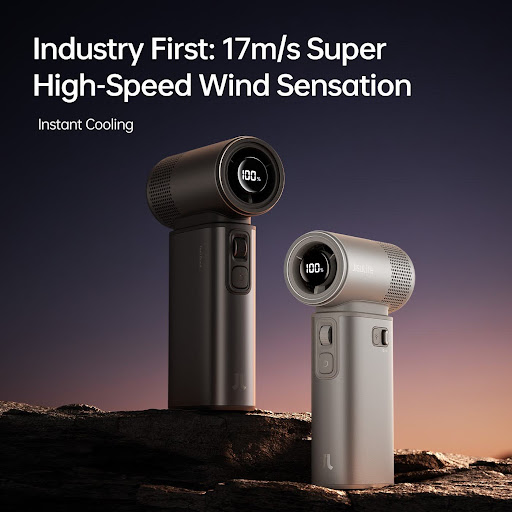
A black small fan refers to a category of compact, handheld or desktop portable fans designed specifically for personal use on the move. Typically small enough to fit in a jacket pocket or the front pouch of a backpack, these devices have evolved well beyond the flimsy plastic novelties of a decade ago. Today’s models feature brushless motors, multi-speed settings, and rechargeable batteries that make them genuinely useful tools rather than gimmicks. The “small fan” label encompasses a range of form factors — from foldable handheld designs to tabletop versions that stand independently on a nightstand — but all share the core promise of delivering personal airflow wherever you happen to be.
The appeal lies in a combination of practicality and versatility. Unlike bulkier cooling devices, a compact fan slots effortlessly into existing travel gear without demanding a dedicated packing spot. It works equally well in a stuffy conference room, a warm train cabin, or a hotel room where the thermostat seems to have a mind of its own. This adaptability across environments is a significant reason why travel fans broadly have surged in popularity, with online searches for portable and rechargeable personal fans climbing steadily year over year. Brands like JisuLife have helped drive this shift, offering portable fan designs that balance runtime, noise reduction, and compact form in ways that genuinely suit travel use.
Color choice might seem trivial, but black has become the preferred option for good reason. Black finishes resist visible scuffs and surface marks that inevitably accumulate during travel, keeping the device looking presentable longer. Aesthetically, black blends into professional and casual settings alike — it won’t look out of place on a boardroom table or a beach towel. For travelers who care about a polished, understated kit, the color choice reflects a broader preference for gear that’s both functional and refined.
Key Features of an Ideal Rechargeable Handheld Fan
Not all compact fans are created equal, and for travelers, the difference between a genuinely useful device and a frustrating disappointment often comes down to a handful of specific features. Battery life tops the list — a fan that dies after two hours offers little comfort during a long overnight stay. Look for models offering at least six to eight hours of runtime on mid-speed settings, with USB-C charging that works with the same cables already in your bag. Multi-speed settings matter too, giving you the flexibility to dial up airflow during a hot afternoon commute and scale back to a whisper at night. Brushless motors are worth seeking out specifically because they run cooler, last longer, and operate far more quietly than conventional motor designs.
Portability: Ensuring It Fits in Carry-On Luggage
Size and weight determine whether a fan actually makes it into your bag or gets left behind. The best travel fans weigh under 200 grams and collapse into a compact form — foldable blade designs are particularly effective, shrinking the device to roughly smartphone dimensions when not in use. Before purchasing, check the folded measurements against your carry-on’s front pocket or toiletry pouch. TSA regulations don’t restrict personal fans, but lithium battery capacity does matter for air travel; confirm the battery falls within airline-permitted limits, typically under 100Wh. A fan with a built-in hook or lanyard loop adds versatility, letting you hang it from a bedpost or backpack strap without occupying flat surface space.
Noise Level: Achieving Quiet Operation in Hotel Rooms
Quiet operation isn’t just a comfort preference — for light sleepers, it’s a necessity. The quietest handheld fans operate below 30 decibels on their lowest setting, roughly equivalent to a soft whisper. Blade count and curvature significantly influence sound output; fans with more blades at shallower angles tend to move air more smoothly with less turbulence noise. When evaluating a fan before travel, test it in a silent room at night — small irregularities become obvious in quiet environments that daytime testing masks entirely. If you’re purchasing online, prioritize models with verified buyer reviews specifically mentioning nighttime use, as these real-world accounts reflect actual sleeping conditions far more accurately than manufacturer specifications alone.
Comparing Black Small Fans with Other Cooling Options
When stacking a black small fan against the broader landscape of portable cooling options, the differences become clear quickly. Battery-operated fans — the kind that run on AA or AAA cells — are widely available and inexpensive, but their runtime is inconsistent, and replacing batteries mid-trip adds unnecessary hassle and expense. Rechargeable handheld fans eliminate that problem entirely, drawing power from the same USB ecosystem most travelers already carry for phones and laptops.
Clip-on fans offer hands-free convenience and can attach to headboards or tent poles, which has genuine appeal. However, their motors tend to run louder than dedicated handheld models, and the clamp mechanism adds bulk that makes packing less straightforward. They also lack the directional flexibility of a handheld fan you can angle precisely where airflow is needed most. Traditional desk fans, meanwhile, are simply impractical for travel — they require wall power, occupy significant luggage space, and produce the kind of motor noise that defeats the purpose of quiet cooling entirely.
Personal air coolers, which combine a small fan with a water reservoir to produce evaporative cooling, represent a more powerful alternative in dry climates. The trade-off is weight, size, and the need to source and carry water — complications that add friction to already demanding travel days. In humid destinations, evaporative coolers lose effectiveness almost entirely.
The black small fan threads the needle between these options. It’s lighter than clip-on alternatives, quieter than battery-operated models, more versatile than desk fans, and simpler to operate than personal coolers. The main limitation is that it circulates existing air rather than actively cooling it, making it less effective in extremely high temperatures without ventilation. For most travel scenarios, though, that trade-off is entirely manageable.
Practical Steps for Travelers to Choose and Use Their Fan
Choosing the right compact fan starts with targeted research rather than grabbing the first result that appears. Search specifically for reviews that mention nighttime hotel use and quiet operation — these filter out fans that perform well in daytime conditions but prove disruptive when silence matters most. Look for verified purchase reviews on retail platforms, paying close attention to comments about motor noise after extended use, since some fans grow louder as the motor warms up over several hours.
Battery life deserves careful scrutiny during the selection process. Cross-reference the manufacturer’s claimed runtime against independent reviewer reports, as real-world performance often differs from advertised figures. Prioritize models with USB-C charging over older micro-USB designs — USB-C cables are already standard in most travel kits, eliminating the need to carry an extra cable. Confirm the battery capacity falls within airline carry-on limits before booking your flight.
Before your first trip, do a dry run with your actual luggage. Place the fan in your intended packing spot — whether a carry-on front pocket or toiletry bag — and verify it fits without forcing the zipper or displacing essentials. This simple step prevents last-minute repacking at the airport.
Once you’re at your destination, position the fan on the nightstand angled toward your face and set it to the lowest speed that provides comfortable airflow. In hotel rooms, placing it near an open window increases effectiveness by drawing in cooler night air. On trains or planes, hold it at chest level rather than pointing directly at your face to avoid drying out your eyes during longer journeys.
The Smart Traveler’s Case for a Black Small Fan
After weighing the options, the black small fan makes a compelling case as one of the smartest additions to any travel kit. It addresses the core frustrations that frequent travelers face — unreliable hotel cooling, noise-disrupted sleep, and the constant balancing act of packing light without sacrificing comfort. Rechargeable via USB, quiet enough for light sleepers, and compact enough to disappear into a carry-on pocket, it solves multiple problems with a single, understated device.
No cooling solution is perfect for every scenario. In extreme heat without ventilation, a compact fan has its limits. But for the vast majority of travel situations — warm hotel rooms, stuffy cabins, humid transit hubs — it delivers reliable personal airflow without the noise, bulk, or power complications that make other options impractical. The black finish keeps it looking sharp trip after trip, and the simplicity of USB charging means one less adapter cluttering your bag.
If you’ve been tolerating poor sleep and uncomfortable temperatures on the road, a quality black small fan is worth serious consideration. Options from portable fan specialists like JisuLife illustrate just how far these devices have come — offering genuine runtime, low noise floors, and travel-ready dimensions that make them easy to justify as everyday carry. It won’t replace a full air conditioning system, but it will give you back something more valuable: control over your own comfort, wherever your travels take you. For the prepared traveler, that’s exactly the kind of reliable, low-effort solution that earns a permanent spot in the bag.