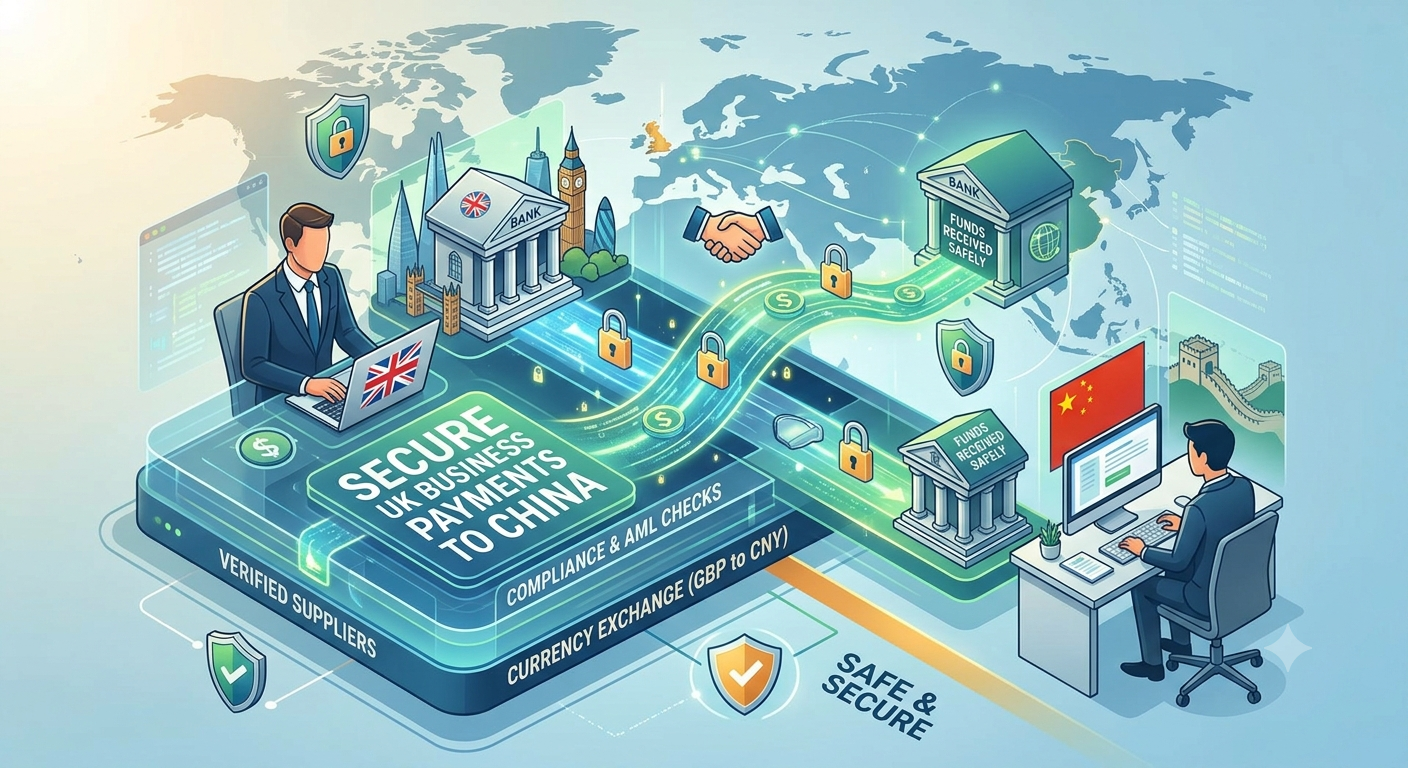
Navigating cross-border trade is exciting for UK e-commerce brands and retailers. You have negotiated product specifications, verified prices, and confirmed delivery timelines. Now, you face the most critical question: how do you transfer money to Chinese factories safely without falling victim to payment fraud or high bank fees?
Sending funds overseas always carries risk. What happens if a supplier disappears after receiving a deposit? What if the provided bank details belong to an online scammer? What if currency conversion fees destroy your profit margins?
Fortunately, secure payment channels exist today. Understanding how to choose the right payment method and verify factory credentials will protect your cash flow and keep your sourcing operations profitable.
Why Choosing the Right Payment Method Matters
When importing goods into the UK, choosing a payment channel is not just a administrative chore. It directly impacts your bottom line and financial security.
- Protection Levels Vary: A Telegraphic Transfer (T/T) is fast and standard, but once sent, the money is almost impossible to recall. Letters of Credit (L/C) or Trade Assurance offer stronger buyer protection by holding funds until strict delivery terms are met.
- Foreign Exchange Fees Add Up: UK buyers often face double currency conversion fees—moving from British Pounds (GBP) to US Dollars (USD) or Chinese Yuan (RMB). High intermediary bank charges can quickly eat into your margins.
- Supplier Risks are Real: Unverified bank transfers leave small businesses vulnerable to email spoofing, invoice alteration scams, and fake account details.
To mitigate these risks without tying up all your capital in massive upfront deposits, working with established supply chain partners is a smart move. Experienced firms like Sellers Union help UK buyers manage secure supplier transactions, offering streamlined RMB settlement and multi-supplier payment consolidation to protect your operating capital.
Evaluating Common Payment Methods1. Telegraphic Transfer (T/T Wire Transfer)
T/T remains the standard choice in international trade. Money moves directly from your UK bank to the supplier’s corporate account.
- Standard Terms: Usually structured as a 30% deposit before production and a 70% balance paid after final quality inspection but before shipment.
- Best For: Orders over £2,000 with vetted, long-term manufacturing partners.
- Letter of Credit (L/C)
An L/C acts as a formal bank agreement. Your bank guarantees payment only after the factory presents accurate shipping documents.
- Best For: Large corporate purchases or initial high-value orders exceeding £20,000.
- Online Payment Platforms & Escrow Services
Platforms like Wise, Payoneer, or Alibaba Trade Assurance offer faster transfers and competitive exchange rates compared to traditional high-street banks.
- Best For: Sample orders, low-volume test runs, and initial supplier testing.
Before issuing any deposit wire, UK importers should consult this comprehensive guide on paying Chinese suppliers to review essential risk-control steps, contract clauses, and optimal currency selection strategies.
Paying in USD vs RMB: Which Saves More Money?
Most export-focused factories in China prefer receiving USD, while domestic sellers (such as those on 1688) prefer RMB settlement.
- Paying in USD: Straightforward for UK accounting, as most banks handle USD wire transfers smoothly. However, factories often add a safety buffer to their quotes to cover potential exchange rate shifts.
- Paying in RMB: Settling directly in RMB can unlock lower unit prices because suppliers avoid currency conversion expenses on their end.
Pro Tip: Always request quotes in both USD and RMB. Comparing both options allows you to identify hidden conversion markups and negotiate better terms.
How to Avoid Payment Scams and Protect Your Capital
Preventing payment fraud requires strict operational procedures before any funds leave your UK account:
- Beware of Last-Minute Bank Account Changes: The most common scam involves hacked supplier emails requesting payments to be sent to a “new offshore account”. Never process these requests via email alone. Always verify new bank details through a phone call or video chat with your factory contact.
- Avoid Personal Accounts: Legitimate Chinese manufacturers operate registered corporate bank accounts. Never transfer business deposits to personal accounts.
- Never Pay 100% Upfront: Unless you are ordering low-cost product samples, avoid paying full amounts before production starts. A 30/70 deposit split gives you leverage to demand strict quality inspections before releasing the final balance.
Final Thoughts
Safely paying Chinese suppliers is a fundamental skill for successful importing. By replacing expensive domestic middlemen, verifying factory bank accounts, and using structured payment terms, your UK business can drastically reduce financial risks.
Take time to build a standardized procurement workflow. Secure payments build trust with overseas factories, lower your landed costs, and give your brand a distinct competitive edge in the UK market.