Introduction
Restaurant equipment plays a crucial role in maintaining kitchen productivity, food quality, and customer satisfaction. From commercial refrigerators and ovens to deep fryers, ice machines, and dishwashers, every piece of equipment must operate reliably to support daily restaurant operations. However, unexpected equipment failures can interrupt food preparation, delay orders, increase repair expenses, and negatively affect the customer experience.
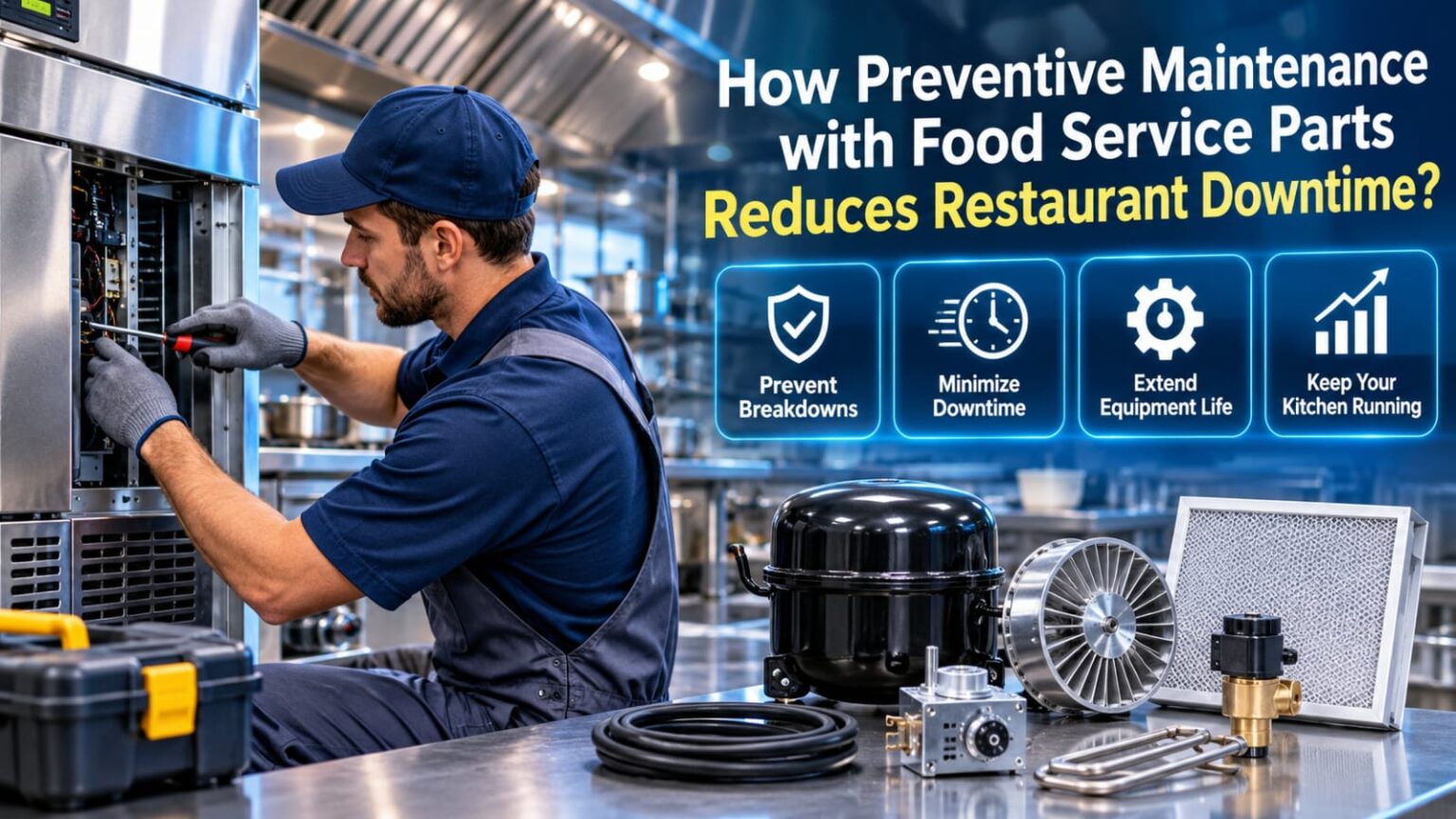
Preventive maintenance with quality food service parts helps restaurants reduce unexpected breakdowns, improve equipment reliability, and minimize operational downtime. By inspecting equipment regularly, replacing worn components, and addressing minor problems before they become major failures, restaurant owners can maintain efficient kitchen operations.
PartsFPS helps restaurant operators find food service parts for commercial kitchen equipment. Whether a kitchen requires replacement gaskets, thermostats, heating elements, or refrigeration components, finding the correct part is an important step toward restoring equipment performance and preventing recurring problems.
Understanding the connection between preventive maintenance and food service parts allows restaurant owners, kitchen managers, and maintenance professionals to make informed decisions that support long-term operational efficiency.
What Is Preventive Maintenance in Restaurant Equipment?
Preventive maintenance is a planned process of inspecting, cleaning, testing, and servicing restaurant equipment to reduce the risk of unexpected failures. Instead of waiting for equipment to stop working, maintenance teams identify potential problems and correct them before they disrupt kitchen operations.
Commercial kitchen equipment operates under demanding conditions. High temperatures, moisture, grease, frequent use, and food particles can gradually affect components and reduce performance. Regular maintenance helps identify these issues before they cause significant equipment damage.
Common preventive maintenance activities include:
- Routine inspections: Examine equipment for visible damage, unusual noises, leaks, loose connections, and abnormal operating temperatures.
- Cleaning and sanitation: Remove grease, dust, food residue, and other buildup that can interfere with equipment performance.
- Component replacement: Replace worn gaskets, damaged switches, faulty thermostats, and other components when necessary.
- Performance testing: Check whether equipment maintains appropriate temperatures and operates according to manufacturer specifications.
- Maintenance scheduling: Establish regular service intervals based on equipment type, usage, and manufacturer recommendations.
- Maintenance documentation: Record inspections, repairs, replacement parts, and recurring problems to support better maintenance decisions.
When restaurants combine these practices with suitable food service parts, they can reduce avoidable breakdowns and maintain more consistent kitchen operations.
How Do Food Service Parts Help Reduce Restaurant Downtime?
Food service parts are replacement components used to repair and maintain commercial kitchen equipment. These parts help restore equipment functionality when existing components become worn, damaged, or defective.
The right replacement part can address a specific problem without requiring unnecessary equipment replacement. However, the part must be compatible with the equipment’s manufacturer, model, and specifications.
Here are several ways food service parts contribute to reduced restaurant downtime.
1. Prevent Unexpected Equipment Breakdowns
Unexpected equipment failures are among the most disruptive challenges in restaurant operations. A refrigerator that stops cooling, a fryer that fails to heat, or an oven that cannot maintain its temperature can interrupt food preparation and affect service.
Preventive maintenance helps identify early warning signs, such as inconsistent temperatures, unusual operating sounds, slow heating, or damaged seals.
Replacing defective components before they fail completely can reduce the likelihood of emergency repairs.
For example, a damaged refrigerator door gasket may allow warm air to enter the cabinet. Replacing the gasket with a compatible part can help maintain the intended temperature and reduce unnecessary strain on the refrigeration system.
PartsFPS provides a resource for restaurant operators searching for food service parts to support equipment repairs and maintenance.
2. Improve Commercial Refrigeration Performance
Commercial refrigeration equipment is essential for maintaining food quality and appropriate storage conditions. Refrigerators, freezers, walk-in coolers, and other refrigeration systems often operate continuously, making regular maintenance particularly important.
Several components can affect refrigeration performance, including:
- Door gaskets and seals.
- Thermostats and temperature sensors.
- Evaporator and condenser fan motors.
- Defrost components.
- Compatible refrigeration controls and electrical components.
A worn gasket can cause cold air to escape, while a faulty temperature sensor may contribute to improper temperature regulation. Identifying these issues early can help prevent larger problems.
Restaurant staff should also monitor temperatures, clean accessible components according to manufacturer instructions, and arrange professional inspections when necessary.
Using the correct refrigeration parts helps support reliable operation, maintain food storage conditions, and reduce the risk of unexpected service interruptions.
3. Maintain Consistent Cooking Equipment Performance
Commercial ovens, fryers, griddles, ranges, and other cooking appliances must perform consistently during busy service periods. Equipment that heats unevenly or takes too long to reach the required temperature can slow food preparation and affect product quality.
Preventive maintenance helps identify worn or defective components before they significantly affect cooking performance.
Depending on the equipment, maintenance may involve checking:
- Heating elements and burners.
- Thermostats and temperature controls.
- Ignition components.
- Switches and compatible electrical connections.
- Door hinges, seals, and other mechanical components.
For example, a malfunctioning thermostat can contribute to inconsistent cooking temperatures. Replacing a confirmed faulty thermostat with the correct compatible part may help restore proper temperature control.
Restaurants should follow manufacturer service procedures and use qualified technicians for repairs involving gas systems, high-voltage electrical components, or other potentially hazardous equipment.
4. Reduce Emergency Repair Expenses
Emergency equipment repairs can involve more than the cost of replacement components. Restaurants may also face service call charges, expedited shipping expenses, interrupted food preparation, wasted ingredients, and lost sales opportunities.
Preventive maintenance helps reduce the likelihood of these unexpected costs by identifying problems earlier.
For example, replacing a worn seal during a scheduled maintenance visit may be less disruptive than waiting until the seal fails and the equipment develops a more serious performance issue.
A practical maintenance strategy includes keeping records of commonly replaced parts, monitoring equipment condition, and planning component replacements according to inspection findings.
PartsFPS can help restaurant operators search for the food service parts needed to address identified equipment problems.
Although preventive maintenance cannot eliminate every breakdown, it can improve maintenance planning and reduce avoidable repair emergencies. In PartsFPS Vulcan Hart, Blodgett and Hobart parts manufactures are reliable commercial kitchen equipment for efficient restaurant operations.
Essential Food Service Parts for Preventive Maintenance
Different commercial kitchen appliances require different replacement components. Understanding the purpose of common food service parts helps restaurant managers recognize potential maintenance needs.
Gaskets and Seals
Gaskets create a seal between adjoining surfaces, such as refrigerator doors and cabinet frames. Damaged seals can allow air leakage, affect temperature stability, and increase equipment workload.
Regular inspection helps identify cracks, deformation, loose sections, and other signs of wear.
Thermostats and Temperature Sensors
Thermostats and sensors help regulate or monitor equipment temperature. When these components malfunction, refrigeration or cooking equipment may operate outside its intended temperature range.
Replacement should be based on proper diagnosis and compatibility with the equipment model.
Heating Elements
Heating elements convert electrical energy into heat in compatible commercial cooking appliances and other equipment. Damaged elements may cause slow heating, uneven performance, or complete loss of heating capability.
Technicians should inspect the equipment and determine whether the element or another component is responsible for the problem.
Motors and Fans
Motors and fans support airflow and mechanical operation in various commercial appliances. Abnormal noise, vibration, or reduced airflow may indicate a developing issue that requires inspection.
Replacing a defective component with the correct part can help restore normal operation.
Switches and Electrical Components
Switches, relays, and other electrical components help control equipment functions. Worn or faulty components may prevent an appliance from starting, stopping, or operating correctly.
Electrical troubleshooting and replacement should be performed by appropriately qualified personnel.
Restaurant operators can use PartsFPS to search for relevant food service parts and identify potential replacement options. Before ordering, verify the manufacturer, model number, part number, and compatibility requirements.
How to Build an Effective Preventive Maintenance Schedule
A consistent maintenance schedule helps restaurant teams identify problems before they interfere with service. The schedule should reflect equipment type, operating conditions, usage frequency, and manufacturer recommendations.
Restaurant managers can use the following framework as a starting point.
Daily maintenance
- Check refrigerators and freezers for abnormal temperature readings.
- Inspect equipment for visible leaks, damage, and unusual sounds.
- Clean equipment according to manufacturer instructions.
- Confirm that essential appliances are operating normally.
- Report warning signs promptly.
Weekly maintenance
- Inspect accessible door gaskets and seals.
- Check for grease, dust, or debris buildup.
- Examine accessible components for visible wear.
- Review recurring equipment complaints from kitchen staff.
- Confirm that routine cleaning and inspection tasks are documented.
Monthly or manufacturer-specified maintenance
- Arrange more detailed equipment inspections.
- Review recurring faults and previous repair records.
- Inspect relevant components according to manufacturer instructions.
- Replace worn parts when supported by inspection findings.
- Schedule qualified technicians to assess complex equipment problems.
These intervals are general examples, not universal requirements. Certain equipment may need more frequent attention, while other maintenance activities must follow specific manufacturer schedules.
A written maintenance checklist helps staff understand their responsibilities and ensures that essential tasks are not overlooked.
How PartsFPS Supports Food Service Parts Searches
Finding the right replacement component is an important part of preventive maintenance. An incorrect part can delay repairs, create compatibility problems, and increase maintenance costs.
PartsFPS supports restaurant and foodservice equipment parts searches, helping customers look for components needed to maintain commercial kitchen equipment.
Restaurant operators can make their parts searches more effective by following these steps:
- Identify the equipment manufacturer: Determine which company manufactured the appliance.
- Locate the model number: Check the equipment identification label or consult the manufacturer’s documentation.
- Identify the required component: Use inspection findings or a technician’s diagnosis to determine which part needs replacement.
- Verify part compatibility: Compare the part number and specifications with reliable equipment documentation.
- Review available options: Search PartsFPS for the relevant food service parts and confirm the listing details before ordering.
- Plan the repair: Arrange installation, testing, and any necessary follow-up maintenance.
Accurate equipment information can reduce ordering mistakes and help maintenance teams find suitable replacement components more efficiently.
Parts availability, compatibility, and delivery timing should be confirmed before scheduling critical repairs. For equipment that is essential to daily service, restaurants should also consider maintaining an appropriate inventory of commonly needed parts.
The Long-Term Benefits of Preventive Maintenance
Preventive maintenance provides benefits beyond reducing immediate equipment downtime. When restaurants follow a consistent maintenance strategy, they can improve operational planning and manage equipment more effectively.
- Improved equipment reliability: Regular inspections help identify wear and developing faults before they cause major interruptions.
- Better kitchen productivity: Properly maintained equipment supports smoother food preparation and more predictable service.
- More controlled maintenance spending: Planned repairs can help reduce avoidable emergency service costs and unnecessary component replacements.
- Extended equipment service life: Appropriate cleaning, inspections, and timely repairs may reduce excessive wear and help equipment remain serviceable for longer.
- Improved food safety management: Maintaining refrigeration and cooking equipment helps restaurants monitor and control temperatures according to applicable food safety requirements.
Better maintenance decisions: Inspection records and repair histories help managers identify recurring problems and prioritize equipment that needs attention.
These benefits depend on the quality of maintenance, correct diagnosis, suitable replacement parts, and proper installation. Preventive maintenance reduces risk but cannot guarantee that equipment will never fail.
Frequently Asked Questions About Food Service Parts and Restaurant Downtime
1.How do food service parts reduce restaurant downtime?
Food service parts help restore equipment functionality when components wear out or fail. When restaurants identify problems early and replace defective parts before they cause major breakdowns, they can reduce unexpected interruptions and improve kitchen reliability.
2.Which food service parts should restaurants inspect regularly?
Common examples include gaskets, seals, thermostats, temperature sensors, heating elements, motors, fans, switches, and other components specified in the equipment maintenance instructions. The exact requirements depend on the appliance and its operating conditions.
3.How often should commercial restaurant equipment receive preventive maintenance?
The appropriate frequency depends on equipment type, usage, operating conditions, and manufacturer recommendations. Daily checks, periodic inspections, and scheduled professional servicing can form part of a comprehensive maintenance program.
4.How can restaurants find the correct replacement parts?
Restaurants should identify the equipment manufacturer and model number, determine the faulty component, and verify its part number and specifications. PartsFPS can be used to search for food service parts, but compatibility should be confirmed before ordering.
5.Can preventive maintenance eliminate restaurant equipment failures?
No. Preventive maintenance cannot eliminate every failure, but it can help identify developing problems, reduce avoidable breakdowns, and improve equipment reliability. Unexpected failures may still occur because of component defects, operating conditions, or other factors.
Conclusion: Reduce Restaurant Downtime with PartsFPS
Preventive maintenance is an essential strategy for restaurants that want to maintain reliable equipment, improve kitchen productivity, and avoid unnecessary service interruptions. Regular inspections, timely repairs, accurate fault diagnosis, and compatible food service parts all contribute to a more dependable commercial kitchen.
From refrigeration gaskets and thermostats to cooking equipment components, the right replacement parts help address specific problems and support continued equipment operation. Combining these parts with a documented maintenance schedule enables restaurant owners to plan repairs more effectively and respond to developing issues before they become major disruptions.
PartsFPS helps restaurant operators search for food service parts for their equipment maintenance and repair needs. By identifying the correct components and planning maintenance proactively, restaurants can take practical steps toward reducing downtime and keeping their kitchens running efficiently.