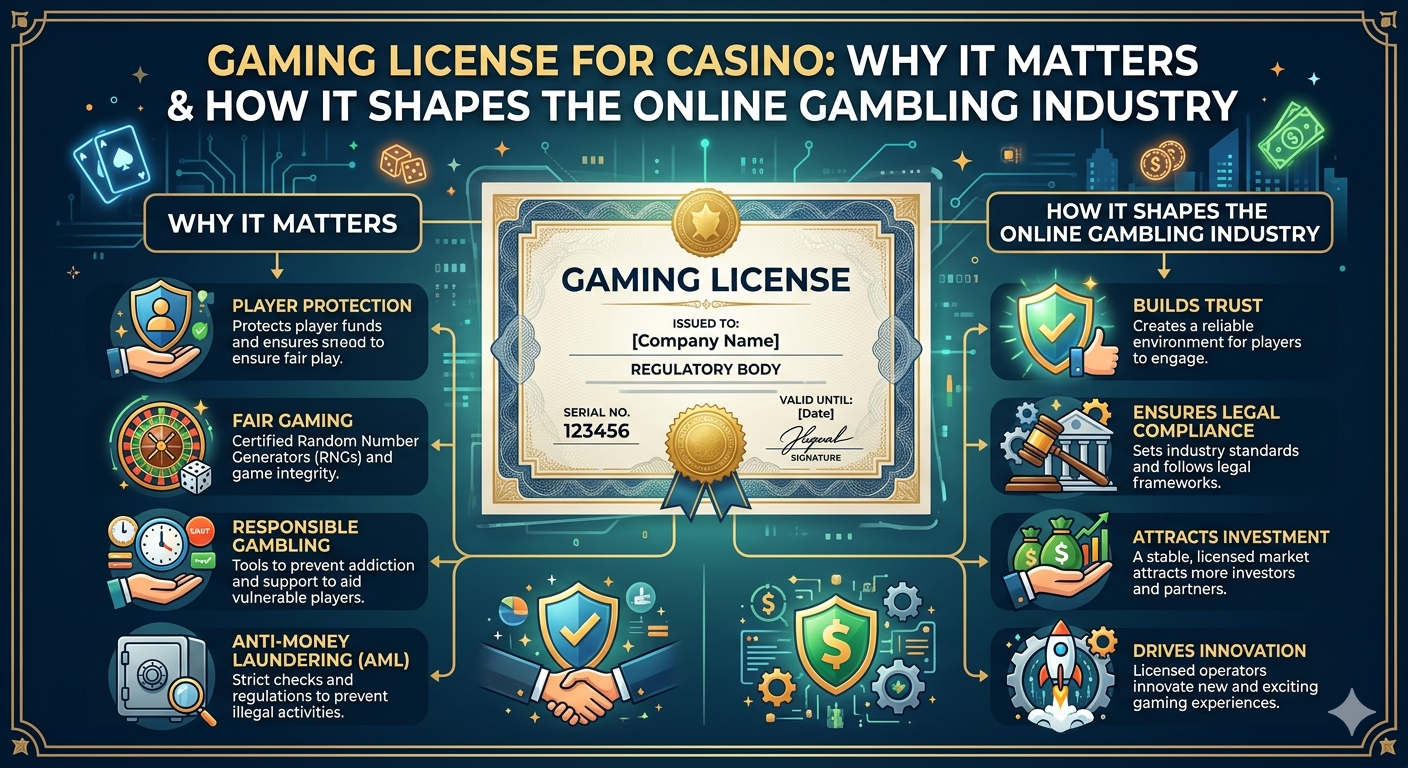
The online casino industry has grown into a global powerhouse over the past two decades, attracting millions of players and generating billions in annual revenue. However, behind every legitimate online casino lies one critical foundation that determines its trustworthiness, legality, and operational stability: the gaming license. A gaming license for casino operations is not just a formal requirement—it is the backbone of a regulated gambling ecosystem that protects players, ensures fairness, and establishes credibility in a highly competitive market.
Understanding What a Gaming License Is
A gaming license is an official authorization issued by a regulatory authority that permits a company to operate gambling activities legally. This includes online casinos, sports betting platforms, poker rooms, and other interactive gaming services. Without a valid license, a casino cannot legally offer its services in regulated markets.
Licensing authorities vary depending on jurisdiction. Some of the most recognized regulatory bodies include Malta Gaming Authority (MGA), UK Gambling Commission (UKGC), Gibraltar Regulatory Authority, and Curacao eGaming. Each jurisdiction has its own rules, requirements, and compliance standards, which operators must strictly follow to maintain their license.
Why a Gaming License for Casino Operations Is Essential
A gaming license serves multiple purposes, all of which are essential for the stability of the gambling industry. First and foremost, it ensures that the casino operates legally within a defined regulatory framework. This protects both the operator and the players from legal complications.
Secondly, licensing guarantees fairness in gaming. Regulators require casinos to use certified Random Number Generators (RNGs) to ensure that all game outcomes are completely random and unbiased. Without such oversight, players could be exposed to manipulated or rigged games.
Thirdly, a license builds trust. In an industry where financial transactions and personal data are involved, users need assurance that their information is safe. Licensed casinos are required to implement strict data protection policies, secure payment systems, and responsible gambling measures.
The Licensing Process: What Casinos Must Go Through
Obtaining a gaming license for casino operations is not a simple or quick process. It involves a detailed application procedure, background checks, financial audits, and ongoing compliance reviews.
Operators must first choose a jurisdiction that aligns with their business model. Some jurisdictions are more strict but offer higher credibility, while others provide faster approvals with lower entry barriers.
Once the jurisdiction is selected, the casino operator must submit detailed documentation. This typically includes company incorporation papers, proof of financial stability, business plans, software certifications, and identity verification of key stakeholders.
Regulators also conduct thorough background checks on company directors and shareholders to ensure they have no criminal history or involvement in fraud or money laundering. Additionally, casinos must demonstrate that their gaming software is fair and independently tested by approved auditing companies.
After approval, the operator receives a license, but the process does not end there. Ongoing compliance is required, including regular reporting, audits, and adherence to anti-money laundering (AML) and Know Your Customer (KYC) policies.
Different Types of Casino Gaming Licenses
Not all gaming licenses are the same. Depending on the scope of operations, casinos may require different types of licenses.
A B2C (Business-to-Consumer) license is the most common and allows casinos to directly offer games to players. A B2B (Business-to-Business) license is used by software providers that supply games and platforms to casino operators.
Some jurisdictions also offer specialized licenses for specific activities such as live dealer casinos, sports betting, or poker networks. Choosing the right type of license is crucial for long-term business success.
Benefits of Operating with a Licensed Casino
Having a gaming license provides significant advantages beyond legal compliance. One of the most important benefits is market access. Many countries and payment providers only work with licensed operators, which means that unlicensed casinos are often excluded from major markets.
Another key benefit is player trust. Users are far more likely to register and deposit money in a licensed casino because they feel secure knowing the platform is regulated. This directly impacts conversion rates and customer retention.
Licensing also enhances partnerships. Game providers, affiliate marketers, and payment processors prefer to collaborate with licensed operators due to reduced risk and increased transparency.
Additionally, licensed casinos are better protected against legal disputes. In case of disagreements with players or third parties, having a regulatory framework provides clear procedures for resolution.
Challenges in Maintaining a Gaming License
While obtaining a license is difficult, maintaining it can be equally challenging. Regulatory requirements are constantly evolving, and casinos must adapt quickly to stay compliant.
One of the biggest challenges is compliance with anti-money laundering regulations. Casinos must monitor transactions, report suspicious activity, and verify player identities. Failure to do so can result in heavy fines or license revocation.
Another challenge is responsible gambling obligations. Operators are required to implement tools such as self-exclusion options, deposit limits, and reality checks to protect vulnerable players.
Cybersecurity is also a major concern. Licensed casinos must invest heavily in protecting their systems from hacking attempts, data breaches, and fraud.
The Future of Gaming Licenses in the Casino Industry
As the online gambling industry continues to evolve, gaming licenses will become even more important. Governments around the world are tightening regulations to ensure better player protection and increased tax revenues.
We are also seeing the rise of more standardized global compliance frameworks. This could eventually simplify the licensing process for international operators while improving transparency across jurisdictions.
Technology will also play a key role. Blockchain, artificial intelligence, and advanced analytics are already being used to improve compliance monitoring, detect fraud, and ensure fair play.
In the future, gaming licenses may become more dynamic, incorporating real-time monitoring systems rather than periodic audits. This would allow regulators to respond faster to violations and improve overall industry safety.
A gaming license for casino operations is far more than a legal requirement—it is a symbol of trust, fairness, and professionalism in the online gambling industry. It protects players, ensures regulatory compliance, and allows operators to build sustainable and reputable businesses.
For any casino aiming to succeed in today’s competitive market, obtaining and maintaining a proper gaming license is not optional; it is essential. As regulations continue to evolve, licensed operators will remain at the forefront of innovation, security, and player satisfaction, shaping the future of online gambling worldwide.