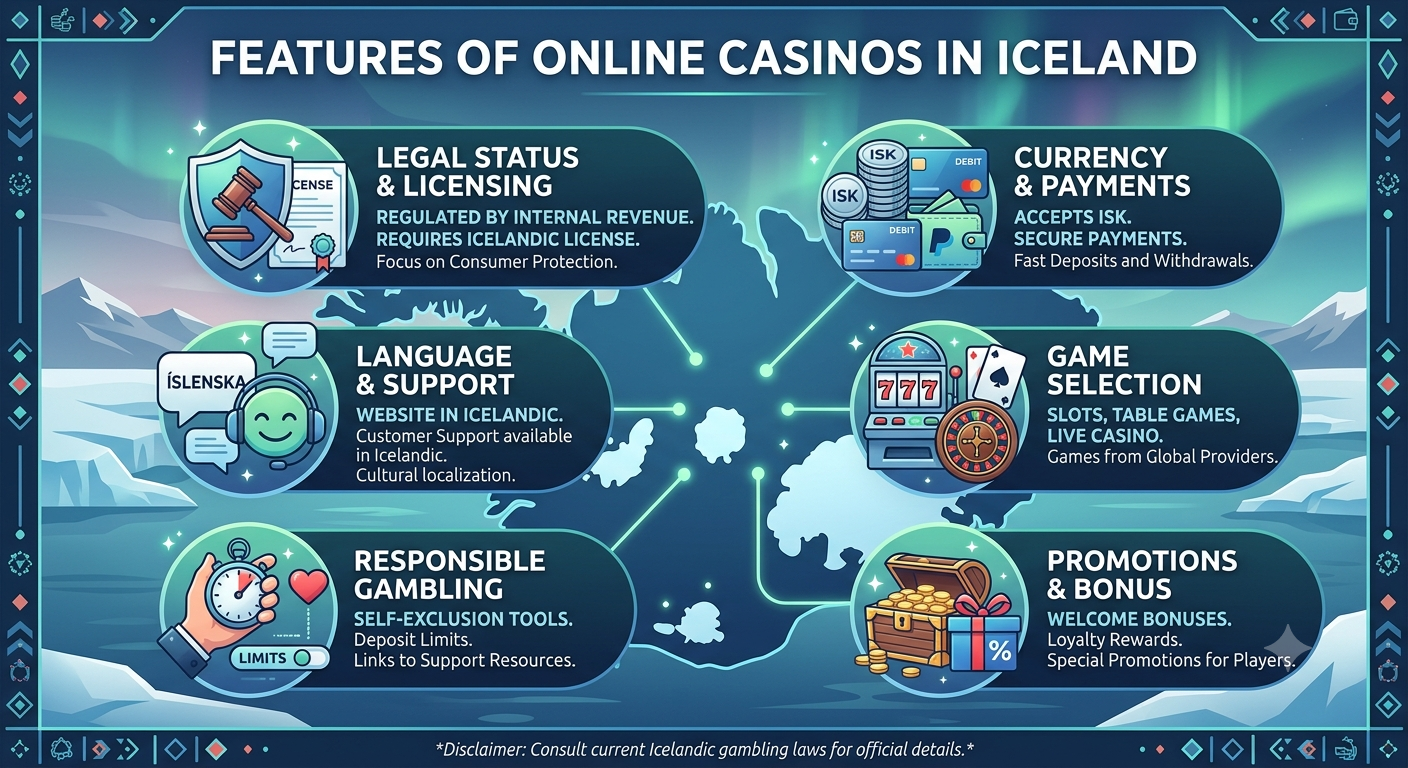
Due to the country’s gambling laws, Iceland does not have its own licensed online casinos. However, many Icelandic players use international gambling platforms that operate under licenses issued by foreign jurisdictions. According to various studies, around 70–80% of Iceland’s adult population participated in some form of gambling between 2011 and 2024.
Icelandic players can register with international online casinos, but choosing the right platform requires careful consideration. It is important to evaluate factors such as licensing, bonus terms, available payment methods, security standards, and the operator’s reputation.
All of these aspects are reviewed by the experts at Znaki FM. The Iceland edition of Znaki FM is dedicated to casinos available to Icelandic players, providing detailed reviews, up-to-date rankings, and useful information to help users compare different gambling platforms.
Gambling Regulation in Iceland
Iceland is often considered a grey market for online gambling. Operating an casino online Iceland from within the country without government authorization is not permitted. Any company attempting to launch a locally based casino would face significant legal and technical barriers, as the country’s .is domain is administered by ISNIC (Internet á Íslandi hf.). For this reason, establishing a domestic online casino business in Iceland is generally not a practical option.
At the same time, Icelandic law does not prohibit residents from accessing international online casinos licensed in other jurisdictions. As long as doing so does not violate the laws of the operator’s licensing jurisdiction, players are generally free to choose from a wide range of platforms, including casinos offering cryptocurrency payments or simplified registration procedures. However, any gambling winnings may be subject to Icelandic tax rules and should be declared in accordance with applicable legislation.
As a result, many gambling operators that wish to serve Icelandic players establish their businesses abroad and obtain licenses from recognized international regulators instead of seeking to operate from within Iceland. Common licensing jurisdictions include:
- Malta Gaming Authority (MGA) — One of the most respected gambling regulators, known for combining strong player protection with clear regulatory standards. Casinos licensed by the MGA are required to meet strict rules regarding fairness, security, and responsible gambling.
- UK Gambling Commission (UKGC) — Widely regarded as one of the world’s most rigorous gambling authorities. The UKGC enforces comprehensive compliance requirements and imposes significant penalties on operators that fail to meet its standards.
- Curaçao eGaming — A well-known international licensing jurisdiction used by many online casino operators. Industry estimates suggest that a substantial share of the global online gambling market operates under licenses issued in Curaçao.
- Anjouan Licensing Services Inc. (ALSI) — A relatively accessible licensing authority that offers a more streamlined application process and generally less stringent regulatory requirements than some of the larger European regulators.
Znaki FM features online casinos licensed by these regulatory authorities.
Payment Methods at Online Casinos in Iceland
Because online casinos rarely support the Icelandic króna (ISK) as an account currency, most Icelandic players choose to gamble in euros (EUR). Some international casinos also support other Nordic currencies, including the Norwegian krone (NOK), Danish krone (DKK), and Swedish krona (SEK).
Minimum deposit requirements typically start at €1–€5 or NOK/DKK/SEK 10–100, depending on the operator’s terms and payment method. Withdrawal limits usually begin at €10–€50 or approximately 1,000 units of the selected Nordic currency.
Deposits are generally processed instantly, while withdrawals may take anywhere from 24 hours to 30 days, depending on the casino’s verification procedures and the payment method used. Larger withdrawals, particularly jackpot winnings, are often subject to additional identity and financial compliance checks, which can extend the processing time.
Responsible Gambling
Responsible gambling is designed to ensure that gambling remains a form of entertainment rather than becoming a harmful habit. Its primary goal is to reduce the risk of gambling-related harm and encourage players to manage both their spending and the amount of time they devote to gambling activities.
Gambling addiction, also known as gambling disorder, is a condition in which a person loses control over their urge to gamble. This compulsive behavior can negatively affect mental well-being, financial stability, relationships, and everyday life. In some cases, people who are unable to gamble may experience anxiety, irritability, emotional distress, or other withdrawal-like symptoms.
To help players stay in control, licensed online casinos provide a range of responsible gambling tools. These commonly include the option to set daily, weekly, or monthly limits on deposits and wagering. Once activated, higher limits usually cannot be applied immediately and are instead subject to a cooling-off period, which typically lasts between 14 and 30 days, depending on the operator’s policies.
Many online casinos also offer Reality Check reminders, which notify players how long they have been gambling continuously and encourage them to take regular breaks. Additional responsible gambling features may include temporary account suspension, self-exclusion programs, and access to account history to help players monitor their gambling habits.
Anyone who finds it difficult to control their gambling or believes that gambling is having a negative impact on their life should consider seeking professional support. Assistance is available through public health services, non-profit organizations, and private counselling providers that specialize in gambling-related issues.