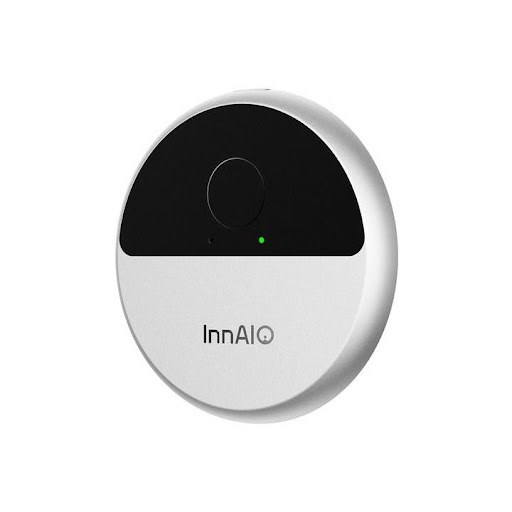
A serious question sits at the centre of every cross-border deal, medical appointment or embassy visit: is the pocket gadget on your desk actually good enough to stand in for a trained human interpreter? A generation of hardware has narrowed the gap in surprising ways, yet marketing hype has raced ahead of what the devices can genuinely do. Answering the question honestly matters, because getting it wrong in a contract negotiation or a hospital corridor is not the same as fumbling a restaurant order. This article examines where a handheld ai translator device already meets professional standards, where it falls short, and how careful users combine hardware with human judgement to get reliable outcomes. It is written for procurement managers, healthcare coordinators, tour operators and international small-business owners weighing whether to invest in devices, human interpreters, or a considered mix of the two.
Where Handheld Translators Already Perform Like Professionals
In routine, high-frequency scenarios, a well-built ai translator device now handles conversations at a level that would have seemed impossible five years ago. Ordering food, confirming appointments, guiding warehouse staff through safety instructions, and running short customer-service exchanges all fall within its comfort zone. The reason is that these interactions rely on a narrow vocabulary, predictable sentence structures and clear intent. Devices trained on massive multilingual corpora recognise the pattern quickly and deliver fluent output. For an ai translator device pitched at business travellers, that means confidently replacing the human interpreter for the vast majority of transactional moments, freeing budget for the situations where a specialist is genuinely needed.
Speed and Availability
A gadget in your pocket is ready in seconds. A human interpreter must be scheduled, briefed and paid, often at premium rates outside working hours. For time-sensitive interactions such as an airport transfer at midnight, the availability alone changes the equation in favour of the device.
Where the Gap Remains Wide
Not every conversation is a transaction. Legal depositions, mental health assessments, subtle negotiation over intellectual property, or discussions with elderly relatives about end-of-life care demand more than word-for-word translation. They require cultural framing, tone modulation, and the ability to ask a clarifying question mid-sentence. Handheld devices, however impressive, translate what they hear rather than what is meant. A phrase that carries respect in one culture may sound curt in another; a joke that lightens a room in Berlin can offend in Tokyo. Trained interpreters carry that context in their heads and adjust in real time. If the stakes of misunderstanding include damages, harm, or long-term relationships, a device should support, not replace, a professional interpreter.
Idioms, Slang and Regional Variance
Even top-tier models struggle with regional slang, generational idioms, and highly technical jargon. A device that scored perfectly on textbook Spanish may falter with Andalusian phrases; an English-Chinese unit may miss Cantonese variations. Sample the device in the specific dialect you will actually meet, not in the reference language taught in classrooms.
Latency, Turn-Taking and the Rhythm of Conversation
Human interpreters manage a subtle dance: they pause when a speaker gathers thought, jump in when a phrase completes, and mediate turn-taking. Devices are getting better at this but often introduce a half-second delay that disrupts flow, especially in group settings. Choose a device with fast on-device processing rather than round-trip cloud calls, and give it a wired lavaliere or a stronger microphone if you will use it in a business meeting. Users often report that after fifteen minutes, both sides adjust their rhythm to the device, but only if that rhythm is consistent. Cloud-only translators, whose latency swings with connection quality, feel jarring and undermine confidence.
Handling Overlapping Voices
Real conversations feature interruptions. Only advanced units use directional microphones and speaker recognition to distinguish overlapping voices. If your setting is a boardroom or a negotiation table, this feature matters more than any language count on the box.
Privacy, Confidentiality and Data Handling
An interpreter signs a non-disclosure agreement; a translator device sends audio to a data centre. That difference is invisible until it matters. Sensitive commercial discussions, personal medical details, and legal statements should be handled by a device with on-device processing or, at minimum, a transparent privacy policy that specifies where audio travels, how long transcripts are retained, and whether they contribute to model training. Reputable brands such as INNAIO publish these details clearly and offer settings that keep certain sessions local only. When confidentiality is central to the conversation, treat the privacy configuration as a hard requirement, not a nice-to-have.
Cost Modelling: When the Device Pays for Itself
Consider two scenarios. A tour company running eight multilingual excursions per week would pay an interpreter per outing, quickly exceeding the price of a durable device within a single quarter. A hospital admitting an occasional non-native speaker might spend little annually on interpreters and prefer to keep that human capacity for critical consultations. The device wins on volume and predictability, while the interpreter wins on high-stakes rarity. Mixed strategies, where devices handle routine touchpoints and humans handle informed consent, contract review or grievance conversations, tend to deliver the best combination of cost efficiency and safety.
Total Cost of Ownership
Add subscription fees, roaming data allowances, spare batteries and eventual replacement into the calculation. A device that requires a monthly plan to unlock its best languages is not as cheap as the initial price suggests. Compare over a three-year horizon rather than a single trip.
Designing a Reliable Workflow Around Your Device
Devices perform best when the humans around them adapt slightly. Speak in shorter sentences, avoid double negatives, pause between phrases and repeat back key numbers such as prices or dates. Encourage the other party to do the same. Keep the microphone within a metre of both speakers, in a quiet position if possible, and confirm the target language on-screen before starting. When a translation seems off, ask the other person to rephrase rather than repeat the original sentence louder; louder rarely helps, rephrasing usually does. Small workflow habits like these lift accuracy dramatically and turn the device from a novelty into a dependable participant in the conversation.
Backup Plans
Even the best device fails occasionally: batteries drain, connections drop, an unfamiliar dialect appears. Have a fallback ready, whether that is a phrasebook app on the phone, a bilingual colleague on speed dial, or a scheduled interpreter available on short notice. Redundancy costs little and preserves the momentum of important conversations.
A Practical Verdict on Devices and Interpreters
The honest answer to the opening question is nuanced. A handheld device does not replace a trained interpreter across the full range of human communication, and pretending otherwise invites costly errors in the exact moments where accuracy matters most. What it does, superbly, is take over the routine, transactional, high-frequency exchanges that make up the bulk of daily cross-language contact. Treat the device as a full-time assistant that handles the ninety percent and reserve human interpreters for the ten percent where nuance, culture and confidentiality are decisive. Build that boundary explicitly into your procurement and travel policies, choose devices from vendors that publish specifications and privacy terms transparently, and you will end up with a communication stack that is faster, cheaper and, perhaps counter-intuitively, more respectful of the people you are speaking with.