Ask five people what a 3D printer costs in India and you will get five different answers. Some will quote you two thousand rupees for a toy-grade machine off a marketplace listing. Others will throw around figures in lakhs, thinking only of industrial setups used in aerospace or dental labs. The truth sits somewhere in between, and it depends heavily on what you actually plan to print.
Over the past year, prices have shifted more than most buyers realise. Component costs have eased, competition among Chinese manufacturers has intensified, and Indian resellers have started stocking machines that were previously import-only. That has pulled entry-level pricing down while pushing feature sets up, which is good news if you are buying in 2026 rather than 2021.
Entry-Level FDM Printers: Where Most Buyers Start
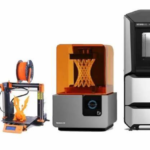
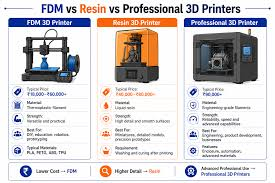
A usable fused deposition modelling printer, the kind that extrudes melted plastic filament layer by layer, now starts around eight to twelve thousand rupees for a basic bed-slinger design. Step up to an enclosed printer with auto bed levelling and a few thousand rupees more buys noticeably better reliability. Most hobbyists, students, and small workshop owners land somewhere in the fifteen to twenty-five thousand rupee bracket, which covers a genuinely capable machine rather than a compromise.
Resin Printers Sit in a Different Price Bracket
If your work involves fine detail, miniatures, jewellery patterns, or dental models, you are looking at resin printers rather than filament machines. Resin printing uses light-cured liquid resin instead of melted plastic, and the price for a good masked stereolithography unit typically starts around eighteen thousand rupees, climbing quickly once you want a larger build volume or a 4K or 8K screen.
It is worth being upfront that resin printers carry ongoing costs that filament printers do not. Resin itself is priced per litre, isopropyl alcohol for cleaning adds up, and you will eventually replace the FEP film on the vat. Factor that into your budget rather than judging the machine on sticker price alone.
What Actually Drives 3D Printer Price in India
A few things push the price of a 3D printer up or down beyond the base hardware. Import duty and GST add a meaningful chunk on top of the manufacturer’s price, which is why identical machines often cost more here than in the US or China. Build volume matters too, since a larger printer needs a sturdier frame and more powerful motors. Brand reputation plays a role as well, and this is where buyers sometimes overpay for a badge without checking whether the underlying hardware justifies it.
Retailers stocking a wide range of 3D printers across price points make comparison shopping easier, since you can weigh an entry FDM machine against a mid-range resin unit side by side instead of hunting across five different websites.
Finding the Best Place to Buy a 3D Printer in Chennai
Price is only half the story. Where you buy matters just as much, particularly for a machine you will be calibrating, troubleshooting, and eventually servicing. A local Chennai dealer who actually stocks inventory, rather than drop-shipping from a warehouse three states away, saves you days of downtime when something needs a replacement part. Ask any dealer directly whether they offer in-person setup help, spare nozzles, and a real warranty process before you commit.
Brand availability is another factor worth checking locally. If you have your eye on Bambu Lab printers, for instance, buying from an authorised Indian stockist means you get local warranty support and firmware updates without the grey-market uncertainty that comes with importing directly.
A Simple Way to Budget
If you are just starting out, plan for the printer itself plus roughly ten to fifteen percent extra for consumables, spare parts, and the inevitable first-month troubleshooting. Filament runs about six hundred to twelve hundred rupees per kilogram depending on material, while a litre of standard resin costs somewhat more per print because of lower yield. Neither cost is dramatic on its own, but skipping it in your budget is a common mistake for first-time buyers.
There is no single correct answer to what a 3D printer costs in India, but there is a correct process: figure out your actual print requirements first, set a realistic total budget that includes consumables, and buy from a dealer who will still answer the phone six months after the sale.