That faint scurrying sound behind your walls isn’t your imagination. It’s often the first sign that rats have already made themselves comfortable in your home, and by the time you hear them, they’ve usually settled in for good. Homeowners frequently dismiss these noises as old pipes settling or wind rattling the siding, but ignoring them can lead to costly damage and serious health risks.
Rats are resourceful, resilient, and reproduce at an alarming rate. A single breeding pair can produce dozens of offspring within a matter of months, turning a minor nuisance into a full-blown infestation before you even realize what’s happening. Beyond the unsettling thought of rodents living in your walls, these pests chew through wiring, insulation, and structural materials, creating fire hazards and expensive repair bills.
This is exactly where professional intervention makes all the difference. Twin Home Experts has built a reputation for helping homeowners identify, address, and permanently resolve rodent problems before they spiral out of control. Understanding how rats invade your space, and knowing when to call in the professionals, can save you thousands of dollars and countless sleepless nights.
Why a Few Rats Can Quickly Become a Serious Problem
Rats don’t just nibble on food left out on the counter. They gnaw through electrical wiring, wood beams, and even concrete to create pathways throughout your home. This behavior stems from their need to file down their constantly growing teeth, and it rarely stops at cosmetic damage.
Beyond property destruction, rats carry pathogens linked to hantavirus, salmonella, and leptospirosis. Their droppings and urine can contaminate food storage areas and insulation, creating health hazards that linger long after the rodents are gone. Children and pets face particularly high risks of exposure since they’re more likely to come into contact with contaminated surfaces.
The financial impact adds up fast too. Chewed wiring can spark house fires, damaged insulation reduces energy efficiency, and structural gnawing weakens the integrity of your home over time. What starts as a minor annoyance can quickly become a five-figure repair project if left unaddressed.
How Rats Find Their Way Into Your Home
Rats are remarkably skilled at exploiting even the smallest vulnerabilities in a home’s exterior. A gap as narrow as a quarter-inch is enough for a rat to squeeze through, meaning gaps around utility lines, vents, and foundation cracks are all potential entry points.
Common warning signs of an active infestation include:
- Gnaw marks on wood, wiring, or plastic containers
- Grease trails along baseboards where rats repeatedly travel the same paths
- Droppings near food sources, cabinets, or storage areas
- Scratching or scurrying sounds within walls or ceilings, especially at night
- A persistent musky odor in enclosed spaces like attics or basements
Recognizing these signs early gives homeowners a critical advantage. The longer an infestation goes unchecked, the more extensive the damage becomes, and the more difficult removal becomes as rat populations multiply and establish deeper nesting sites throughout the property.
What Makes Twin Home Experts Different
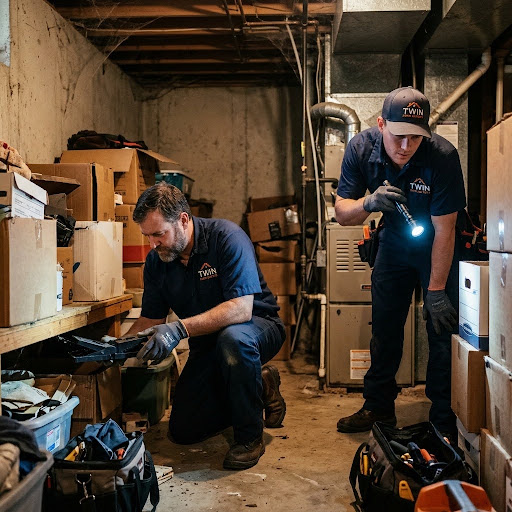
Not all rodent control services are created equal. Twin Home Experts combines thorough property inspections with targeted treatment plans designed around each home’s specific layout and infestation severity. Rather than relying on generic solutions, the team identifies entry points, nesting areas, and food sources unique to your property before implementing a removal strategy.
This tailored approach extends beyond simply trapping and removing rats. Twin Home Experts also focuses on exclusion work, sealing potential entry points to prevent future infestations from taking hold. This proactive step separates a lasting solution from a temporary fix, giving homeowners genuine peace of mind rather than a recurring problem.
Customer satisfaction remains central to how Twin Home Experts operates. The team communicates clearly throughout the process, explaining findings, treatment steps, and prevention recommendations in straightforward terms. Homeowners aren’t left guessing about what’s happening in their own home or why certain measures are necessary.
Take Back Your Home With Confidence
A dependable rat exterminator who eliminates infestations quickly while protecting your family’s health and your home’s structure is exactly what you need the moment you suspect rodents have moved in. Waiting only allows the problem to grow, both in scale and in cost.
Twin Home Experts brings the experience, tools, and attention to detail needed to handle infestations of any size. From the initial inspection to the final exclusion work that keeps rats from returning, every step is handled with precision and care. Homeowners who partner with Twin Home Experts don’t just get rid of a current problem; they gain a long-term defense against future invasions.
If you’ve noticed any signs of rodent activity, whether it’s strange sounds at night, unexplained droppings, or gnaw marks around your home, don’t wait for the problem to escalate. Reach out to Twin Home Experts today and take the first step toward reclaiming a safe, pest-free home for your family.
Frequently Asked Questions
How quickly can rodent removal be completed?
Most infestations can be significantly reduced within one to two weeks, depending on severity, though exclusion work and monitoring may continue afterward to ensure rats don’t return.
Is professional rat removal safe for homes with children and pets?
Yes. Twin Home Experts uses methods designed to minimize risk to household members while effectively eliminating rodent populations.
Will sealing entry points really prevent future infestations?
Sealing entry points is one of the most effective long-term prevention strategies available, as it removes the access rats rely on to re-enter a home.