


The arrival of a new Volkswagen Transporter matters because this is not a van bought only on price. For many businesses, it becomes part of the daily routine for years: the vehicle that opens before the first job, carries the equipment that earns the money and waits outside the customer’s premises.
The new VW Transporter T7 has been designed as the next chapter of that familiar working-van role. It introduces a more digital cab, updated safety systems and a broader range of powertrain choices, while retaining the core question that matters to operators: can it carry people, equipment and business expectations without becoming difficult to live with?
For a buyer looking at a Volkswagen Transporter T7, the most useful approach is not to focus on one headline feature. Instead, look at how the new model changes the working day from the driver’s seat to the rear doors.
The T7 feels like a different generation.
The outgoing T6.1 remains a recognisable and capable commercial vehicle, so the new Transporter T7 has a clear task: modernise the experience without losing the practical qualities that made previous Transporters popular with trades and fleets.
The most obvious difference is inside. The T7 brings a redesigned dashboard, digital instrument display and a larger central touchscreen. That change will appeal to drivers who use navigation, phone connectivity and vehicle information constantly, but it should be judged as working equipment rather than decoration.
A better interface can reduce distraction when it is clear, quick to use, and sensibly positioned. It can become irritating if essential controls are difficult to reach while driving. Any business arranging a test drive should take time to use the systems as they would on a normal route, rather than simply looking at them while parked.
The visual update also gives the Transporter T7 a sharper, more contemporary presence. That matters to client-facing businesses such as installers, technology firms, facilities teams and premium home-improvement companies. A van does not need to look flashy, but it should look purposeful and well maintained.
The cab now has to earn its place as an office.
Many van drivers spend more time in the cab than in a traditional office. They take calls, follow schedules, plan routes, complete paperwork and manage the space between appointments. The new Transporter T7 is therefore more than a vehicle upgrade; for some operators, it is a mobile workplace upgrade.
The first consideration is visibility. A van that is easier to place in traffic, reverse into a driveway or manoeuvre through a busy industrial estate saves stress throughout the day. Parking aids, cameras and safety assistance can be especially valuable for businesses with multiple drivers or long urban routes.
The second is fatigue. Long-distance service engineers and regional sales teams benefit from supportive seating, good storage, useful charging points and straightforward connectivity. These features may not appear as essential as load dimensions on a specification sheet, but they influence whether a driver finishes the day focused or exhausted.
A business should choose the technology that best supports its routes. A company making frequent city-centre stops may prioritise parking support and quick phone integration. A company covering rural or motorway routes may value driver assistance, comfort and weather-ready traction more.
A van still succeeds or fails in the rear.
Despite the improved cab, the rear remains the Transporter T7’s commercial heart.
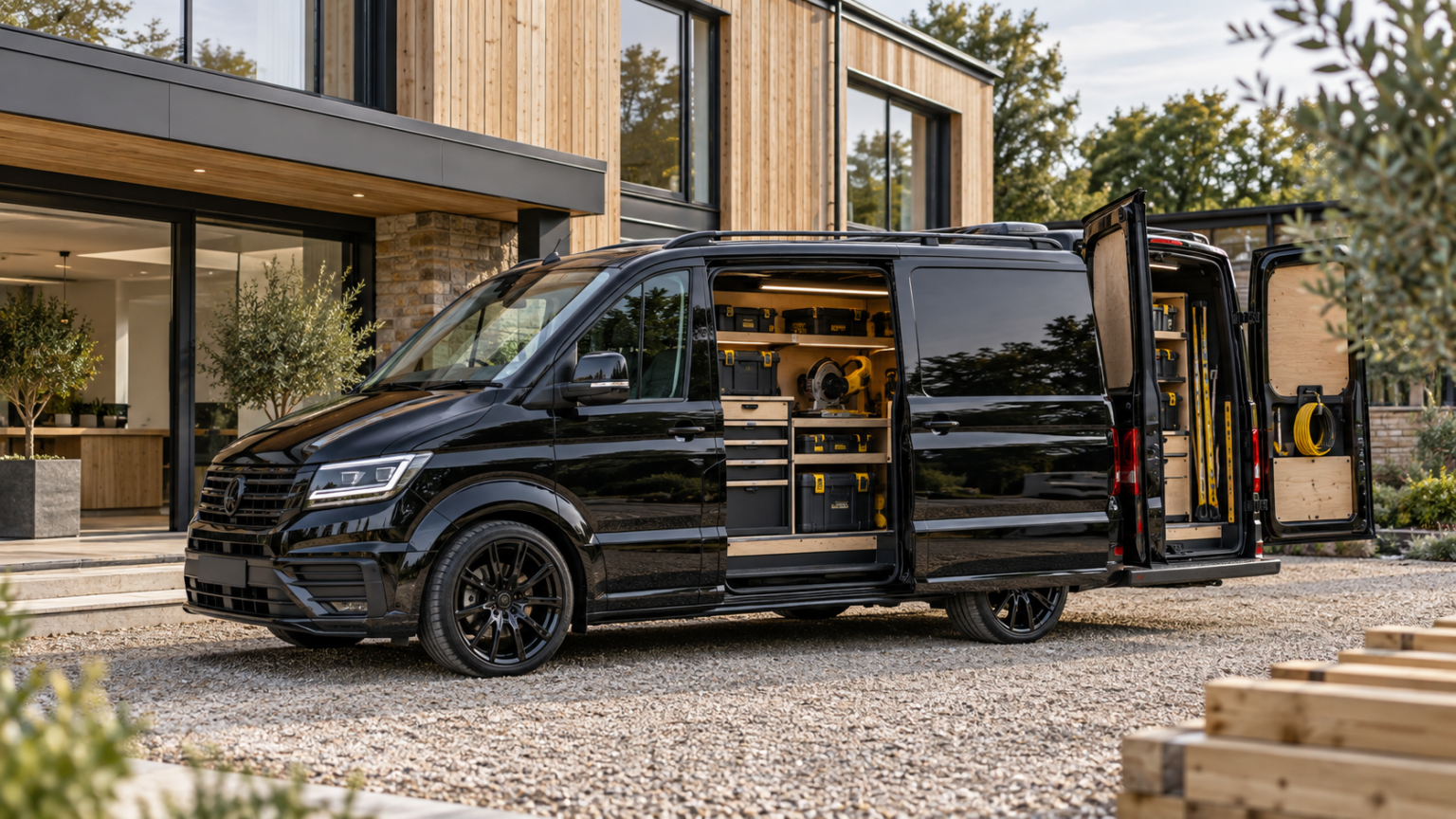
Volkswagen has developed the new model with a wider load area between the wheel arches and a longer wheelbase than the outgoing T6.1. That matters only if it changes what you can carry. A contractor should measure the equipment that causes the biggest operational problem: a tool chest, a stack of storage boxes, a cable reel, a ladder system or a piece of machinery that needs to travel securely.
The question is not whether the load space is bigger on paper. It is whether the van can be loaded quickly, unloaded safely and kept organised after a demanding day.
The T7 range includes panel-van, Kombi, and crew-oriented options, giving businesses scope to choose a layout around their working pattern. A panel van makes sense when protected cargo space is the priority. A Kombi can be more useful when staff regularly travel together but still need to bring tools and equipment.
The compromise is clear: extra seating reduces the load area available behind it. That is not a flaw; it simply means the buyer needs to choose around the normal job rather than the occasional one.
The powertrain choice is wider than before
The new VW Transporter T7 is available across diesel, hybrid and electric options, depending on specification and availability. That gives buyers more flexibility, but it also makes the buying decision more complex.
Diesel remains a practical option for many high-mileage businesses, particularly those completing long regional journeys, carrying substantial loads or working in areas without convenient charging. For these users, a proven fuel type and quick refuelling may matter more than switching to a newer powertrain simply because it is available.
Electric options can make a strong case for predictable local routes, depot-based operations and businesses with dependable overnight charging. The key is to assess the real daily pattern. Delivery operators completing a fixed local circuit may be well suited to electric running. A contractor whose route changes daily, carries varying loads and travels long distances may need a different solution.
Hybrid choices can appeal to businesses that want some electrified flexibility without relying entirely on charging infrastructure. However, the right answer should come from route data, not assumptions. Look at average mileage, load weight, parking location, downtime and the distance between regular sites.
When 4MOTION is worth serious consideration
Four-wheel drive is not necessary for every van operator, but it can make a practical difference in specific conditions.
The T7 4MOTION option is most relevant to businesses working on rural sites, unmade access roads, wet grass, construction locations or areas where winter weather regularly affects travel. Agricultural support firms, utility contractors, outdoor-event teams and some building trades may find the extra traction worthwhile.
For a business operating mainly on standard urban and motorway routes, front-wheel drive may be the more sensible choice. Don’t pay for a capability you will never use. At the same time, a company that loses working days because vehicles struggle to reach site may see four-wheel drive as an operational safeguard rather than a luxury.
Tie the decision to the terrain, not the van’s image.
Do not treat payload and towing as afterthoughts.
Some Transporter T7 diesel specifications offer substantial payload and towing capability, but exact figures vary by model, powertrain, wheelbase and equipment. Buyers should never assume the highest published figure applies to every version.
This is particularly important for businesses fitting racking, flooring, roof bars, tow bars, additional locks and specialist equipment. Those useful additions all contribute weight. Add a driver, passengers, fuel and cargo, and the remaining payload can be reduced faster than expected.
The same principle applies to towing. If the van will pull a trailer regularly, choose based on the actual trailer weight and working conditions. A vehicle that only meets the requirement on paper may not be the right fit once it is fully loaded and operating through winter or on uneven ground.
Choosing a Transporter T7 around the job
The Transporter T7 isn’t a single van with a single use case. It is a platform that can be configured around very different businesses.
A clean panel van may suit a premium trade company that needs a secure, organised mobile workshop. A Kombi could suit a small installation team travelling to jobs together. A 4MOTION version may suit a business that spends part of the week off normal roads. An electric model may suit a local service operation with reliable charging.
When comparing current stock, the important detail is the exact listed vehicle. The available Swiss Vans range includes different T7 body styles and powertrain options, so buyers should compare payload, seating, drive layout and delivery timing on the individual specification.
The new VW Transporter T7 represents a meaningful shift in how a working van can feel: more digital, more connected and more adaptable. Its real value, however, will be decided in ordinary moments. When the driver can find what they need, the rear doors open onto an organised load area, and the van reaches the next job without adding unnecessary effort to the business.