There are roughly six box sizes you will encounter on a move, and using the wrong one is the source of half the back pain and most of the broken items on moving day. The single most common mistake: putting heavy things in big boxes. The second: putting light things in small boxes. Both make the load harder to carry and slower to load.
Here is what each standard box is actually for.
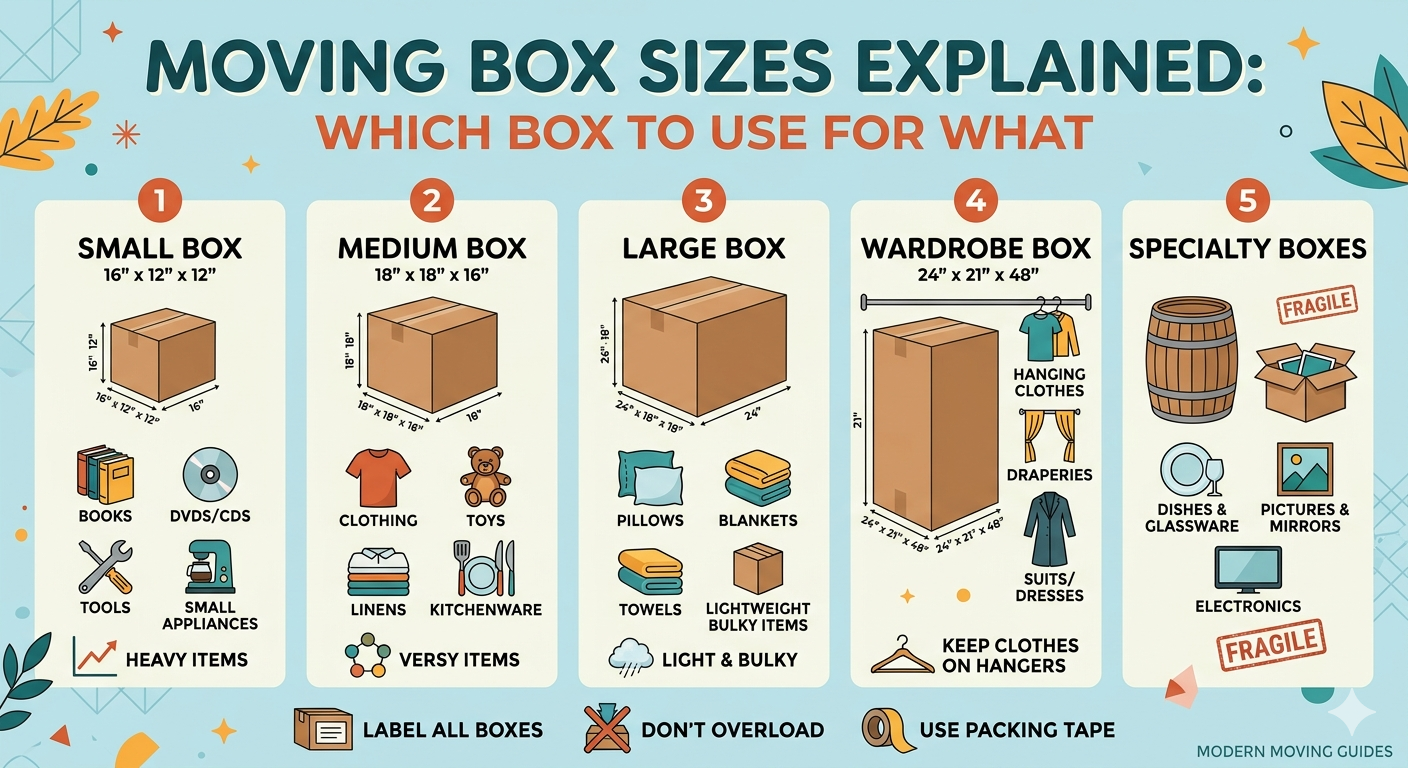
Small box (1.5 cubic feet, roughly 16 × 12 × 12 in)
The workhorse for heavy, dense items.
- Books
- Records and vinyl
- Canned food
- Tools
- Toiletries and full bottles
- Small kitchen appliances
Rule of thumb: if a single small box, fully packed, weighs more than 35-40 lbs, switch to a smaller box or pack less in it. The handle on a small box should let one person carry it comfortably down stairs.
A typical 1-bedroom apartment uses 8-12 small boxes. A 2-bedroom: 15-20. Many a nyc moving company will drop off a starter kit of mixed sizes if you ask during booking, which saves a trip to the hardware store.
Medium box (3.0 cubic feet, roughly 18 × 18 × 16 in)
The most versatile box. Use for mid-weight household items.
- Pots, pans, cookware
- Small electronics, gaming consoles, routers
- Toys
- Pantry items in bags
- Office supplies
- Mixed kitchen drawers
A medium box is the right answer when in doubt. A typical 1-bedroom uses 15-25 medium boxes.
Large box (4.5 cubic feet, roughly 18 × 18 × 24 in)
For light, bulky items only.
- Bedding, comforters, pillows
- Lampshades
- Stuffed animals
- Tupperware and plastic kitchen storage
- Throw blankets
- Off-season clothing
Putting books in a large box is the classic mistake — once full, it can weigh 80 lbs and nobody on the crew will be happy to see it. If you fill a large box and it feels heavy, repack the dense items into smaller boxes.
A 1-bedroom needs 6-10 large boxes.
Extra-large / picture box
A 24 × 4 × 36 in flat box for items that need to travel on their edge:
- Framed art
- Mirrors
- Wall-mounted TVs (in the right size)
- Posters and prints
These boxes are sold in adjustable sizes that telescope to fit different frame dimensions. Use foam corner protectors inside.
Dishpack (5.0 cubic feet, double-walled)
A reinforced, double-walled box specifically for fragile kitchen items.
- Plates, bowls, serving dishes
- Stemware (with a divider insert)
- Mixing bowls and ceramic items
- China sets and crystal
Worth the extra few dollars over a standard large box. The double wall is what keeps the box from collapsing under the weight of stacked items in the truck.
Wardrobe box
A tall box with a hanger rod across the top — clothes on hangers go straight from the closet into the box without being folded.
- Suits, dresses, coats
- Anything that wrinkles easily
- Long garments
Wardrobe boxes are bulky and expensive but save hours of folding and ironing on the other side. They also stack at the top of the truck where lighter items go.
Specialty: TV box, mattress bag, glassware divider
- TV box: sized for flat-screen TVs, with foam corner inserts. Original TV box is even better if you kept it.
- Mattress bag: thick plastic that keeps the mattress clean during transit. Reusable.
- Glassware divider: cardboard cells that fit inside a dishpack — each stemware glass goes in its own cell.
Estimating quantities (1-bedroom apartment)
| Box type | Quantity |
|———-|———-|
| Small | 8-12 |
| Medium | 15-25 |
| Large | 6-10 |
| Dishpack | 2-4 |
| Wardrobe | 2-4 |
| Picture / TV | 2-3 |
| Total | 35-58 boxes |
Scale up roughly 60% for a 2-bedroom and double for a 3-bedroom.