Outdoor video surveillance cameras face a different set of demands than anything mounted indoors. Rain, temperature swings, direct sun exposure, and the occasional curious animal all take a toll on hardware that isn’t built for it, and the failures usually show up at the worst possible time, often mid-storm or overnight when you actually need footage. Choosing a camera that’s genuinely rated for outdoor conditions, rather than one that just looks rugged, is the difference between a system that lasts years and one that needs replacing after a single rough season.
This matters most for the parts of a property that see the least foot traffic and the most weather exposure: garages, side yards, driveways, and detached structures. This article walks through what to actually check before mounting a camera outdoors, how placement affects both coverage and durability, and what ongoing maintenance keeps an outdoor system reliable through changing seasons.
Weatherproofing Ratings Worth Understanding
Most outdoor cameras list an IP rating, and it’s worth knowing what those numbers actually mean before assuming a camera can handle your climate. The rating describes resistance to dust and water, with higher numbers indicating better sealing against both. A camera rated for light rain exposure is not the same as one built for direct exposure to driving rain or snow accumulation, and the difference becomes obvious the first time a storm hits a poorly rated unit.
Beyond the rating itself, check how the camera handles temperature extremes if your region sees hot summers or freezing winters. Some units struggle with lens fogging in humid conditions or slow down in extreme cold, issues that rarely show up in a spec sheet but matter enormously once the camera is actually mounted outside.
Mounting Locations That Reduce Wear
Where you mount a camera affects how much weather it actually absorbs. Placing a unit under an eave, overhang, or covered porch reduces direct rain exposure and sun glare without sacrificing much coverage, and this small adjustment often extends a camera’s working life more than any spec on the box. Fully exposed mounting positions, like on an open fence post or freestanding pole, put more strain on seals and housings over time.
When a fully exposed position is unavoidable, such as covering a driveway entrance or a detached shed, prioritize cameras with a proven outdoor track record over ones that simply advertise the highest resolution. Image quality means little if the camera stops functioning after its first winter.
Covering the Right Angles Around a Property
Outdoor cameras earn their value by covering the spots that indoor cameras and doorbell cameras miss entirely: side yards, back fences, and detached garages. Walk the perimeter of your property and note where someone could approach without being seen from the street or front door. Those blind spots are exactly where outdoor coverage matters most.
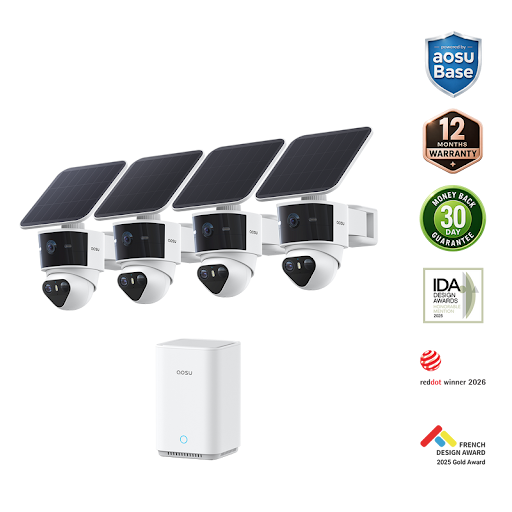
Night performance deserves particular attention for these areas since most unwanted activity around a property’s edges happens after dark. Check a camera’s infrared range against the actual distance it needs to cover, since a camera rated for close-range night vision will produce a washed-out or unusable image if mounted too far from its target area. Systems built around outdoor video surveillance cameras are designed with these longer-range, lower-light scenarios in mind, which is exactly the gap most indoor-oriented cameras can’t fill.
Keeping Coverage Reliable Through the Seasons
Outdoor cameras need periodic attention even after installation. Lenses collect dust, spiderwebs, and pollen faster outside than in, and a quick wipe every few months keeps footage sharp instead of gradually degrading without anyone noticing. Seasonal changes, like leaves falling or snow piling near a mount, can also shift a camera’s effective field of view without moving the camera itself.
AOSU users covering exposed areas often build a simple habit of checking camera angles after major weather events, which catches shifts in coverage before they turn into actual blind spots.
Building Outdoor Coverage That Lasts
Outdoor video surveillance cameras are only as good as their ability to survive the conditions they’re mounted in, which means weatherproofing and mounting position deserve as much attention as resolution or field of view. Prioritizing genuine outdoor durability, placing cameras to reduce direct exposure where possible, and keeping up with light seasonal maintenance are what separate a system that holds up for years from one that fails right when it’s needed most.
With the right hardware and a bit of attention to placement, outdoor cameras cover the exact blind spots that indoor systems can’t reach, giving a property complete coverage regardless of what the weather brings.