



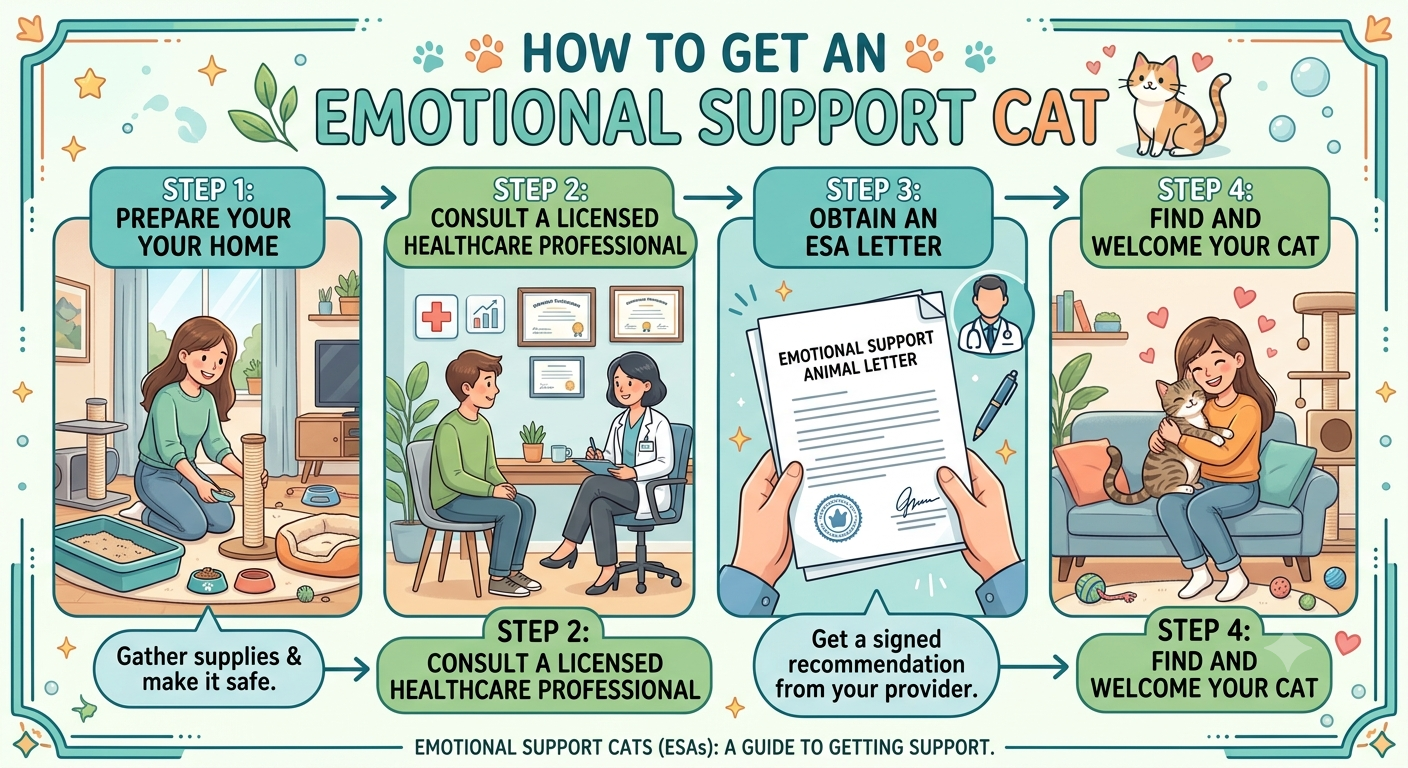
Cats are often seen as less affectionate than their canine counterparts… But any feline owner will tell you this is far from the truth.
They simply show their love for their humans in different ways: gentle purrs, soft nudges, warming your lap, and keeping a watchful eye on you. For many, these loving acts are all the more comforting and reassuring than a dog’s slobber or tail wags.
If you feel that a cat’s presence and the way they express their affection will support your well-being, then you’re at the pawfect place. Our guide below will discuss how to get an emotional support cat, step by step. We’ll also cover everything you need to know, like eligibility and the legal protections emotional support cats receive.
What Is an Emotional Support Cat
An emotional support cat is an animal that assists those with diagnosed mental health disabilities, such as depression or anxiety.
Unlike service animals that perform trained disability-specific tasks, emotional support cats provide support solely through their presence and the benefits that this brings. For instance, a cat’s constant companionship can provide security and grounding stability, while their gentle purrs can help soothe and ease anxiety.
Emotional support cats are legally recognized in the United States. They are protected under the Fair Housing Act (FHA), which entitles them to certain housing rights, such as exemption from no-pet policies in rental properties.
How to Get an Emotional Support Cat: Step-By-Step
You can’t simply claim your cat is an emotional support cat. Legal recognition, and the rights that come with it, can only occur if you have obtained a valid emotional support animal (ESA) letter. This process starts with understanding your eligibility.
1. Determine Eligibility
You can only qualify for an emotional support cat if you:
- Have been officially diagnosed by a licensed mental health care professional (LMHP)
- Your disability affects one or more areas of your life
- You have the means to give a cat the life, care, and environment they need to thrive
Even if you meet these initial requirements, the process doesn’t end there. You need to be officially prescribed an ESA as part of your treatment plan.
2. Find a Licensed Mental Health Professional
Only an LMHP who is licensed to practice in your state can prescribe an emotional support cat. They will need to carry out a careful assessment of your needs and history, known as an ESA consultation, to determine whether an emotional support cat is the right treatment for you.
If you have an established relationship with an LMHP, contact them directly to learn whether they can book you in for an ESA consultation appointment.
While many LMHPs will provide this service, this won’t always be the case, particularly if they’re not familiar with this type of treatment.
An easier (and often) quicker approach is to use a third-party ESA provider. They collaborate closely with LMHPs who know the ins and outs of the ESA process, and they can arrange everything for you through telehealth.
Be aware that in certain places, you must have at least a 30-day client-provider relationship with the LMHP before they can carry out the actual ESA consultation and prescribe you an ESA. This applies in states like California, Arkansas, and Montana. Some ESA service providers can help you build this relationship easily by scheduling weekly check-in calls before the actual appointment.
3. Have an ESA Consultation
Your ESA consultation is a chance to discuss your disability-specific needs in greater detail with the LMHP. It also allows you to explain why you feel an emotional support cat will be beneficial for your emotional well-being.
The LMHP will carefully consider the information you provide them and your medical history. They will tell you more information about how an ESA can help and the limitations involved.
4. Receive Your ESA Letter
If the LMHP feels that an ESA is a suitable treatment for you, they will issue you a document known as an ESA letter.
This letter is essentially your prescription, and it is what confirms your emotional support cat’s legal status. You can show this document to a landlord or other relevant agencies to gain any ESA-related legal protections.
You will typically need to renew this ESA letter annually to ensure it stays an accurate reflection of your needs. It’s best to schedule this in advance to prevent complications later down the line.
You can also register your ESA with US Service Animals. While not a legal requirement, registration comes with benefits, like greater peace of mind and reminders of when you should renew your ESA letter.
Summarizing How to Get an Emotional Support Cat
Getting an emotional support cat can be summarized in four key steps: Check you’re eligible, find the right LMHP, undergo an ESA consultation, and wait to receive your valid ESA letter.
However, each step does take time and can feel nerve-wracking. Familiarize yourself with state-specific ESA laws and leverage reputable ESA providers to help simplify the process. Most important of all? Advocate for yourself every step of the way.