A new box should solve a problem, not create one. Yet plenty of owners bring home a clever-looking model only to watch their cat sniff it once and walk away to a corner of the laundry room. The gap between what people find convenient and what cats accept is where most litter box purchases go wrong.
Choosing well is less about browsing features and more about reading your cat: its size, age, mobility, and habits. The room matters too, because a box that fits your bathroom perfectly may sit in a spot your cat avoids. This guide works through the decision in the order that actually matters, from the cat outward to the room, so the box you buy is one your cat uses from the first night.
Start With the Cat, Not the Box
One useful exercise is to watch your current box for a week before shopping. Note when your cat approaches, how it stands, whether it digs deeply or barely scrapes the surface, and which side it exits from. Those small observations tell you more than any product listing, because they reveal the friction points your cat already works around.
Every design choice traces back to the animal. A young, agile cat can handle almost anything; a senior with stiff hips or a kitten with short legs needs something different. Getting this first layer right prevents most problems later, because cats are creatures of habit and will keep using a box they find comfortable even as they age.
Size and Entry Style
If you are unsure between two sizes, pick the larger one. Cats grow, and even a small adult prefers extra room to dig. The only real downside of a bigger box is space and a little more litter, both of which are easier to manage than a cat that avoids a cramped tray.
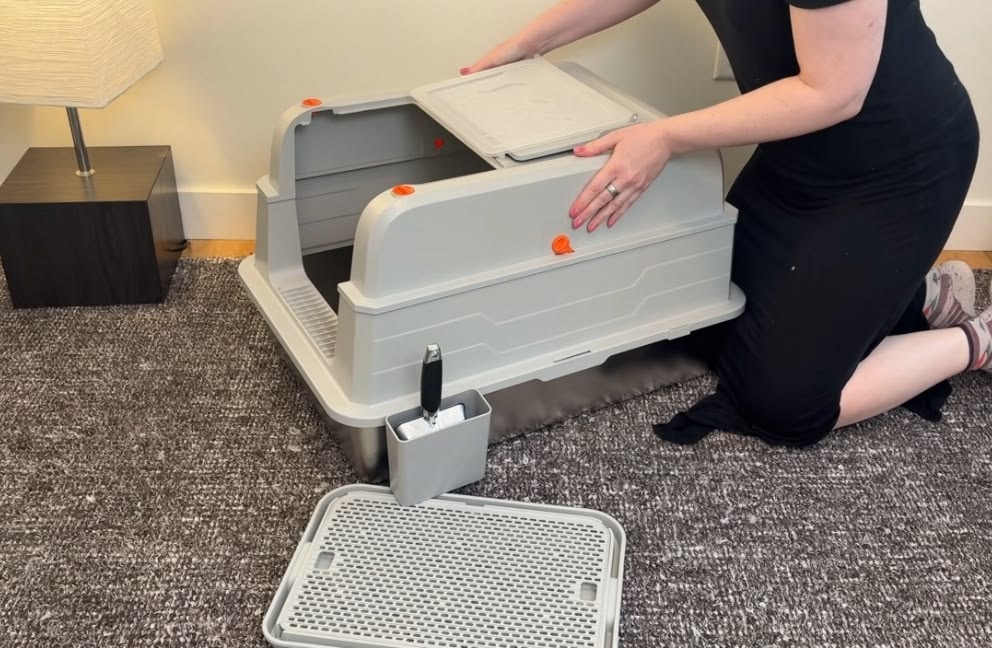
The tray should be about one and a half times the length of your cat, excluding the tail, so it can turn around without stepping in waste. Entry height matters more than most owners expect. Low-sided boxes suit kittens, seniors, and cats recovering from injury, while high sides help with enthusiastic diggers. If you choose a hooded unit, confirm the door swings easily and that a nervous cat can exit without pushing through a stiff flap, since some cats learn to avoid boxes with awkward doors.
Litter Type Compatibility
Some designs pair better with certain litters. Fine clumping clay works in deep trays and self-cleaning rakes, but it is heavy and dusty. Crystal litter needs a box with good depth and a solid base. Pellet litters like pine or paper sit best in sifting or grate-style boxes so dust falls through. Decide on litter first when possible, then pick a cat litter box built for it rather than switching litter later to fit the equipment.
Matching the Box to Your Home
Apartment dwellers face a particular squeeze. A single bathroom may be the only practical spot, so the box has to work within tight limits. In that case, prioritize height and depth over footprint: a taller box in a corner holds more litter without spreading across the floor. A hood also helps in shared spaces where guests pass through, as long as the cat still has room to turn inside.
A box that disrupts the household gets neglected by everyone, including the cat. The goal is a setup that is easy to reach, easy to clean, and out of the traffic path. Those three requirements pull in different directions, which is why placement deserves real thought before purchase.
Space and Placement
Floor surface is a detail most buyers ignore and most cats notice. A box that slides when a cat jumps in or digs hard feels unstable, and instability reads as risk. Place it on a non-slip mat or on a hard floor rather than thick carpet, and check that the base sits flat. A stable box is used more confidently, especially by older cats who rely on firm footing.
Choose a quiet spot with an escape route. Cats dislike boxes where they can be cornered, so a bathroom or spare room with two ways out works better than the end of a dead-end hallway. Keep the box away from food and water, and give it a few feet of clearance in front so your cat can approach without squeezing past a wall. In apartments, an alcove or the foot of a closet often works if you leave the door cracked; hiding the box behind a cabinet is only useful if the cat can still find it easily.
Other Pets and Children
Dogs are the most common reason people buy covered boxes, and that is a fair reason, since a hood plus a top entry keeps curious dogs out. Children who like to watch need a location that stays out of reach, which usually means raising the box or gating the room rather than relying on a lid. If you have more than one cat, plan for one box per cat plus a spare spread across different rooms, because cats often refuse to share.
Features Worth Paying For
Think about maintenance duration, not just price. A model that takes ten minutes to disassemble for a deep clean will be cleaned less often than one that comes apart in two. Ask yourself whether you can remove the lid with one hand, whether the corners are smooth enough to wipe, and whether the waste compartment is reachable without a tool. Those answers predict long-term behavior better than any specification sheet.
Not every feature earns its price. A few do. A high-quality charcoal filter on a hooded box reduces odor without perfumes that bother cats. A removable hood makes deep cleaning far less annoying, which means you will actually do it. Non-stick surfaces and rounded corners cut scrubbing time, and a wide base keeps the box from sliding when a cat digs hard.
Automatic cleaning is worth it if you travel, work long hours, or have several cats. It is not worth it if your cat is anxious or elderly, since the moving mechanism can frighten a nervous animal. The same logic applies to litter tracking mats and enclosure furniture: helpful when they solve a specific, recurring problem, and clutter when added as a guess. Brands like Meowant design around this principle, offering sealed hoods and self-cleaning trays as options rather than forcing one format on every household.
Consider where the box sits relative to your cleaning supplies. If you store soap and paper towels in the same room as the box, you are far more likely to keep it clean, because the task never requires a trip across the house. Owners often buy a box without thinking about the cleaning path, then find themselves avoiding the chore. Move supplies first, and the maintenance part of ownership becomes routine.
Skip decorative lids and built-in gadgets that are hard to clean. If a feature cannot survive a monthly wash with mild soap, it will become a source of odor rather than a solution.
A Selection Checklist to Use Before You Buy
Budget expectations matter as well, though not in the way most guides suggest. The cheapest box often costs more over time because it is replaced sooner or paired with more litter to compensate for shallow depth. A mid-range box that fits your cat properly usually outlasts an expensive model chosen for features the cat ignores. Spend on fit and ease of cleaning, and treat gadgetry as optional.
Before checkout, run through the practical points that predict whether a box will work in daily life. These are the questions experienced owners wish they had asked earlier:
- Can my cat turn around fully inside the tray?
- Can it enter and exit without a struggle, especially as it ages?
- Does the lid come off easily for cleaning?
- Is there a stable spot for it away from food and foot traffic?
- Will the litter I prefer work in this design?
Also check the return process before buying online. Litter boxes are bulky, and a model that does not fit your space is expensive to ship back. Measuring your intended spot with tape before ordering saves the hassle entirely, and it forces you to notice clearance in front of the box, which is easy to overlook on a product page.
If any answer is uncertain, size up or choose a simpler design. Simpler boxes are easier to maintain, and maintenance is what keeps a box acceptable to a cat over years, not novelty.
Choosing for the Long Term
The right box is the one your cat keeps using without prompting. That usually means a footprint big enough to turn around, an entry that stays easy with age, and a location that feels safe. Price and features matter, but only after those basics are satisfied.
If you already own a box your cat ignores, apply the checklist before shopping again. Sometimes the fix is a new location or a longer scooping habit, not a new purchase. When a replacement is justified, choose one design step up from your current setup and give your cat a week to adjust. Patient observation, not the latest gadget, is what makes a litter box choice stick.