The Endocannabinoid System: The Body’s Internal Balance Network
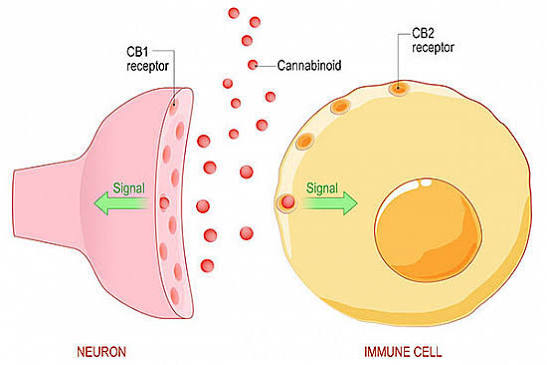
The endocannabinoid system (ECS) is one of the body’s key regulatory systems, responsible for maintaining internal balance across functions like mood, stress response, sleep, appetite, memory, and immune activity. It operates through a network of receptors, mainly CB1 receptors found in the brain and central nervous system, and CB2 receptors located more broadly in immune cells and peripheral tissues.
The body naturally produces its own signaling molecules called endocannabinoids, which bind to these receptors to help regulate internal stability in response to changes inside and outside the body. When the ECS is functioning well, it supports a steady internal state often described as homeostasis. When it becomes dysregulated or overstimulated, people may experience symptoms such as anxiety, poor sleep, inflammation, or mood instability.
CBD and THC interact with this system in very different ways, which is why their effects can feel so distinct even though both come from cannabis.
How THC Interacts with the Endocannabinoid System
THC, or tetrahydrocannabinol, is the primary psychoactive compound in cannabis. It interacts directly with CB1 receptors in the brain, which are closely involved in mood, perception, memory, and coordination. When THC binds to these receptors, it mimics natural endocannabinoids but produces a stronger and longer-lasting activation.
This direct interaction is what creates the characteristic “high.” It can alter sensory perception, increase dopamine activity, and shift emotional processing. For some users, this results in relaxation, euphoria, or heightened sensory awareness. For others, especially at higher doses or in sensitive individuals, it may lead to anxiety, paranoia, or cognitive disruption.
THC effects are highly dose-dependent. Low doses may support relaxation and stress relief, while higher doses can overwhelm CB1 receptor activity, leading to impaired coordination, reduced short-term memory, and emotional overstimulation. Over time, repeated THC exposure can also cause CB1 receptor downregulation, which contributes to tolerance and reduced sensitivity.
How CBD Interacts with the Endocannabinoid System
CBD, or cannabidiol, works in a more indirect and complex way. Unlike THC, it does not strongly bind to CB1 or CB2 receptors. Instead, it influences the ECS by modulating receptor activity and interacting with other biological signaling systems.
One of CBD’s key roles is its effect on the breakdown of endocannabinoids. It can slow the breakdown of anandamide, a naturally occurring compound sometimes called the “bliss molecule,” allowing it to remain active in the body for longer. This may contribute to a calmer, more balanced internal state without producing intoxication.
CBD also interacts with non-cannabinoid receptors, including serotonin receptors, which are involved in mood regulation and stress response. This broader activity is why CBD is often associated with reduced anxiety, emotional stability, and a sense of calm rather than a psychoactive “high.”
The Entourage Effect: How CBD and THC Work Together
When CBD and THC are consumed together, their interaction creates what is known as the entourage effect. This describes how multiple cannabis compounds work synergistically to influence the overall experience.
CBD can moderate THC’s impact on CB1 receptors, which may reduce some of its more intense effects such as anxiety or mental overstimulation. This often results in a smoother and more balanced experience compared to high-THC products alone. At the same time, THC can enhance the overall activity of the ECS in a way that may amplify certain relaxing or mood-related effects when combined with CBD.
The ratio between CBD and THC is crucial. A THC-heavy formulation may feel intense or overwhelming, while a CBD-heavy one may feel subtle and non-intoxicating. Balanced ratios tend to produce more moderated and predictable effects.
This is one reason some wellness-focused consumers prefer more transparent, balanced formulations from providers like Got Flower, where cannabinoid profiles are clearly structured rather than left vague or inconsistent.
Why Individual Responses to CBD and THC Vary So Much
One of the most challenging aspects of cannabis use is how differently people respond to the same compounds. This variability comes from differences in ECS sensitivity, receptor density, metabolism, and prior cannabis exposure.
Some individuals have a more sensitive CB1 receptor system, making them more reactive to THC even at low doses. Others may require higher amounts to feel noticeable effects. CBD responses also vary depending on baseline anxiety levels, stress load, and overall nervous system balance.
Lifestyle factors such as sleep quality, diet, and chronic stress further influence ECS function. A more dysregulated system may react more strongly or unpredictably to cannabinoids, while a balanced system tends to produce more stable and subtle effects.
Tolerance and ECS Adaptation Over Time
With repeated THC exposure, the ECS adapts by reducing CB1 receptor sensitivity. This protective mechanism prevents overstimulation but also leads to tolerance. As a result, users often need higher doses to achieve the same effects, which can make the experience less predictable over time.
CBD does not appear to produce tolerance in the same way, although long-term research is still developing. Many users report that CBD’s calming effects remain relatively consistent, particularly when used in moderate doses.
This difference in tolerance behavior is one reason some users incorporate CBD into their routine alongside THC or use it as a primary cannabinoid for long-term wellness support.
Practical Implications for Everyday Cannabis Use
Understanding how CBD and THC interact with the endocannabinoid system helps explain why cannabis effects vary so widely and why intentional use matters. It is not simply about choosing a stronger or weaker product, but about selecting a cannabinoid profile that aligns with how an individual ECS responds.
For example, CBD-dominant products are often preferred by users seeking relaxation without intoxication, as they support ECS balance without strong CB1 activation. THC-dominant products are more commonly used by those seeking noticeable psychoactive effects, often with careful dosing to manage intensity.
Balanced CBD:THC formulations are often chosen for situations where both relaxation and functional clarity are desired, as they produce more moderated ECS activity and a more predictable experience.
The Bottom Line on CBD, THC, and the ECS
The endocannabinoid system plays a central role in regulating balance throughout the body, and both CBD and THC influence it in distinct but interconnected ways. THC directly activates CB1 receptors, producing psychoactive effects, while CBD works indirectly by modulating receptor activity and supporting broader regulatory systems.
Their interaction creates a wide spectrum of effects shaped by dosage, ratio, and individual biology. Rather than acting as simple on-or-off compounds, they influence how the body responds to stress, mood changes, and internal regulation over time.
For users, understanding this system provides a clearer foundation for making informed choices and setting realistic expectations about cannabis effects.
FAQ
What is the endocannabinoid system?
It is a biological system that helps regulate mood, sleep, appetite, stress, and immune function through cannabinoid receptors and natural signaling molecules.
How does THC affect the endocannabinoid system?
THC binds directly to CB1 receptors in the brain, producing psychoactive effects such as altered perception, relaxation, and euphoria.
How does CBD affect the endocannabinoid system?
CBD works indirectly by influencing receptor activity and slowing the breakdown of natural endocannabinoids, supporting balance without intoxication.
Why do CBD and THC feel different?
THC activates receptors directly, while CBD modulates the system more subtly and interacts with additional pathways such as serotonin signaling.
What is the entourage effect?
It is the synergistic interaction of cannabinoids like CBD and THC working together to create a more balanced and nuanced overall effect.