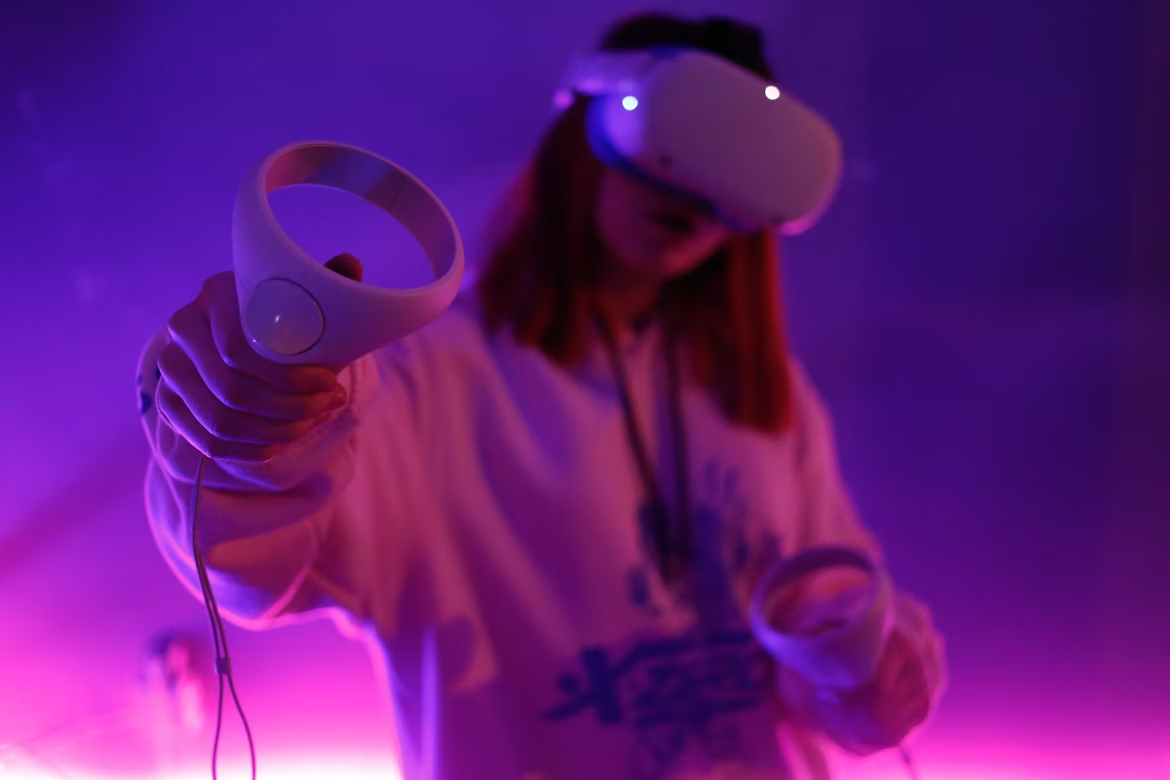
Strap a visor in 2030, and a half-court could fill the living room carpet with cheering avatars. That picture still feels futuristic, yet research labs, studios, and leagues already test early prototypes that blend real sweat with virtual stadiums. The transformation moves steadily as hardware grows lighter, engines render cleaner, and broadband erases most delay. Even the short routine of performing a cricket match betting before warming up inside a three-dimensional practice cage hints at habits soon as common as tying laces or inflating a ball.
Why Full Immersion Matters Beyond Novelty
Traditional sports titles rely on thumb pressure and television angles to mimic match tension. Virtual reality drops the participant onto the pitch at life scale. Depth cues arrive naturally, ambient noise wraps around the head, and muscle memory, not button memory decides success. Augmented reality walks a parallel road. Smart glasses project data on real turf, turning a weekend kick-about into a coached session with floating passing lines and shot maps. The payoff is intuitive learning and a sense of agency missing from flat screens.
Crowds notice. A neighbour catches sight of digital arrows slicing across the grass; curiosity sparks conversation, then a try-on, then a purchase. Word of mouth, once limited to pubs or forums, now spreads as soon as someone walks through a park wearing translucent lenses.
First Wave Gains for Everyday Users
- Natural Motion Input
Kicks, swings, and jumps replace button combos. Younger participants enter easily, and experienced gamers meet a deeper skill ceiling. - Instant Spatial Feedback
Holographic defenders show gaps the moment they open, reducing the long feedback loop common in regular drills. - Highlight Rewinding
Play can pause and shift to any angle mid-session, letting mistakes shrink faster than during video review hours later. - Flexible Play Areas
Driveways, basements, or school gyms become regulation courts through mixed-reality boundaries that appear and vanish at will.
From Solo Training to Global Arenas
Immersive sport refuses to stay private. Cloud servers already host synchronised VR races, and prototype AR leagues plan city-wide treasure hunts mixed with five-a-side football skills. Spectatorship follows. A headset user sitting in the cheap seats may toggle into “player cam” for corners, while the friend on a couch keeps classic broadcast view. The same match holds multiple angles, each tuned to taste.
Publishers smell opportunity. Microtransactions shift from cosmetic jerseys to experiential layers: retro scoreboards, fireworks above the crossbar, mascot drones buzzing midfield. The line between ticket sales and downloadable content blurs.
Investment Hotspots Fueling Momentum
- Affordable Sensor Suits
Compression sleeves with inertial units track limb speed for a fraction of today’s lab rigs. - Cross-Device Matchmaking
Headset, console, and phone users enter one queue, keeping friends together despite hardware gaps. - Open Dev Toolkits
Indie teams gain stadium scans, physics modules, and crowd AI at low cost, widening genre diversity. - Shared Revenue Licenses
Clubs earn a slice of virtual kit sales, aligning success in pixels with revenue at turnstiles.
Roadblocks That Still Need Repair
Motion sickness lingers for a slice of players, especially during sudden camera pans. Regulatory bodies debate whether tall athletes gain unfair reach in VR basketball or if avatars must follow a universal template. Sweat management turns into engineering homework; lenses fog when heart rates climb, and haptic vests must survive washing machines.
Bandwidth remains the biggest constraint. A hundred simultaneous users inside one augmented field push current 5G cells to the limit. Edge-computing nodes appear in urban pilot zones, but suburban parks still drop frames when everyone swings for a serve.
Long-Term Cultural Upside
When television debuted, commentators worried crowds would abandon stadiums. Instead, appetite multiplied. Immersive tech looks set to repeat the pattern. A junior midfielder practises flicks against virtual markers after school, then drags parents to a live match to compare technique. Grandpa, limited by bad knees, joins the pre-game rondo via headset and chats in the same lobby. Community layers grow thicker, not thinner.
Second list now, spaced well from the first.
Social Shifts Expected in the Next Decade
- Inclusive Coaching
Adaptive overlays adjust for wheelchair users, allowing mixed-ability squads without separate rules. - Eco-Friendly Facilities
Empty malls convert into climate-controlled holo-courts, reducing land pressure for new builds. - Custom Fan Roles
Spectators in headsets vote on stadium lighting themes or halftime challenges, turning passive viewing into co-creation. - Continuous Season Arcs
Club narratives stretch from weekend fixtures to nightly VR scrimmages, filling the calendar without overloading real athletes.
A Future Ready to Tip
History shows that once deeper presence enters mainstream hands, stepping back feels dull. Black-and-white sets surrendered to colour, colour to high definition. In the same arc, flat gamepads will coexist with full-body tracking yet gradually cede prime time. VR and AR deliver agency, discovery, and community in one package. Obstacles remain, but every prototype solved pushes adoption further, and each school that installs mixed-reality gear breeds the next wave of curious players.
By the time current trainees coach youth sides, logging in for a virtual warm-up could equal strapping shin pads. Sports gaming will not erase mud and grass; rather, the headset will rest on the same shelf as boots, both essential for a modern season.