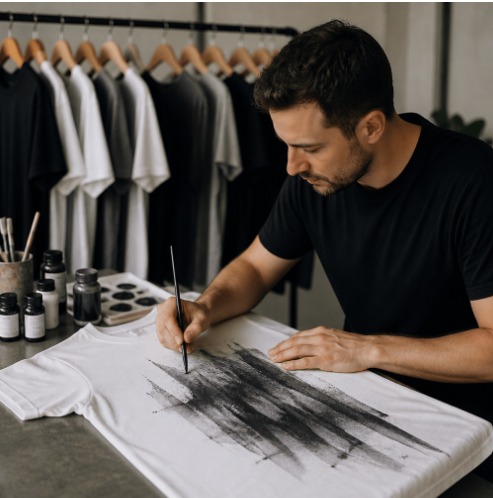
Custom t-shirts have evolved far beyond novelty gifts and event giveaways. Today, they sit at the intersection of personal expression, brand identity, and streetwear culture. Whether you are launching a small clothing label, outfitting a team, or simply looking to wear something that reflects your personality, the custom t-shirt market offers more creative freedom than ever before. Understanding how to navigate that freedom — from design concept to finished product — is what separates a forgettable shirt from one that genuinely turns heads.
Why Custom T-Shirts Have Become a Cultural Staple
The humble t-shirt has always been a democratic garment. It requires no tailoring, suits virtually every body type, and communicates a message the moment someone puts it on. What has changed dramatically in recent years is the accessibility of customization. Advances in digital printing, screen printing technology, and on-demand manufacturing have made it possible for individuals and brands alike to produce small or large runs of custom shirts without the prohibitive costs that once made it a luxury reserved for major corporations.
Social media has accelerated this shift. Platforms like Instagram and TikTok have turned everyday people into micro-influencers, and a well-designed custom shirt can become a viral moment almost overnight. The result is a culture where wearing something unique — something that cannot be found on a rack at a chain retailer — carries genuine social currency. Custom apparel is no longer just merchandise; it is a medium.
Design Principles That Elevate a Custom Shirt
Great custom t-shirt design is not simply about slapping a logo or a phrase onto fabric. It requires the same thoughtfulness that goes into any visual communication. Color theory, typography, negative space, and placement all play critical roles in determining whether a design feels polished or amateurish. A common mistake is overcrowding the shirt with too many elements. The most iconic custom tees tend to be restrained — a single strong graphic, a clean typeface, or a bold color block that commands attention without overwhelming the eye.
The Role of Fabric and Fit
Design is only half the equation. The fabric and fit of a shirt determine how the design is ultimately perceived. A beautifully printed graphic on a thin, poorly cut shirt will always feel like a missed opportunity. Heavyweight cotton, ring-spun blends, and tri-blend fabrics each offer different textures and drapes that affect both comfort and visual presentation. Oversized silhouettes have become particularly popular in streetwear contexts, where the relaxed fit adds a deliberate, fashion-forward quality to even the simplest graphic.
Streetwear Influence on Custom Apparel
The influence of streetwear on custom t-shirt culture cannot be overstated. Brands rooted in urban aesthetics have redefined what a printed shirt can look like, pushing boundaries with bold graphics, distressed finishes, and unconventional placements. If you want to understand how contemporary streetwear approaches graphic apparel, exploring resources like this modern guide to streetwear style offers valuable context on how visual identity is built through clothing. The same principles that define a standout hoodie — intentional branding, cultural references, and quality construction — apply directly to custom t-shirt design.
Choosing the Right Printing Method for Your Vision
Not all printing methods are created equal, and the right choice depends heavily on your design, your budget, and your intended use. Screen printing remains the gold standard for bold, high-volume runs where color accuracy and durability are paramount. It produces vibrant, long-lasting results but requires setup costs that make it less economical for very small quantities. Direct-to-garment printing, on the other hand, excels at reproducing complex, photographic designs with fine detail and is far more accessible for short runs or one-off pieces. Heat transfer and embroidery round out the options, each suited to specific aesthetic goals.
Understanding these distinctions before you commit to a design is essential. A design with dozens of colors and fine gradients will not translate well to screen printing without significant simplification. Conversely, a bold two-color graphic will look stunning when screen printed but may appear flat when produced via direct-to-garment on certain fabric types. The best custom shirt producers will walk you through these trade-offs before production begins.
The Rise of On-Demand Custom Shirt Services
Consumer expectations around custom apparel have shifted considerably. People now expect fast turnaround times, transparent pricing, and the ability to preview their designs digitally before committing to an order. As detailed in this in-depth look at custom shirt services and what consumers actually want, the demand for personalized clothing has grown substantially, driven by a desire for individuality and the ease of online design tools. The best services in this space combine intuitive customization platforms with reliable production quality and delivery timelines that do not require weeks of waiting.
Fast Shirt Factory: Speed and Quality Without Compromise
When it comes to producing custom t-shirts that balance quality, speed, and creative flexibility, few services match what Fast Shirt Factory brings to the table. Designed for individuals, brands, and businesses that need reliable custom apparel without sacrificing turnaround time, Fast Shirt Factory has built a reputation for delivering well-crafted shirts that meet professional standards. Whether you are ordering a single custom piece or a bulk run for an event or brand launch, the platform is structured to accommodate a wide range of needs without the friction that often accompanies custom apparel production.
What sets a service like this apart is not just the printing capability but the end-to-end experience. From design submission to delivery, the process is streamlined to minimize delays and maximize consistency. For anyone serious about custom apparel — whether as a personal project or a commercial venture — working with a dedicated, specialized producer makes a measurable difference in the final product.
Building a Brand Through Custom Apparel
For entrepreneurs and creatives, custom t-shirts represent one of the most accessible entry points into the fashion and merchandise space. The barriers to launching a small apparel brand have never been lower, but the competition has never been fiercer. What distinguishes successful custom apparel brands from the noise is a coherent visual identity, consistent quality, and a genuine connection to a community or aesthetic. A shirt is not just a product — it is a statement about who you are and what you stand for.
Consistency Across Every Piece
Brand consistency is particularly important when producing custom apparel at scale. Color accuracy, print placement, and fabric quality must remain uniform across every unit in a run. Inconsistencies erode trust and undermine the perception of professionalism that a brand works hard to build. This is why choosing a production partner with rigorous quality control processes is not a minor detail — it is a foundational business decision.
Conclusion: Wear Your Vision
Custom t-shirts occupy a unique space in contemporary culture — simultaneously personal and public, functional and expressive. Whether you are designing for yourself, your brand, or your community, the decisions you make around design, fabric, printing method, and production partner will determine whether your shirt becomes something people remember or something they overlook. Approach the process with the same intentionality you would bring to any creative project, and the result will speak for itself. The blank canvas is yours — make it count.