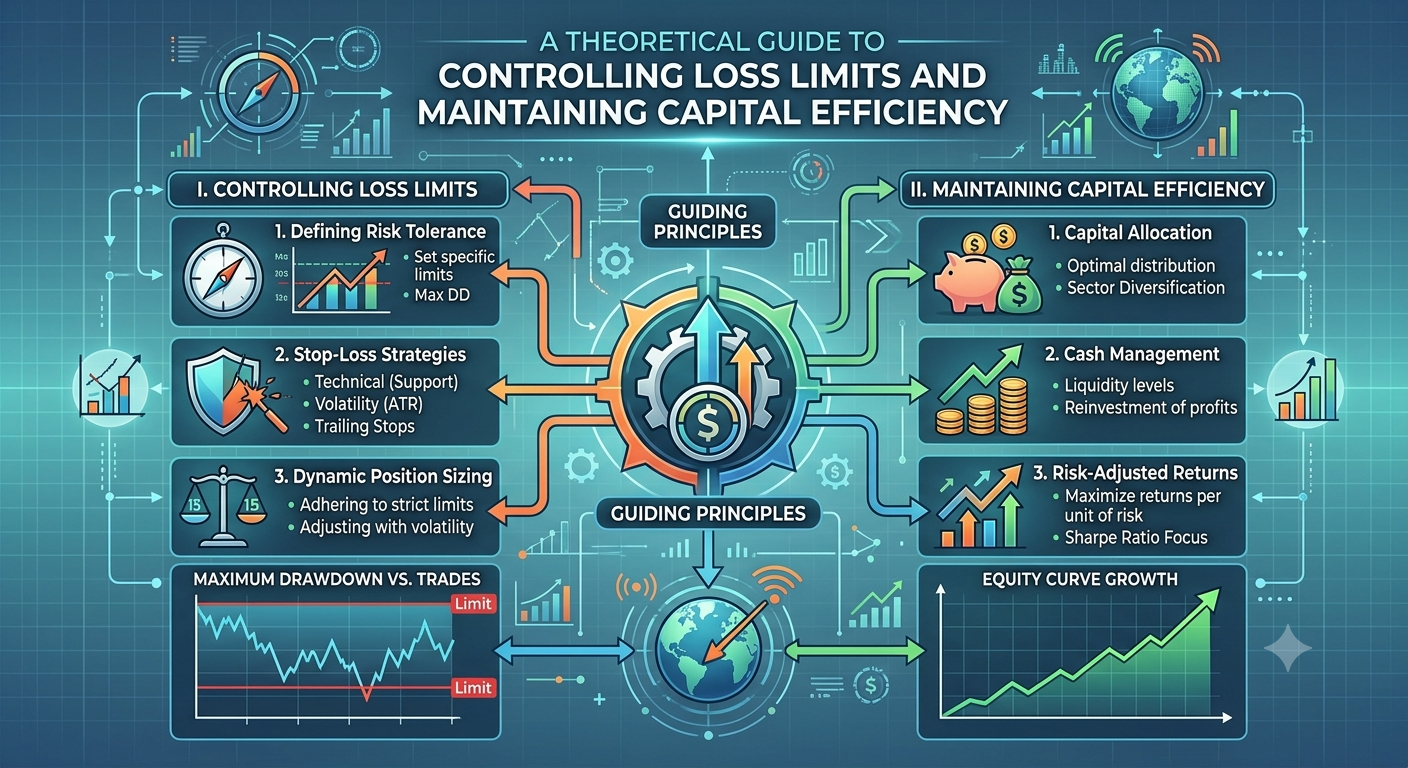
Effective capital management is one of the most important foundations of rational decision-making in any activity involving uncertainty. Whether the objective is entertainment, financial planning, or strategic analysis, preserving available resources should always take precedence over chasing short-term outcomes. A disciplined approach allows individuals to remain objective while minimizing unnecessary financial pressure and maintaining long-term sustainability.
The first principle of efficient capital management is establishing a clear loss limit before any activity begins. This predefined limit represents the maximum amount of money that can be used during a single session or within a specific period. Once the limit has been reached, the activity should end without exception. Following this rule reduces emotional decision-making and prevents temporary setbacks from escalating into significant financial losses.
Another essential concept is dividing available capital into multiple smaller allocations rather than committing everything at once. This structured method provides greater flexibility, allowing participants to evaluate performance over time without exposing their entire budget to unnecessary risk. Smaller allocations also encourage patience, making it easier to remain consistent even when outcomes vary from one session to another.
Consistency is equally important when determining participation levels. Frequently changing allocation sizes based on recent results often leads to impulsive decisions instead of logical ones. Maintaining a stable approach makes it easier to measure long-term performance and determine whether a strategy remains effective. This theoretical framework promotes disciplined behavior rather than emotionally driven adjustments.
Many people also explore different entertainment formats that vary in participation levels, including Slot Bet 100. Regardless of the selected option, the fundamental principle should always remain unchanged: every decision must fit within a predetermined budget. Financial limits should never be adjusted simply because a particular format appears more attractive or offers a different style of play.
Psychological discipline plays a significant role in protecting capital. Emotional responses such as frustration, excitement, or overconfidence often influence financial decisions more than objective reasoning. Individuals who establish clear rules before participating are generally better equipped to resist impulsive behavior. This ability to remain consistent during both favorable and unfavorable periods contributes significantly to long-term financial stability.
Keeping accurate records is another valuable practice for improving capital efficiency. Recording session budgets, spending patterns, and overall outcomes provides meaningful information that supports future decision-making. Instead of relying on memory, documented data helps identify recurring habits, evaluate strategies objectively, and recognize opportunities for improvement. Over time, these observations create a stronger foundation for responsible financial management.
An additional theoretical principle involves understanding variance. Short-term outcomes rarely provide an accurate representation of the effectiveness of a financial strategy because random fluctuations are unavoidable. Evaluating performance over an extended period offers a more realistic perspective while reducing the temptation to make unnecessary changes after isolated results. Patience and consistency are therefore essential components of sustainable capital management.
Toward the end of any evaluation process, participants may compare different participation preferences, including Slot Bet 200, to determine which approach aligns better with their financial objectives. However, the choice of format should never replace sound budgeting practices. The effectiveness of a strategy depends on disciplined execution, controlled exposure, and adherence to predefined financial boundaries rather than the size or style of participation itself.
In conclusion, controlling loss limits and maintaining capital efficiency are theoretical concepts that emphasize responsible financial behavior above all else. Setting clear spending boundaries, dividing capital into manageable allocations, maintaining emotional discipline, documenting performance, and evaluating results over time all contribute to better decision-making. While uncertainty is an unavoidable part of many activities, individuals who consistently follow these principles are more likely to preserve their resources and make balanced, informed decisions that support long-term financial stability.