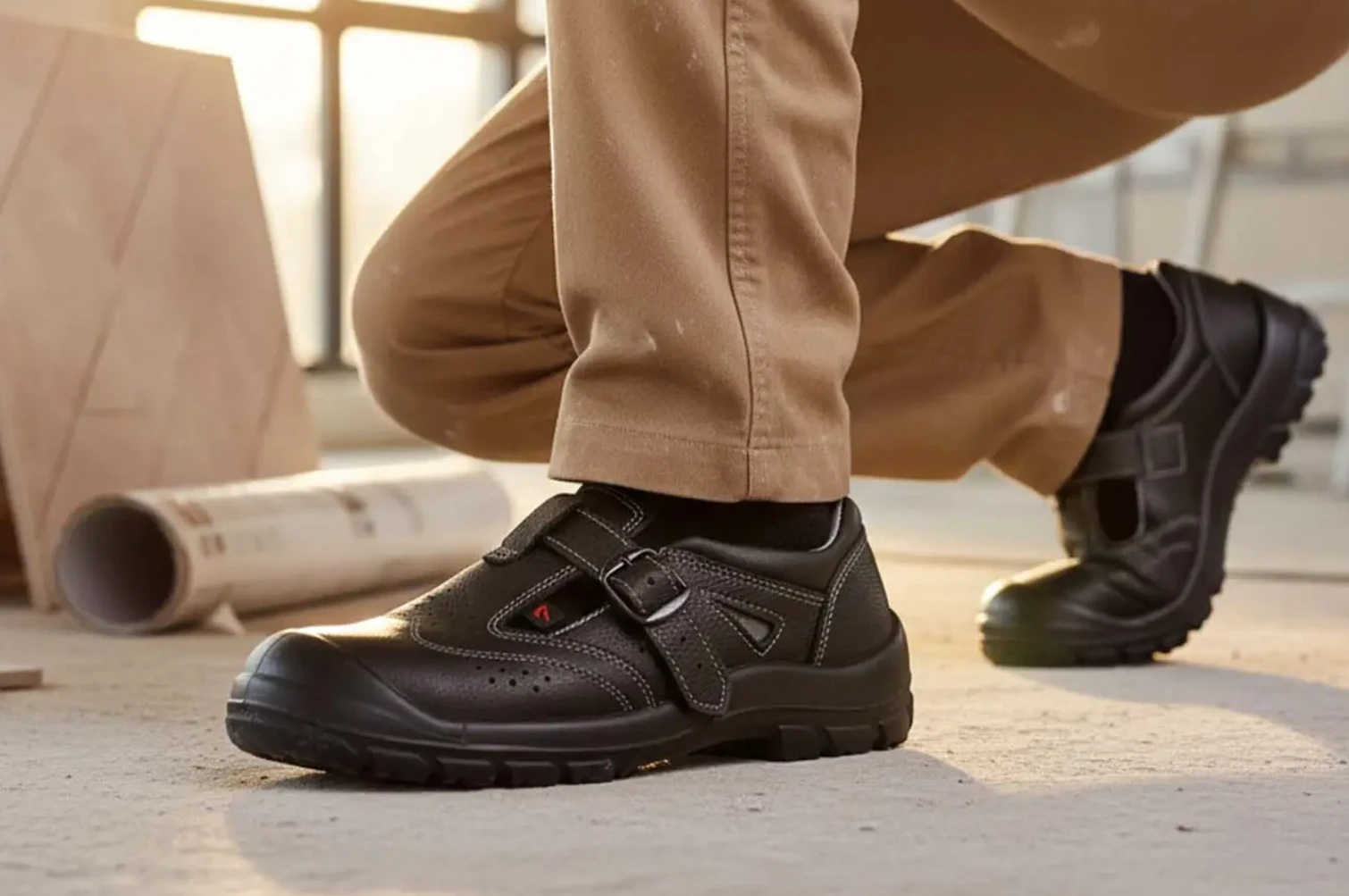
Work footwear in the UAE is put through its paces on a daily basis. High humidity, fine sand, chemically active construction site dirt and the scorching sun can reduce its lifespan several times faster than in a temperate climate. At the same time, proper care affects more than just the appearance of safety footwear. The protective properties of the footwear, slip resistance, the condition of the leather and foot comfort during long shifts all depend directly on it. Following a few simple rules helps to significantly extend the lifespan of safety shoes and maintain its performance characteristics throughout many months of intensive use.
Tip 1. Make sure to regularly remove sand and building dust from your shoes
In the Gulf countries, sand is the main cause of wear and tear on work boots. Fine abrasive particles constantly get into the seams, creases in the leather and areas where the boot bends. Over time, they act like sandpaper, gradually breaking down the structure of the materials. To prevent premature wear:
- Clean your shoes with a dry brush after every shift.
- Pay particular attention to seams and hard-to-reach areas.
- Do not allow construction dust to build up over a long period.
- If necessary, finish cleaning with a slightly damp cloth.
One of the most important principles when learning how to clean safety shoes in the UAE is to remove dust, sand, and construction debris immediately after work, before they become embedded in the material. This approach is recommended by leading safety footwear manufacturers, including TALAN talansafetyshoes.com, because regular cleaning helps preserve the strength of the materials, maintain the professional appearance of the boots, and protect their safety performance throughout their service life.
Tip 2. Keep the insoles and the inside of your safety shoes clean
In the UAE climate, feet produce significantly more moisture than in most other parts of the world. If this moisture remains inside footwear every day, it leads to unpleasant odours, bacterial growth and accelerated wear and tear of the inner materials. For this reason, safety footwear manufacturers recommend:
- Remove the insoles every night.
- Dry them separately from your shoes.
- Clean regularly to remove salt deposits.
- Hand wash occasionally at a temperature of up to 30°C.
Modern anatomical solutions, such as Vildona, are highly effective at managing moisture. These insoles actively absorb moisture throughout the working day, helping to maintain comfort even during long shifts. However, the technology cannot work effectively without regular airing.
Tip 3. Never dry your shoes in direct sunlight
After a hard shift, workers often make the same mistake: they leave their shoes out in the sun to dry. It seems like a logical solution. In practice, however, the consequences can be rather unpleasant. When exposed to extreme temperatures:
- The skin becomes dry and loses its elasticity.
- Micro-cracks begin to appear.
- The water-repellent properties of the materials are diminishing.
- The polyurethane sole is ageing more quickly.
Slow, natural drying helps to preserve both the appearance and the protective properties of the shoes.
Tip 4. Keep your skin in good condition
High-quality leather with a thickness of 2.0–2.2 mm is highly durable, but even this requires regular care. To maintain its performance, we recommend:
- Use special skin creams.
- Apply protective wax from time to time.
- Avoid using harsh detergents.
- Maintain the material’s natural elasticity.
Leather types such as strongProtection or CrazyHorse can retain their properties for years if they are regularly moisturised. With proper care, the material remains both durable and water-repellent.
Tip 5. Check the condition of the sole and tread
Even the most reliable safety footwear requires regular inspection of the soles. It is recommended that you check the following at least once a week:
- Presence of lodged stones.
- Traces of oil and other fluids.
- Degree of tread wear.
- The condition of the bond between the sole and the upper.
A worn tread reduces SRC slip resistance and increases the risk of slipping on wet or dirty surfaces.
Simple tips to extend the life of your safety footwear
| Action | How to do it properly | What not to do |
| Cleaning the upper part | A dry brush and a damp cloth | Washing leather shoes in the washing machine |
| Caring for insoles | Remove every night; wash at up to 30°C | Dry on a radiator or in direct sunlight |
| Drying shoes | In a cool, well-ventilated room | Use a hairdryer or leave it out in the blazing sun |
Proper care starts with the right work shoes
Just a few minutes of daily care can significantly extend the life of your work boots. Boots that are clean, properly dried and maintained regularly retain their protective properties for longer, provide a secure grip on the ground and remain comfortable even after many months of heavy use.
The difference is particularly noticeable when using models designed specifically for hot and dusty climates. TALAN products, available through the official distributor Verona Shoes FZE in Sharjah, feature a moisture-wicking airSurf Fabric lining, advanced Vildona insoles and durable PU Tek materials.