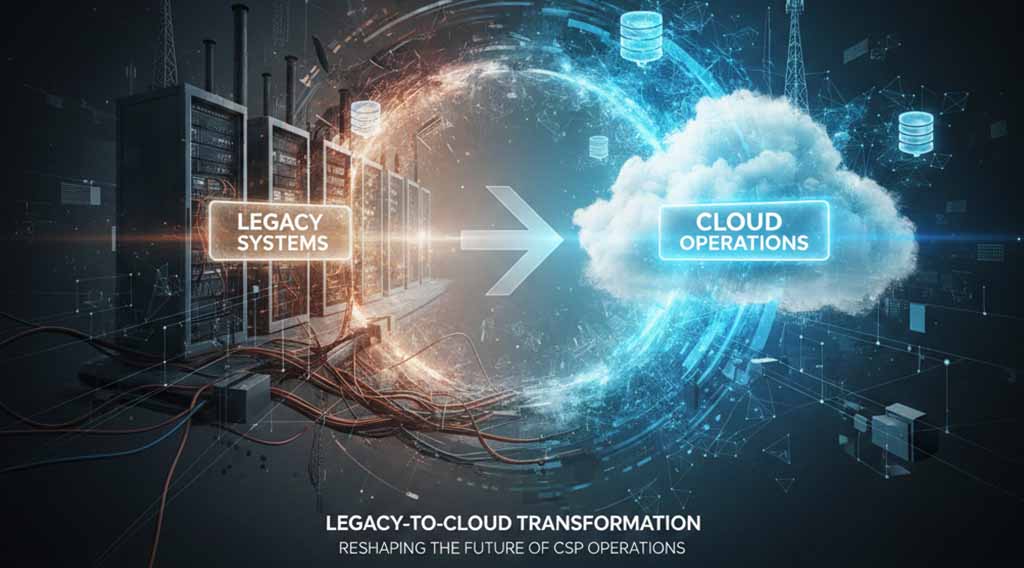
Communications Service Providers are facing a turning point. Rapid growth in data usage, customer demand for seamless digital experiences, and the rise of technologies like 5G and AI have exposed the limitations of traditional telecom infrastructure. Companies such as Zinkworks, which work closely with CSPs on legacy-to-cloud transformation strategies, highlight how deeply these outdated systems can restrict innovation and operational agility. Many CSPs still rely on legacy operational and support systems that were built for a different era. These systems, while once reliable, now slow down progress and increase operational complexity.
The Challenge of Legacy Environments in Telecom
Fragmented Systems and Data Silos
Legacy telecom environments are often made up of multiple standalone systems that were added over time. Each system handles a specific function, such as billing, network management, or customer support. While these systems may work independently, they rarely communicate efficiently with one another.
This creates data silos that prevent CSPs from having a single, unified view of their operations. As a result, troubleshooting issues, analysing performance, or launching new services becomes slower and more complicated.
High Maintenance and Limited Flexibility
Older systems demand constant maintenance. They often require specialised knowledge, manual processes, and costly infrastructure. Making even small changes can be time-consuming, which limits a CSP’s ability to adapt to new market demands.
When agility is essential, rigid systems become a serious obstacle.
What Cloud Migration Brings to CSPs
Scalability on Demand
Cloud platforms allow CSPs to scale resources up or down depending on network load and service requirements. This flexibility is especially important in telecom, where usage patterns can change rapidly due to events, seasons, or market growth.
Centralised and Actionable Data
A cloud-based environment allows data from different systems to be integrated into a single platform. This centralisation enables better analytics, faster insights, and improved decision-making across departments.
Faster Innovation Cycles
Cloud-native architectures support modern development practices. New features, services, and improvements can be deployed more quickly without disrupting existing operations. This speed gives CSPs a competitive advantage.
Readiness for Automation and AI
Artificial intelligence, predictive maintenance, and automated network management rely on scalable, data-rich environments. Cloud infrastructure provides the foundation needed to implement these advanced capabilities.
A Practical Path from Legacy to Cloud
Modernisation is rarely a one-step process. Most CSPs follow a phased approach that reduces risk while delivering incremental value.
Phase 1: Initial Migration
In the early stage, selected applications are moved to the cloud with minimal changes. This helps teams understand how their systems behave in the new environment while maintaining continuity.
Phase 2: Re-Architecting for Cloud Native
Once applications are stable in the cloud, they are redesigned to take full advantage of cloud features. This may involve breaking monolithic systems into microservices, introducing containerisation, and enabling automated scaling.
Phase 3: Integration and Optimisation
The final phase focuses on consolidating systems, removing redundancies, and improving overall performance. At this stage, CSPs begin to see the full benefits of agility, efficiency, and innovation.
The Operational Impact on CSPs
Improved Efficiency
Automation reduces manual tasks and operational errors. Teams can focus on strategic initiatives instead of routine maintenance.
Better Customer Experience
With unified data and faster systems, CSPs can resolve issues more quickly and introduce new services that enhance the customer journey.
Cost Optimisation
Reducing reliance on outdated infrastructure lowers operational costs. Cloud platforms also eliminate the need for large upfront hardware investments.
Future-Proofing the Network
As telecom continues to evolve, CSPs that adopt cloud-native operations are better positioned to integrate emerging technologies and adapt to industry changes.
Why This Transformation Matters Now
The telecom landscape is changing faster than ever. Competition from digital-first providers, increasing user expectations, and the expansion of connected devices all demand greater flexibility and innovation. CSPs that remain tied to legacy environments risk falling behind.
Cloud transformation provides a way forward. It offers a foundation for smarter networks, faster services, and more efficient operations. More importantly, it allows CSPs to shift from reactive problem-solving to proactive innovation.
Conclusion
The transition from legacy systems to cloud-native platforms is not just a technical upgrade. It is a strategic transformation that reshapes how Communications Service Providers operate, compete, and grow. By modernising their environments, CSPs gain the agility, insight, and scalability needed to thrive in a digital-first world.
As telecom continues to evolve, those who embrace the legacy-to-cloud journey will be best equipped to lead the future of connected services.