Modern businesses use data not only to measure performance, but to shape decisions, distribute resources, and judge change with greater assurance. Yet data rarely appears in a form ready for direct use. It is often scattered across systems, inconsistent in format, and influenced more by operational demands than analytical needs. That is why the question ‘What is ETL?’ still carries weight in enterprise contexts.
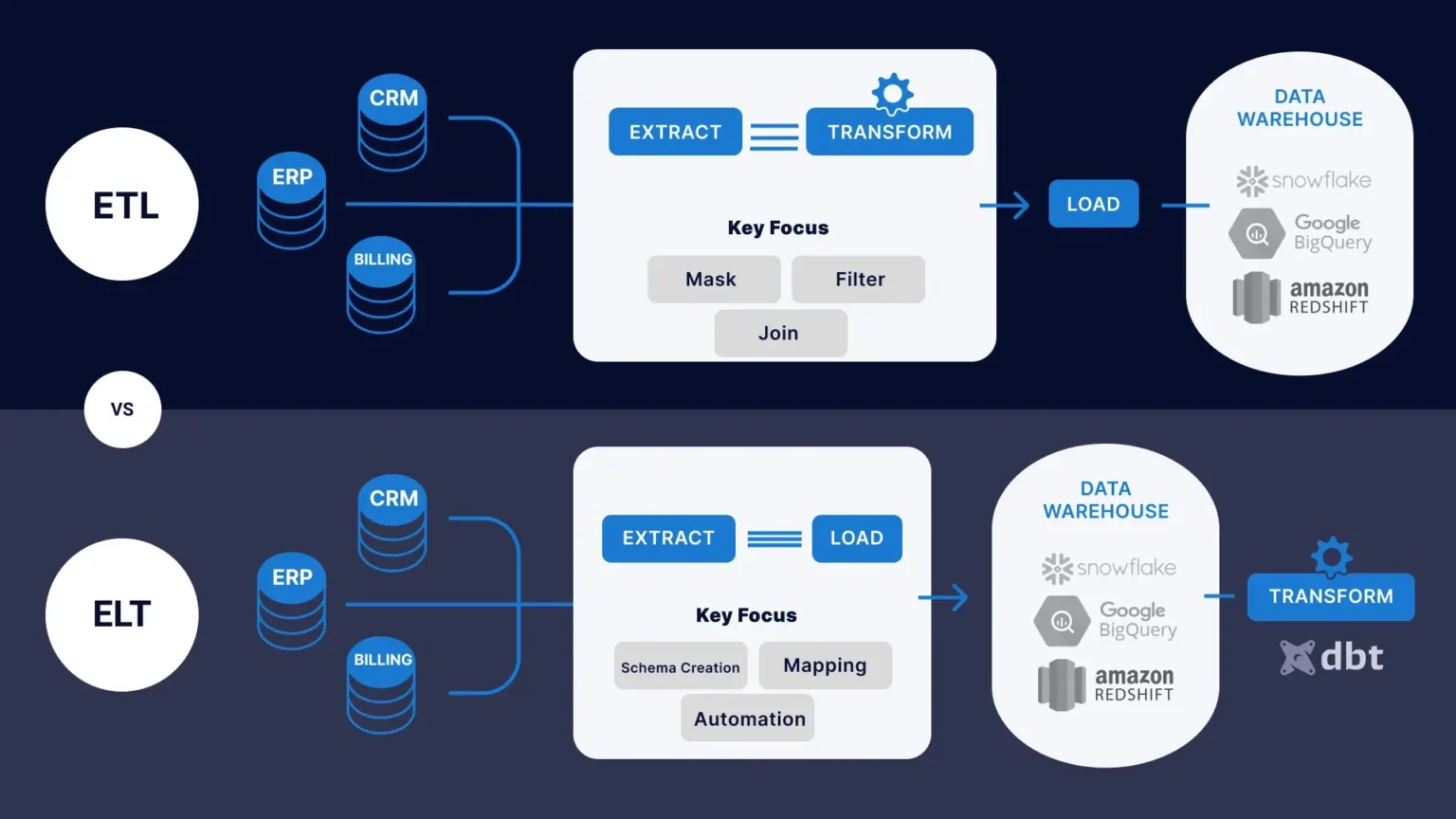
ETL stands for extract, transform, and load. It is the process of gathering data from source systems, refining that data into a more usable form, and loading it into a destination where it can support reporting, analytics, or broader business intelligence. The concept is straightforward, but its significance is much greater than the definition suggests. ETL brings order, consistency, and traceability to information that would otherwise remain difficult to trust.
Why ETL Still Matters in Modern Business Environments
The relevance of ETL has not diminished simply because data platforms have become more advanced. If anything, the growth of enterprise data has made structured integration more important. Most organizations operate across multiple applications, databases, and digital systems, each designed for a different function. Sales tools, finance platforms, CRM systems, and operational applications do not usually speak the same language.
This creates a practical problem. A customer record may appear differently across systems. Dates may follow different formats. Product categories may not align. Revenue fields may be defined in inconsistent ways. Without a disciplined method of preparing this information, the result is not insight, but ambiguity.
A reliable ETL process helps businesses:
- Strengthen trust in reporting across teams and enterprise functions.
- Reduce duplication, formatting issues, and incomplete data records.
- Prepare information for analysis, forecasting, and business decisions.
- Improve consistency across reports, dashboards, and analytical outputs.
- Bring data from disconnected systems into a single governed environment.
To ask, “What is ETL?” is therefore to ask how data becomes fit for business use. That is the more important question.
Understanding the Three Stages of ETL
The structure of ETL is best understood by looking at its three parts.
Extract
Extraction is the process of gathering data from one or more source systems. These sources may include internal applications, transactional databases, cloud platforms, customer systems, or third-party tools. The purpose is to collect relevant data without yet assuming that it is ready for immediate analysis.
Transform
Transformation is the point at which raw data is converted into a more usable structure. This often involves standardizing formats, removing duplicate values, correcting inconsistencies, validating key fields, linking related records, and applying business logic. At this stage, data begins to support reporting and analytical work more effectively.
Load
Loading places the transformed data into a target system such as a data warehouse, reporting environment, or analytical platform. Once loaded, the data can be used more reliably across dashboards, operational reports, and strategic reviews.
This sequence is what gives ETL its value. It does not merely move information. It improves its usability.
ETL and the Foundations of Scalable Analytics
A well-managed ETL process also creates better conditions for broader data maturity. Analytics, forecasting, and model-driven decision support all depend on underlying data quality. When inputs are poorly structured or inconsistent across systems, downstream work becomes more difficult, slower, and less reliable.
This is where related strategic capabilities become relevant. Many enterprises rely on big data consulting services when they need guidance on architecture, governance, and integration design across growing data estates. In the same way, data science consulting services often depend on strong data preparation practices, because advanced models are only as useful as the quality of the data that supports them.
ETL does not replace strategic data thinking. It enables it. It provides the operational discipline that allows larger analytical ambitions to rest on firmer ground.
Why ETL Remains Strategically Relevant
It is tempting to think of ETL as merely a technical process, but that view is too narrow. ETL is also a business discipline. It defines how an organization turns scattered inputs into dependable assets. Where data quality is weak, decision-making often becomes reactive and fragmented. Where data preparation is thoughtful and repeatable, the business can operate with greater clarity.
This is one reason the question “What is ETL?” continues to appear in serious enterprise discussions. It is not only about integration. It is about confidence. Business leaders need to know that the numbers informing their decisions are based on stable logic rather than inconsistent source conditions.
Pattem Digital recognizes this operational dimension clearly. ETL is not valuable because it sounds technically sophisticated. It is valuable because it helps businesses create reporting and analytical environments they can actually rely on.
What ETL Means for Business Decision-Making
When businesses ask, “What is ETL?” they are often asking a deeper question without stating it directly. They want to know how data can become more usable across teams, more consistent across systems, and more reliable for strategic planning. ETL answers that question through a structured process that improves both quality and usability.
Its enduring value lies in its clarity. It creates a pathway from fragmented data to organized information and from organized information to better business judgment. That is why ETL continues to matter in enterprise settings, even as platforms, tools, and data volumes continue to evolve.
Pattem Digital understands that dependable analytics begins long before reporting. It begins with the disciplined preparation of data itself. ETL remains one of the clearest and most practical ways to make that possible.