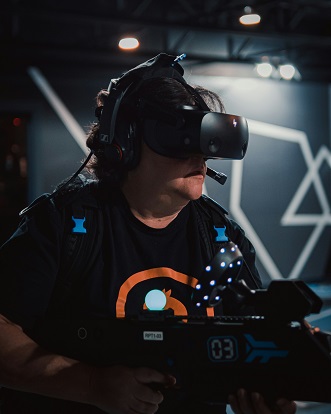
The origins of virtual reality (VR) gaming can be traced back to the 1960s, with significant developments leading to the immersive experiences we see today. Initial experiments in VR initiated with the creation of the Sensorama, a machine designed to provide multi-sensory experiences by combining visuals, sound, and even smells. This marked a considerable leap in the exploration of immersive experiences, setting the stage for the evolution of VR gaming.
Moving into the 1980s, the introduction of the first head-mounted display (HMD) for gaming brought a new level of engagement to users. The “VPL DataGlove” enabled players to interact with virtual environments, albeit in a rudimentary form. This innovation paved the way for future advancements, though technology at the time was limited by heavy equipment and low graphical fidelity.
Throughout the 1990s and early 2000s, developments in computer graphics and processing power directly influenced VR gaming’s trajectory. The release of systems like the Sega VR and Nintendo’s Virtual Boy showcased attempts to popularize VR but ultimately fell short due to technical limitations and lackluster game quality.
The real turning point for VR gaming came in the 2010s, marked by the launch of consumer-focused headsets such as the Oculus Rift and HTC Vive. These devices incorporated advanced motion tracking and high-resolution displays, significantly increasing immersion. Software innovations also emerged, with the development of more complex and interactive worlds that players could explore.
Today’s VR gaming landscape continues to evolve, with innovations like haptic feedback technology enhancing players’ interactions with virtual environments. As the hardware becomes more sophisticated and accessible, VR gaming is positioned to redefine how we play, offering experiences that feel strikingly real.
Top Realistic Virtual Reality Games
The realm of virtual reality games has expanded significantly in recent years, with several titles achieving a level of realism that can be truly captivating. These games not only deliver stunning graphics but also offer immersive environments and lifelike mechanics that enhance the overall gaming experience.
One standout title in the realm of realistic virtual reality is Half-Life: Alyx. As a flagship VR game, it showcases exceptional graphics and intricate physics simulations that allow players to interact with the environment in a manner reminiscent of real life. Players can manipulate objects, solve puzzles, and engage in combat, all while navigating a richly detailed world that feels tangible and alive.
Another notable entry is Blade and Sorcery, which excels in hand-to-hand combat and weapon interactions. The game utilizes a physics engine that replicates real-world mechanics, giving players the ability to wield weapons in a way that feels authentic. From throwing items to engaging in intricate melee battles, the level of detail in player interactions adds a dynamic layer of realism that is hard to overlook.
Additionally, Microsoft Flight Simulator offers a different take on realism by simulating real-world aviation experiences. The game provides players with an opportunity to pilot a variety of aircraft over meticulously rendered landscapes. The attention to detail, including weather patterns and real-time air traffic, contributes to an authentic flying experience, showcasing the diversity of VR gaming.
Lastly, Boneworks stands out for its attention to interactive environments, allowing players to engage with the world in a variety of creative ways. Whether it’s utilizing physics to overcome obstacles or utilizing objects as tools for exploration, this title emphasizes the importance of player agency within its realistic framework.
Psychological Effects of Hyper-Realistic VR Experiences
The advent of hyper-realistic virtual reality (VR) games has introduced a new frontier in immersive experiences, engaging players in ways that traditional gaming cannot achieve. One of the most significant psychological effects of these experiences is the concept of presence, which refers to the feeling of being physically present in a virtual environment. Research has shown that when players perceive the VR world as real, it can lead to heightened emotional responses, creating a sense of empathy towards virtual characters and situations.
Immersion is another critical factor to consider when discussing the psychological impacts of ultra-realistic VR. This state of flow can enhance players’ engagement and make the gaming experience more enjoyable. Studies indicate that immersive experiences can also result in cognitive benefits, such as improved problem-solving skills and spatial awareness. Furthermore, the therapeutic benefits of VR are becoming increasingly prevalent in psychological treatment, particularly for conditions such as post-traumatic stress disorder (PTSD) and anxiety disorders. Therapists utilize VR simulations to expose patients to fears in a controlled environment, allowing them to process and confront their anxieties gradually.
However, the intensity of hyper-realistic VR gaming can also pose risks. Players may experience overstimulation, leading to feelings of anxiety or dissociation from reality. In some cases, long-term exposure to hyper-realistic environments can blur the line between virtual experiences and real-life perceptions. Game designers and psychologists emphasize the importance of moderation and awareness of these potential risks. Balancing the enjoyment and benefits of VR games with the understanding of their psychological impact is crucial for a healthy gaming experience. By fostering awareness and applying VR in moderation, individuals can safely enjoy the captivating, immersive worlds these games offer.
The Future of Realism in Virtual Reality Gaming
The realm of virtual reality (VR) gaming is on the cusp of remarkable transformations, with advancements poised to bridge the gap between digital experiences and the tangible world. As technology evolves, several key areas are projected to drive the enhancement of realism in VR games.
One of the foremost developments lies within artificial intelligence (AI). As machine learning algorithms progress, the behavior of non-player characters (NPCs) is expected to become increasingly sophisticated. This evolution will allow NPCs to interact with players in more lifelike manners, responding to their actions in real time and creating dynamic storytelling experiences. Such AI-driven interactions could amplify immersion, making players feel as if they are truly part of the game.
Further, advancements in graphics rendering will contribute significantly to the visual fidelity of VR environments. Upcoming technologies, including ray tracing and improved shading techniques, promise to create more realistic lighting and textures. These enhancements will not only make virtual landscapes more appealing but also increase the emotional engagement of players, drawing them deeper into the game narrative.
Moreover, sensory technology is set to redefine the limits of immersion. Innovations in haptic feedback and sensory stimuli could enable players to experience physical sensations that mimic those found in real life. From feeling the ground beneath their feet to the impact of an object in their virtual surroundings, players will enjoy a multisensory experience that blurs the lines between reality and the digital realm.
As these technologies converge, the implications for game developers are profound. They will be challenged to explore new narratives and gameplay mechanics that fully utilize the capabilities of enhanced realism. For players, the horizon of VR gaming is vast, offering unprecedented levels of engagement and interaction. The future of realism in virtual reality gaming is not merely a possibility but an exciting upcoming reality waiting to be explored.