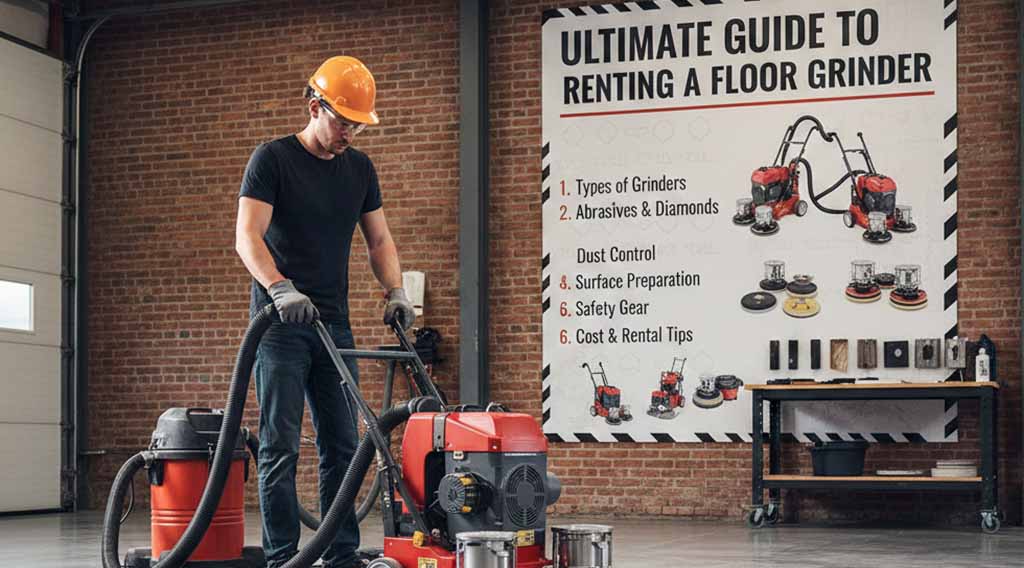
If you’re planning a renovation, preparing a concrete floor for a new finish, or tackling stubborn coatings, hiring a floor grinder can be one of the smartest decisions you make. Floor grinders are powerful tools designed to level, polish, and prepare concrete surfaces with precision and efficiency.
But for many DIYers, contractors, and property owners, the idea of renting heavy equipment can be intimidating. This guide breaks down everything you need to know about Floor Grinder Hire, from choosing the right machine to getting the best results on your project.
What Is a Floor Grinder?
A floor grinder is a machine used to grind, smooth, and polish hard surfaces, especially concrete. These machines use abrasive discs or diamond tooling to remove coatings, level uneven surfaces, and prepare floors for topping or sealing. Depending on the model and attachments, floor grinders can handle light surface preparation tasks or heavy-duty grinding work.
Why Hire Instead of Buy?
Cost Efficiency for One-Off Projects
For many homeowners and small contractors, buying a floor grinder doesn’t make financial sense if you only need it for a single project. Hiring allows you to access high-quality equipment without the upfront purchase cost and ongoing maintenance expenses.
Access to Professional-Grade Tools
Hire companies typically stock a range of machines, including industrial-grade grinders that deliver better performance than what you might find in local tool stores. This means you can choose the right tool for your task, whether it’s light preparation or heavy coating removal.
No Maintenance Hassles
Renting a floor grinder means you don’t have to worry about servicing, storage, or repairs. If the machine needs attention, the hire provider handles it, and you can often swap it for another if something goes wrong.
Types of Floor Grinders Available for Hire
Handheld Grinders
Handheld grinders are compact and versatile, making them ideal for working in tight spaces, edges, and corners. They’re suitable for smaller rooms or detail work where a large machine would be impractical.
Planetary Grinders
These are the most commonly hired floor grinders and are ideal for larger areas. They have rotating heads that move in a planetary pattern, delivering even grinding and polishing results. Planetary grinders are efficient for leveling and surface preparation on medium to large floors.
Single Disc Grinders
Single disc machines are simpler and lighter. They’re often used for cleaning, coating removal, and light surface preparation. While they aren’t as aggressive as planetary grinders, they can be perfect for quick jobs or lighter-duty tasks.
How to Choose the Right Floor Grinder for Your Project
Assess the Size of the Area
Before renting, measure your floor area. Larger spaces benefit from bigger, more powerful planetary grinders, while smaller rooms or specific spots might only need a handheld or single disc model.
Consider the Floor Condition
If the concrete is uneven, has thick coatings, or needs serious leveling, opt for a more powerful grinder with diamond tooling. For simpler tasks like surface polishing or minor roughness, lighter machines can do the job.
Check Power Requirements
Some grinders run on standard electrical supplies, while heavy-duty models might need three-phase power. Make sure your site can support the machine you plan to hire.
Essential Accessories and Tools
Diamond Grinding Discs
These are the heart of any floor grinder. Diamond tooling comes in different grit levels, so choose coarse grit for heavy removal and finer grit for polishing and finishing.
Dust Extraction
Floor grinding produces a lot of dust. Many hire companies offer compatible dust extraction units. Using proper extraction not only keeps your workspace cleaner but also improves air quality and reduces cleanup time.
Personal Protective Equipment
Always plan to wear safety gear such as eye protection, hearing protection, and a dust mask or respirator. Grinding work can be noisy and dusty, so safety should be a priority.
Tips for Efficient and Safe Use
Read the Instruction Manual
Every machine varies slightly. Take a few minutes to read the operating instructions before you start. Familiarity with controls and safety features will save you time and reduce the risk of accidents.
Start with a Test Patch
Before tackling the entire floor, test the grinder on a small section. This helps you gauge the machine’s performance and adjust your technique if necessary.
Work in Sections
Divide your floor into manageable sections. Grinding can be physically demanding, and working systematically ensures a smoother finish with less fatigue.
Keep the Grinder Moving
Don’t let the grinder sit in one spot for too long. Constant movement helps prevent gouging the concrete and ensures an even surface.
Common Mistakes to Avoid
Overlooking Dust Control
Not using a dust extractor can turn your workspace into a hazardous, dusty mess. Always pair your grinder with proper extraction equipment.
Underestimating the Job
Some floor surfaces need more preparation than expected. Be realistic about the time and effort needed, and don’t rush the process.
Ignoring Power Needs
Failing to check power requirements can lead to machine stalling or damage. Make sure your site’s electrical supply matches the grinder’s specifications.
Conclusion
Hiring a floor grinder is an excellent way to get professional-level results without the commitment of buying a machine. By understanding the types of grinders available, preparing your workspace, and using the equipment safely and efficiently, you can transform your concrete floors with confidence. Whether you’re removing coatings, leveling uneven surfaces, or preparing for a polished finish, the right floor grinder — and the right approach — makes all the difference.