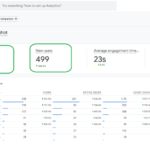
In the hyper-competitive world of e-commerce, success is no longer just about having a great product. It’s about getting that product in front of the right person at the very moment they are ready to buy.
Many online store owners pour the majority of their marketing budget into Google or Meta ads. While paid ads offer instant gratification, the moment you stop paying, the traffic faucet turns off completely. This is where E-Commerce SEO (Search Engine Optimization) comes in.
Let’s be brutally honest from the start: anyone promising to rank your store on the first page of Google in three days is selling you a fairy tale. SEO is a marathon, not a sprint. It requires patience, strategy, and consistent execution.
This guide outlines a realistic, fluff-free strategy to boost your organic traffic and, more importantly, turn those clicks into customers.
1. Site Architecture: Building a Solid Foundation
Think of your e-commerce site like a physical department store. If customers can’t find the shoe section because it’s hidden behind the home goods, they will walk out. Google’s web crawlers behave the exact same way. A messy site structure hurts your user experience (UX) and makes it incredibly difficult for search engines to index your pages.
- The Three-Click Rule: A user should be able to navigate from your homepage to any product on your site in three clicks or less.
- Logical Hierarchy: Keep your URL structures clean and predictable. Instead of a messy string of numbers, use a structure like: [yourstore.com/mens-shoes/running-shoes](https://yourstore.com/mens-shoes/running-shoes).
- Breadcrumbs: These internal links not only help users track their path back to broader categories but also distribute “link juice” efficiently across your site.
https://skyzonedigital.com/e-ticaret-seo-ajansi/
2. Keyword Research: Deciphering Buyer Intent
A common pitfall in e-commerce SEO is chasing high-volume keywords blindly. Ranking first for a broad term like “shoes” is virtually impossible for small-to-medium businesses, and frankly, it’s rarely profitable. You need to target users who are ready to pull out their wallets.
- Focus on Long-Tail Keywords: Terms like “waterproof men’s trail running shoes size 11” have lower search volumes, but the conversion rate is massive because the buyer intent is highly specific.
- Understand Transactional Intent: Optimize your category and product pages for search queries that include words like “buy,” “price,” “sale,” or “best online.”
- Competitor Gap Analysis: Look at what your direct competitors are ranking for. Identify keywords where their content is weak or outdated, and build something significantly better.
3. Technical SEO: Speed and Mobile Are Non-Negotiable
Google puts user experience at the forefront of its ranking algorithms. If your website takes more than three seconds to load, you’ve already lost half of your potential customers before they even see your products.
- Core Web Vitals: Google uses these metrics to measure visual stability and loading performance. Compress your product images, utilize next-gen formats like WebP, and eliminate clunky, unnecessary code scripts.
- Mobile-First Indexing: The vast majority of e-commerce shopping happens on smartphones. If your mobile checkout process is frustrating or your fonts are too small, your search rankings will suffer.
- Product Schema Markup: Implement structured data on your product pages. This allows Google to display “rich snippets” in search results—showing your price, stock status, and star reviews directly on the search page. This drastically improves your Click-Through Rate (CTR).
4. Unique Product Descriptions: Ditch the Copy-Paste
Copying and pasting the manufacturer’s product description is a fast track to SEO oblivion. If a hundred other retailers are using the exact same text, Google has no reason to prioritize your store.
- Benefit-Driven Storytelling: Don’t just list the technical specs. Explain how the product solves a specific problem for the customer. How does it feel? Why do they need it?
- Keep It Original: Write at least 150 to 200 words of unique content for every single product page. Inject your brand’s personality into the copy.
- Leverage User Reviews: Encourage customers to leave reviews on your product pages. This provides Google with fresh, user-generated content for free, while building trust with new visitors.
5. Taming E-Commerce Monsters: Filters and Out-of-Stock Items
E-commerce websites face unique technical challenges due to large inventories and dynamic pages. Managing these correctly prevents major indexation issues.
- Faceted Navigation (Filters): When users filter by size, color, or price, it can generate millions of duplicate URLs. Use canonical tags to tell Google which primary page it should index, or block irrelevant filter combinations via your robots.txt file.
- Handling Out-of-Stock Products: Never delete a page just because an item is temporarily out of stock. Keep the page live, offer a “notify me when available” button, and suggest similar alternatives. If a product is permanently discontinued, implement a permanent 301 redirect to the most relevant category page.
The Reality Check
Real SEO results take time. Expect to see meaningful shifts in your organic traffic around the 6-to-9-month mark of consistent optimization.
There are no shortcuts, hacks, or secret tricks. A successful e-commerce SEO strategy is simply the cumulative effect of a fast website, clear site organization, targeted keyword research, and high-quality, original content. Treat your site well, focus on the user experience, and the search engines will reward you with sustainable, high-converting traffic.