



Ford isn’t quite the company it was ten years ago. The Fiesta has gone, the Focus has followed it out of production, and the days when both cars seemed to be parked on every street in Britain are slowly disappearing.
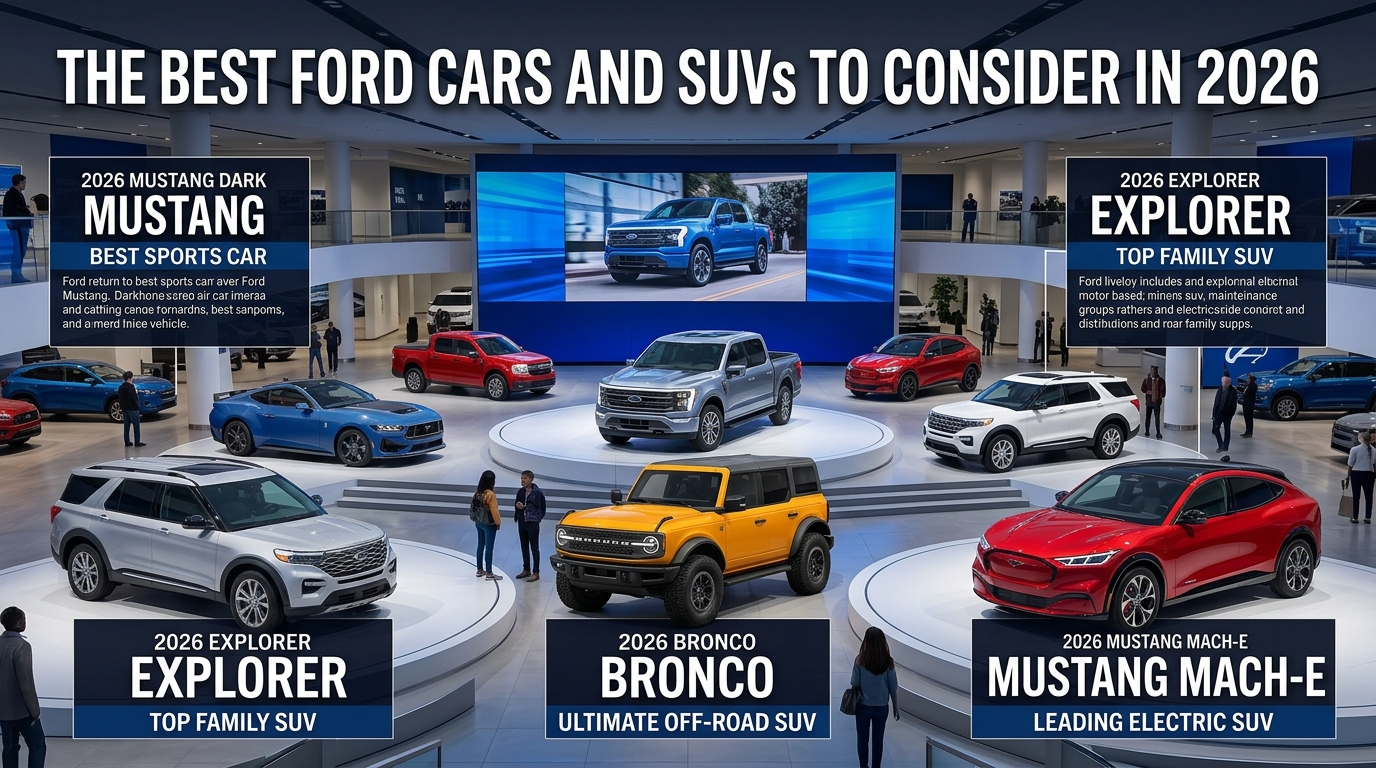
What has replaced them is a much broader mix of SUVs, crossovers and electric cars. Models such as the Puma and Kuga now do much of the heavy lifting, while the Explorer and Mustang Mach-E give Ford a stronger presence in the growing EV market.
That doesn’t mean buyers should ignore older models. Far from it. The used market is packed with Fords, and some of the best buys still wear names that have disappeared from new-car showrooms.
Here are the models worth having on the shortlist in 2026.
Ford Puma
For most people looking for a modern Ford, the Puma is probably the obvious place to start.
It manages to be small enough for everyday driving without feeling cramped, and it’s more entertaining on a country road than many compact crossovers. The boot is another reason it has proved popular. There’s 456 litres of space, plus Ford’s useful waterproof MegaBox beneath the floor for muddy boots, sports equipment or anything else you’d rather keep away from the carpet.
Petrol mild-hybrid versions remain a sensible choice, while the Puma Gen-E adds an electric option for buyers ready to move away from petrol.
Ford Kuga
Need something bigger? The Kuga makes more sense for families.
There’s plenty of room in the back and the sliding rear seats are genuinely useful, rather than being the sort of feature you forget about after the first week. Push them forward and you gain more luggage space; slide them back and rear passengers have plenty of legroom.
Ford has also managed to retain some of the handling character the brand is known for. It doesn’t feel like a sports car, obviously, but nor does it feel heavy or cumbersome.
The plug-in hybrid is worth a look if most journeys are fairly short and home charging is possible. Its official electric-only range is up to 42 miles.
Ford Fiesta
The Fiesta might be gone from Ford showrooms, but it certainly hasn’t disappeared from British roads.
There are thousands on the used market, covering everything from basic runabouts to sporty ST-Line models. A well-kept Fiesta can still make an excellent first car or inexpensive daily driver.
The 1.0-litre EcoBoost petrol engine suits the car particularly well, although service history matters. That applies to any second-hand vehicle, of course. Before handing over any money, it’s worth checking the paperwork and using a car checker tool to see whether there’s anything in the vehicle’s history that needs a closer look.
Find a good one and the Fiesta remains difficult to dislike. It’s light, easy to place on the road and still more enjoyable to drive than plenty of newer small cars.
Ford Focus
The Focus is another Ford that has recently reached the end of the road as a new car, with production finishing in 2025.
That may actually make it more interesting to used buyers. There’s plenty of choice, and the final generation is a particularly accomplished family hatchback.
Rear-seat room is good, the driving position is comfortable and later cars have the sort of technology most buyers now expect, including smartphone connectivity and a large touchscreen.
The estate is the one to choose if luggage space matters. It loses little of the hatchback’s appeal on the road but gives you considerably more room in the back.
Ford Ranger
The Ranger has moved a long way from being simply a pickup for builders and farmers.
Yes, it will still tow up to 3,500kg and has the load bed you expect, but higher-spec versions feel surprisingly close to an SUV inside. Wildtrak models in particular are well equipped and comfortable enough for long journeys.
Its main drawback is also fairly obvious: it’s big. Narrow streets and cramped supermarket car parks aren’t its natural habitat.
For anyone who genuinely needs towing ability or a pickup bed, though, it remains one of Ford’s most convincing vehicles.
Ford Explorer
Ford’s electric Explorer is aimed squarely at family SUV buyers.
Underneath, it shares technology with electric models from the Volkswagen Group, but Ford has done enough work to give it its own feel. The steering is responsive and it’s more enjoyable to drive than you might expect from a fairly substantial electric SUV.
Depending on the version, official range stretches from 233 miles to as much as 374 miles.
The cabin is practical too, with lots of storage and a 470-litre boot.
Ford Mustang Mach-E
The Mustang name on an electric SUV still bothers some traditionalists, but the Mach-E has been around long enough now to stand on its own merits.
It’s quick, roomy and much more practical than the badge might suggest. Extended-range versions can cover up to 372 miles officially, while the GT turns the performance up considerably.
The ride can be firm, particularly on larger wheels, but anyone wanting an electric Ford with a bit more personality than the average family SUV should at least try one.
And what about the Mustang?
The proper V8 Mustang is still there for buyers who want something completely different.
It’s wide, thirsty and not especially practical. The back seats are tight and fuel bills won’t be pleasant either.
None of that is really the point.
The 5.0-litre V8, rear-wheel drive and unmistakable styling give the Mustang the sort of character that’s becoming increasingly rare. As an everyday family car it makes little sense. As something bought because you simply want one, it makes much more.
Which Ford makes the most sense?
There isn’t one answer.
The Puma is probably the easiest Ford to recommend to the widest range of buyers, while the Kuga gives families more space. The Fiesta and Focus remain strong used choices, and the Ranger is difficult to beat if towing and carrying ability matter.
For electric buyers, the Explorer is the sensible option, while the Mustang Mach-E adds a little more drama.
That variety is probably Ford’s biggest strength in 2026. The familiar line-up may have changed, but there’s still something for almost every kind of driver.