Mobile app development has moved far beyond simple, standalone tools. Today’s applications—especially scheduling and productivity apps—function as intelligent systems that connect deeply with external platforms like Google Calendar and Apple’s ecosystem. This shift has transformed mobile apps into interconnected environments where user data flows seamlessly across devices, services, and operating systems.
At the heart of this transformation is modern mobile architecture. Developers design apps using structured approaches such as clean architecture or MVVM, separating user interface, logic, and data handling. This separation allows apps to scale efficiently and integrate smoothly with third-party services. For businesses aiming to build robust and scalable solutions, services like https://looksgreat.studio/services/mobile-app-dev/ focus on combining strong architecture with seamless ecosystem connectivity.
Understanding Personal Systems Architecture
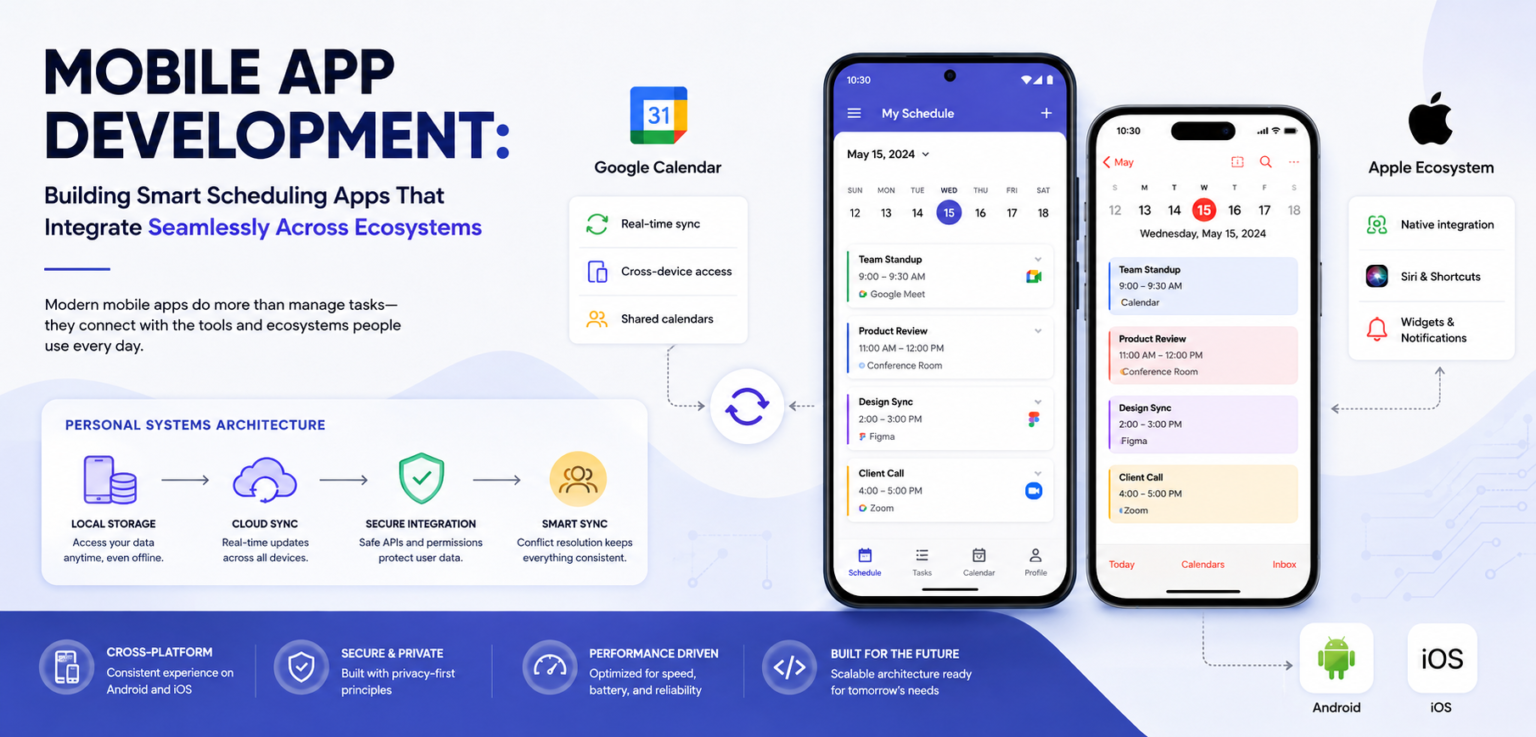
Scheduling applications are a clear example of personal systems architecture. These apps are not just interfaces; they act as central hubs where users manage their time, tasks, and commitments. Internally, they maintain their own databases to ensure fast access and offline functionality. At the same time, they synchronize with external platforms to keep everything updated in real time.
A well-built scheduling app constantly balances local and cloud data. If a user creates an event without internet access, the app stores it locally and syncs it later. If the same event is modified on another device, the system resolves conflicts intelligently to avoid duplication or data loss. This invisible coordination is what makes modern apps feel reliable and effortless.
Integration with Google Calendar
Integration with Google Calendar is one of the most important features for scheduling apps. Developers use secure APIs and authentication systems to connect user accounts and exchange data safely. Once connected, the app can read, create, and update events in real time.
This integration allows users to manage their schedules from multiple platforms without thinking about where the data is stored. An event created inside a mobile app instantly appears in Google Calendar and vice versa. It also enables collaboration, since shared calendars and invitations are handled seamlessly across devices and services.
Working Within the Apple Ecosystem
The Apple ecosystem offers a different but equally powerful integration model. Instead of relying heavily on external APIs, Apple provides native frameworks that allow apps to interact directly with system-level services like Calendar and Reminders.
This results in tighter performance and a smoother user experience. Features like widgets, notifications, and voice commands through Siri enhance usability without requiring additional complexity from the user. However, Apple’s controlled environment also means developers must strictly follow its guidelines, ensuring consistency but limiting flexibility compared to more open platforms.
Maintaining Consistency Across Android and iOS
One of the biggest challenges in mobile development is delivering a consistent experience across Android and iOS. Each platform has its own design philosophy, interaction patterns, and technical constraints. Android emphasizes flexibility and customization, while iOS prioritizes simplicity and uniformity.
To manage this, developers often use cross-platform frameworks such as Flutter or React Native. These tools allow much of the codebase to be shared, reducing development time and cost. Still, achieving true consistency requires careful attention to detail. Developers must adapt layouts, animations, and navigation patterns so that the app feels natural on each platform rather than identical in a forced way.
Consistency is not just about visuals—it also includes performance, responsiveness, and reliability. Users expect the same speed and smoothness regardless of the device they are using, which requires ongoing optimization and testing.
Handling Permissions, Security, and Native Features
When apps interact with calendars and other personal data, security becomes critical. Developers must request user permissions clearly and ensure that sensitive data is handled responsibly. Both Android and iOS enforce strict privacy rules, requiring apps to justify access to calendars, contacts, and other personal information.
Beyond permissions, apps must also work with native features such as notifications, background syncing, and system-level integrations. These elements enhance usability but require platform-specific implementation, adding another layer of complexity to development.
Creating a Seamless User Experience
A seamless user experience is the ultimate goal of modern mobile apps. This is achieved through thoughtful design, efficient data synchronization, and reliable performance. Instead of overwhelming users with complexity, well-designed apps hide technical processes behind simple and intuitive interfaces.
Developers also focus on strategies like offline functionality and real-time updates to ensure that the app remains useful in all conditions. Continuous testing and updates help maintain stability while introducing new features without disrupting the user experience.
The Future of Mobile App Ecosystems
Mobile ecosystems are becoming increasingly interconnected. The gap between platforms is narrowing as users expect their data and experiences to move freely between devices. Scheduling apps and other productivity tools are leading this shift by demonstrating how personal systems can integrate with global services.
In the future, we can expect even deeper integration, smarter automation, and more personalized experiences driven by data and artificial intelligence. Mobile apps will continue evolving from simple tools into intelligent systems that anticipate user needs and operate seamlessly across entire digital ecosystems.
Conclusion
Mobile app development today is about building connections as much as creating functionality. Scheduling apps highlight how personal systems architecture can combine internal data management with external platforms like Google Calendar and Apple’s ecosystem. By using modern development practices and focusing on user experience, developers can deliver apps that feel consistent, reliable, and truly integrated across both Android and iOS platforms.