Dina, my neighbor, keeps a whiteboard in her kitchen that’s roughly the size of a door. Every January it fills up with a list that would exhaust a small army: 10K, Spanish, fifty books, closet purge, “finally learn to cook rice properly” (her words, and yes, this one got me). By March it’s basically wallpaper. She admitted she’d started angling her chair away from it at breakfast. A whiteboard. Making a grown woman feel guilty over eggs.
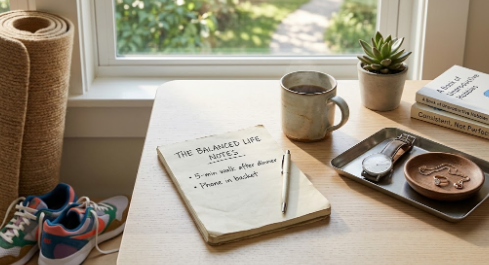
The thing that actually stuck, when I asked her about it last month, was almost embarrassingly small. Five minutes around the block after dinner. Phones in a basket by the door during meals. That’s the whole system. She’s kept it up for about eight months now, which is longer than anything on that board ever lasted.
Which is more or less my whole argument. A balanced lifestyle isn’t a flawless routine, and it definitely isn’t fixing your entire life in one weekend (I’ve watched friends try, it does not end well). It’s a few habits that quietly prop up your health, your goals, your people, and that feeling that things are manageable rather than perpetually on fire.
For some folks that means moving more. For others it means finally making room for a hobby, sorting out their mornings, or caring a little more about what they put on. Doesn’t matter which. Small changes start to carry real weight the second they stop feeling like effort and turn into just… a normal Wednesday.
Making Movement Part of Your Daily Routine
Moving regularly is probably the cheapest way to feel better, and it doesn’t need a gym. I’d go further, honestly. A lot of people would be better off if the gym stopped being the default answer. Pick something convenient. Ideally something you don’t secretly dread.
Home workouts are a decent fit when your schedule’s packed. A workout trampoline, say, gets you moving at home without a mountain of gear or a giant chunk of the living room.
A rebounder does similar work, especially if you want it gentler on your joints. Same rule applies, though. It has to fit your actual week. Not the tidy, imaginary week where nothing goes wrong.
I usually tell people to ask one question: will I still be doing this in three months? Not three days. Three months.
Focus on Consistency Rather Than Perfection
Starting is the easy bit. Everybody’s good at Day One. It’s Day Nineteen that quietly kills most plans, when work gets loud, or somebody in the house gets sick, or you’re just tired in a way that has nothing to do with sleep.
So go smaller than feels respectable. A short daily walk. Exercise a few times a week (a few, not seven, be nice to yourself). A bedtime that stays vaguely the same.
Consistency wins. Every time. Three intense weeks followed by nothing counts for a lot less than boring little habits that settle into your days without anyone announcing them.
Give Yourself Time to Recharge
Movement’s only half of it. Rest matters just as much, and I’d argue a bit more, though most people know that and skip it anyway. I do it too.
Screens off for a while. Some time outside. A book, some music, a hobby with absolutely no productive purpose (that’s the entire point, actually). Even five quiet minutes puts a little distance between work-you and the person underneath, which sounds vague but really isn’t.
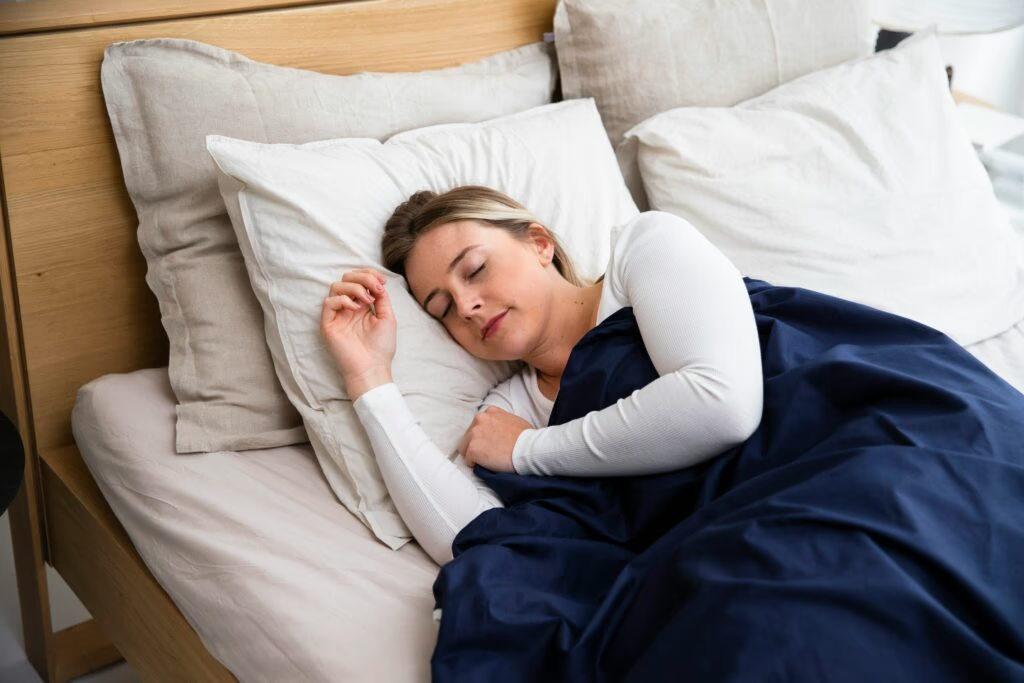
And sleep. Yes, everyone says it. But a steady schedule and a bed that doesn’t fight you make the rest of the day so much easier. It’s boring advice because it’s true.
Develop a Personal Sense of Style
Wellbeing isn’t only physical. What you’re wearing colors your whole day more than most people will admit out loud. Feel put together, and you honestly walk differently.
Style doesn’t need to chase trends. Pick a few pieces that feel like you and work across a handful of occasions. That’s plenty.
Jewellery is one easy way in. Diamond rings get linked to big occasions, sure, but they can just as easily mark a personal milestone, a hard-won achievement, a memory only the wearer really understands. Which, if I’m honest, is a better reason than most.
Same goes for watches and other accessories. A good piece complements an outfit. It doesn’t need to talk over it.
Choose Timeless Pieces
Trends move so fast that I find them a little tiring, if I’m being honest. Some accessories quietly stay relevant for years though, and picking timeless designs makes a wardrobe more flexible while taking the pressure off constantly replacing things.
A classic watch is the obvious case. A Tissot watch works with casual outfits and dressier ones, so it earns its place across different parts of your week instead of sitting in a drawer waiting for a wedding.
You don’t need a big collection. Just a few things you actually like. Getting dressed gets easier, and your style starts feeling consistent without much effort from you.
Make Space for the Things That Matter
A balanced life has room for people and experiences, not only tasks. Work will cheerfully eat most of your day if nothing pushes back, so it helps to protect time deliberately for family, friends, hobbies, the occasions you’ll actually remember.
Celebrating milestones is a simple way to notice them. A birthday, an anniversary, an engagement, a promotion, a goal you finally hit. Pausing for a second to appreciate progress makes ordinary life feel a bit more meaningful, and it costs practically nothing.
Nothing fancy needed. One thoughtful gesture, one good evening, that’s often enough.
Find a Routine That Works for You
There’s no single formula. What works wonderfully for your friend might do nothing for you, and that doesn’t mean you’re doing it wrong (I need to keep reminding myself of this one too).
Someone with a chaotic schedule might love short home workouts. Someone else would rather take long walks outside. Style’s the same, anywhere from minimalist and practical to expressive and fashion-forward.
Build your routine around your own life. Not somebody else’s highlight reel.
Start small. Make time for movement, protect your rest, do things that recharge you, and pick personal items that mean something to you.
Give it time. Those small decisions add up to a lifestyle that feels healthier, more comfortable, and a lot more like yours.
Frequently Asked Questions
How can I stay active at home without a lot of equipment?
You don’t need much. A workout trampoline or a rebounder gives you low-impact movement without eating up your floor space. Just pick whichever one you’ll actually enjoy using, because that’s the one you’ll keep doing.
Why is consistency more important than intensity when building healthy habits?
Because intense routines tend to collapse the moment life gets busy, and life always gets busy. Small habits are much easier to keep alive, and over time they stop feeling like effort at all.
How do I choose accessories that fit my personal style?
Go for pieces that feel like you and work in a few different situations, not whatever’s trending this month. Timeless stuff, like a classic Tissot watch or something meaningful such as diamond rings, tends to last longer and makes getting dressed a lot easier.
How important is rest and sleep in a balanced lifestyle?
Really important, honestly as much as exercise. Your body and mind recover during sleep and downtime, so a steady sleep schedule and some time away from screens make everything else easier to manage.
How can I build a routine that actually works for me?
Start with a few small, realistic changes based on your own life, not someone else’s. Make time for movement, protect your rest, do things that recharge you, and adjust as you figure out what fits.