


Betting odds may seem simple on the surface, but they are based on a mix of many different factors, including statistical analysis and market behavior. These factors help to predict outcomes and balance the financial exposure of sportsbooks. They show the probability of a certain outcome happening. The odds are usually a fair representation of expected outcomes but if you are a sports bettor, you are still responsible for assessing and evaluating odds to win your bets.
American betting odds
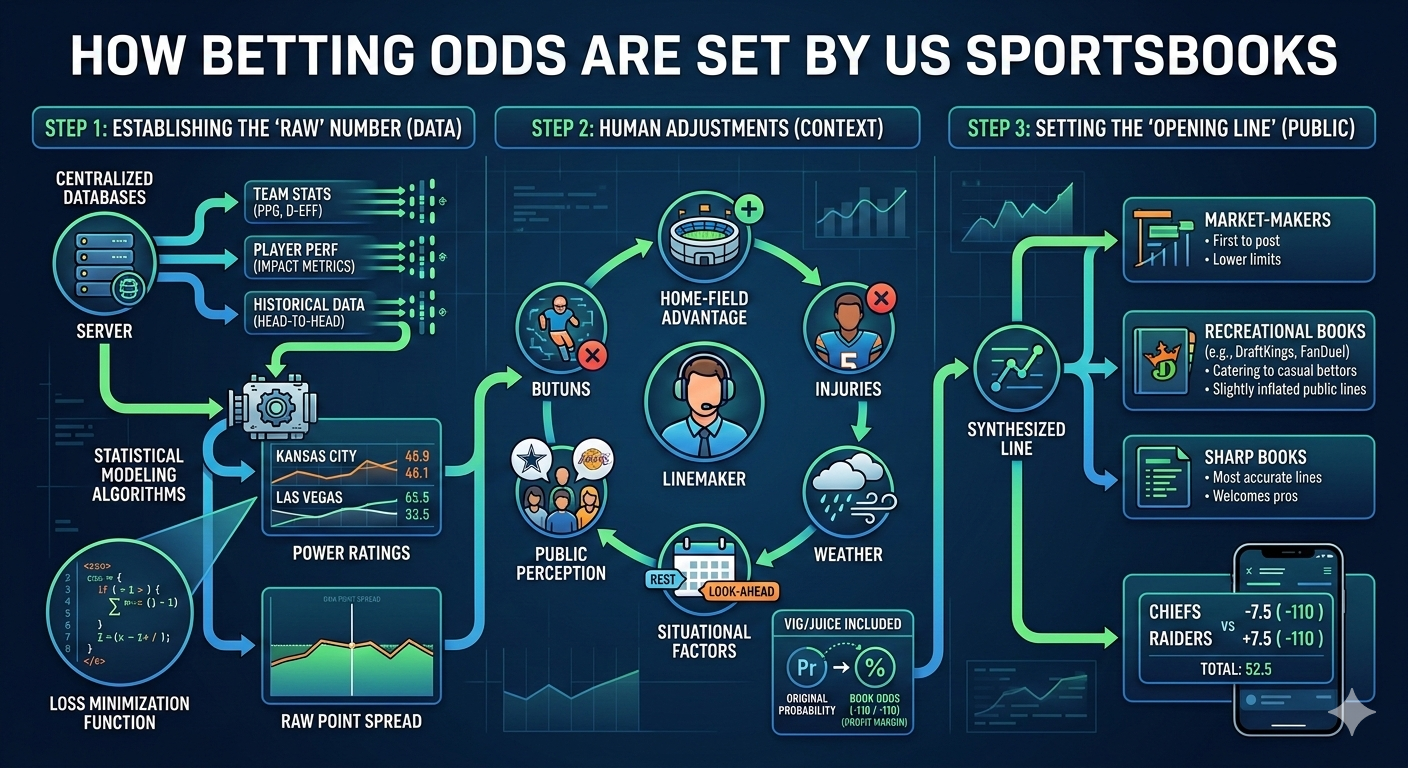
US sportsbooks use analysts and quantitative models to evaluate teams. The data allows them to create an initial point spread or moneyline that reflects the balance between the perceived strength of the two teams.
American odds center on a $100 base value, and they have either a plus (+) or minus (-) sign. Understanding the odds is essential for placing smart sports bets. They not only tell you how much you could win but also hint at the likelihood of a certain outcome and the amount of risk you are taking. Several factors go into determining these odds, such as team or individual performance and the past record of players over time. The total bets, margins and probabilities of outcomes also come into play.
How do odds affect winning?
The amount you can win from a wager depends on the odds. Higher odds offer a larger potential payout but imply a lower probability of winning. Lower (shorter) odds indicate a higher chance of success, but the potential return is smaller.
Favorites and underdogs
Negative odds mean the team is a favorite and positive odds mean the team is an underdog. For example, an NFL spread may open with -7 for the favorite and +7 for the underdog. If a preferred team is expected to win around 60% of the time, the odds are usually around -150. This means you need to risk $150 to win $100.
At +200, you will gain $200 for every $100 you bet on the result. This is common for underdogs. You will receive $200 profit and your $100 stake back, so you receive a total of $300. You stand to win more if the plus number is higher.
The ‘vig’ or ‘juice’
Every sportsbook has built-in commission, which is usually a margin of around 5 to 10%. It ensures that the sportsbook profits regardless of which team wins. For example, a typical point spread might show odds of -110 on both sides. This means bettors risk $110 to win $100 and the extra $10 represents the bookmaker’s edge.
Line movement
After sportsbooks post the opening odds, they monitor betting activity closely. One popular quick cash idea for professional bettors is to bet early, which can have a big influence on the line.
If they place a large amount of money on one side, sportsbooks are likely to adjust the odds to make betting on the other side more attractive. They try to balance the betting pool to ensure betting on both sides. If a game is in favor of bettors but only to one side of the betting line, the bookmaker is likely to suffer a loss.
Market consensus
U.S. sportsbooks don’t operate in isolation, and major operators will monitor each other’s lines. Sportsbooks keep adjusting their odds to stay in line with the broader market. If one sportsbook posts a line that’s different from the others, professional sports bettors can profit from the discrepancy. This makes sports betting one of the more realistic side hustles in 2026.
Real-time information
Sportsbooks also rely on real-time information. For example, weather conditions or injuries affect the odds. Suspensions or unavailable players do too. Automated systems and trading teams constantly update the odds as new information becomes available.
Machine learning models and predictive analytics
Advances in technology and the introduction of AI algorithms have improved the ways for bookmakers to establish odds. Machine learning models can analyze huge datasets to estimate probabilities. This reduces human error and provides more accuracy and precision. It results in a dynamic system where the odds shift constantly in response to both bettor behavior and data. The aim is to manage risk and ensure the maintenance of a profitable betting environment.