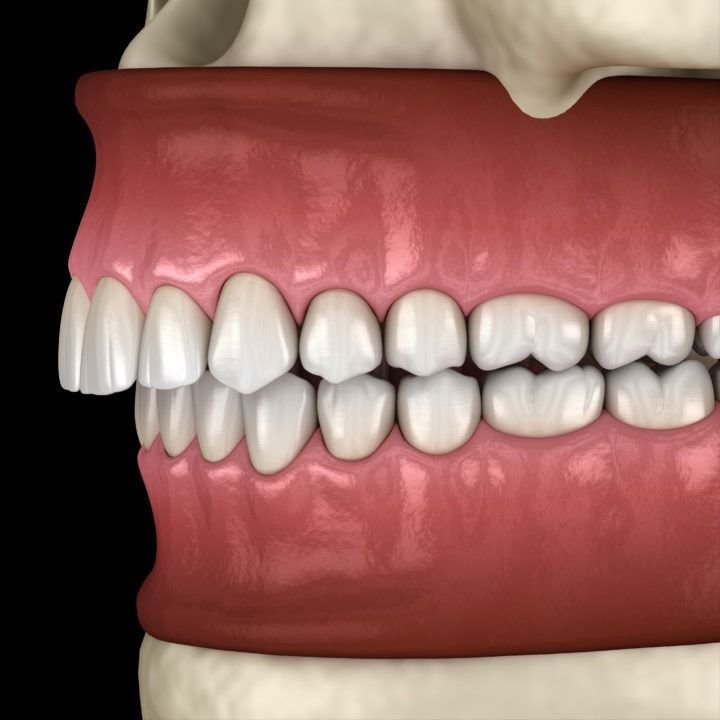
A person’s teeth do more than contribute to the appearance of their smile. They also need to come together in a way that allows comfortable biting, chewing and speaking.
When the upper and lower teeth do not meet or align as expected, this is known as malocclusion. Some differences in tooth alignment are minor and may not require treatment, while others can affect chewing, tooth wear, oral hygiene, jaw function or the development of the teeth and jaws.
Common bite problems include overbites, overjets, underbites, crossbites, open bites, deep bites, crowding and spacing. These problems can occur in children, teenagers and adults, although their causes and treatment options may differ.
Orthodontic treatment can help correct many types of malocclusion. Depending on the problem, treatment may involve braces, clear aligners, expanders or other appliances. In more complex cases involving the position of the jaws, treatment may require a combination of orthodontic and surgical care.
The important point is that not every bite difference needs to be corrected. An assessment by an orthodontist looks at the severity of the problem, how the teeth and jaws function and whether there is a risk of future dental or functional problems.
What Is a Normal Bite?
A bite, also called occlusion, describes how the upper and lower teeth come together when the mouth is closed.
In a typical bite:
- The upper front teeth sit slightly in front of the lower front teeth.
- The upper back teeth generally fit slightly outside the lower back teeth.
- The upper and lower teeth meet in a way that supports chewing.
- The teeth do not place excessive pressure on the gums or surrounding tissues.
There can be natural variation in tooth and jaw position, so a bite does not have to look exactly the same from person to person.
A bite may become a concern when the relationship between the teeth or jaws affects function, causes discomfort, contributes to abnormal tooth wear or creates difficulty maintaining oral hygiene.
What Are the Most Common Bite Problems?
Several types of malocclusion can affect the way the teeth meet.
Overbite and Deep Bite
An overbite describes the vertical overlap of the upper front teeth over the lower front teeth.
A small amount of vertical overlap is normal. A deep bite occurs when the upper front teeth overlap the lower teeth excessively.
In more pronounced cases, the lower teeth may contact the gum tissue behind the upper front teeth, or the upper teeth may place excessive pressure on the lower gums.
Potential concerns associated with a significant deep bite include:
- Excessive tooth wear
- Damage to the enamel
- Gum irritation
- Difficulty biting comfortably
- Jaw discomfort in some patients
The severity and underlying cause determine whether treatment is needed.
Overjet
An overjet refers to the horizontal distance between the upper and lower front teeth.
With an increased overjet, the upper front teeth project further forward than usual.
This can sometimes be associated with:
- The position of the teeth
- The relationship between the upper and lower jaws
- Oral habits
- Other developmental factors
A pronounced overjet may increase the risk of trauma to the upper front teeth, particularly in children.
Treatment depends on whether the problem is primarily related to tooth position, jaw development or a combination of both.
Underbite
An underbite occurs when the lower front teeth sit in front of the upper front teeth when the mouth is closed.
An underbite may be caused by:
- Forward positioning of the lower jaw
- A relatively underdeveloped upper jaw
- Tooth position
- A combination of dental and skeletal factors
Mild cases may be corrected through orthodontic tooth movement.
More pronounced skeletal underbites may be more difficult to correct once jaw growth is complete and may require consideration of jaw surgery alongside orthodontic treatment.
Potential functional concerns include:
- Difficulty biting food
- Difficulty chewing
- Uneven tooth wear
- Speech difficulties in some cases
- Jaw discomfort
Not every underbite requires surgery. Treatment depends on the severity and whether the problem is primarily dental or skeletal.
Crossbite
A crossbite occurs when one or more upper teeth sit inside the corresponding lower teeth when the mouth is closed.
Crossbites can affect the front or back teeth.
Anterior Crossbite
An anterior crossbite involves the front teeth, where one or more upper front teeth sit behind the lower front teeth.
In children, an untreated anterior crossbite can sometimes contribute to abnormal tooth wear, gum problems or changes in jaw movement. Early assessment may be useful because treatment can sometimes be simpler while the jaws are still developing.
Posterior Crossbite
A posterior crossbite affects the back teeth.
The upper back teeth may sit inside the lower back teeth rather than slightly outside them.
Depending on the cause, posterior crossbite may be associated with differences in the width of the upper and lower jaws.
Treatment may involve orthodontic expansion or tooth movement depending on the patient’s age and the underlying cause.
Open Bite
An open bite occurs when some upper and lower teeth do not touch when the mouth is closed.
An open bite can occur at the front or back of the mouth.
Anterior Open Bite
An anterior open bite occurs when the back teeth meet but there is a visible gap between the upper and lower front teeth.
Possible contributing factors include:
- Thumb or finger sucking
- Tongue positioning
- Certain oral habits
- Differences in jaw development
- Other skeletal factors
An anterior open bite can make it difficult to bite into foods such as sandwiches or apples.
It may also affect speech in some patients.
In children, addressing contributing oral habits early may sometimes help reduce the severity of the developing bite problem.
Posterior Open Bite
A posterior open bite occurs when some of the back teeth do not meet when the mouth is closed.
This can interfere with chewing and may require more detailed assessment to determine the underlying cause.
Crowded Teeth
Crowding occurs when there is insufficient space for the teeth to align properly.
Crowded teeth may:
- Overlap
- Twist
- Become displaced
- Remain partially erupted
- Become impacted
Crowding can make brushing and flossing more difficult because some tooth surfaces may be difficult to access.
This can increase the challenge of maintaining good oral hygiene.
Crowding can result from factors such as:
- Tooth size
- Jaw size
- Early or abnormal loss of baby teeth
- Delayed eruption
- Tooth position
- Genetic factors
Treatment depends on the amount of crowding and the patient’s overall dental development.
Spacing Between Teeth
Spacing refers to gaps between teeth.
A small gap may simply be a cosmetic concern, while more extensive spacing can sometimes be associated with tooth position, missing teeth, jaw size or other dental conditions.
Spacing may occur because:
- Teeth are relatively small compared with the available jaw space
- One or more teeth are missing
- Teeth have shifted
- A frenum or other tissue affects tooth position
- Certain oral habits are present
In adults, new spacing or movement of previously straight teeth should be assessed because changes in tooth position can sometimes be associated with gum disease, tooth loss or other dental problems.
Can Bite Problems Affect Oral Health?
Some bite problems have little effect beyond appearance.
Others can affect how the teeth function or how easily they can be cleaned.
Potential concerns include:
Difficulty Cleaning the Teeth
Crowded or overlapping teeth can make some areas difficult to reach with a toothbrush or floss.
This does not mean that crowding automatically causes tooth decay or gum disease, but it can make effective oral hygiene more challenging.
Uneven Tooth Wear
When the teeth meet unevenly, certain teeth may receive more force than others.
Over time, this may contribute to:
- Enamel wear
- Chipping
- Sensitivity
- Changes in tooth shape
Difficulty Biting or Chewing
An open bite, severe crossbite or other malocclusion may interfere with how food is bitten or chewed.
Gum Irritation
Certain bite patterns can cause teeth to contact or place pressure on gum tissue.
Jaw Discomfort
Some patients with significant bite discrepancies may experience jaw discomfort or muscle strain. However, not every jaw pain problem is caused by malocclusion, and bite correction should not be assumed to treat all temporomandibular joint disorders.
What Causes Bite Problems?
Malocclusion can have several causes.
Genetics
The size and shape of the jaws, as well as tooth size and position, can be influenced by inherited characteristics.
Jaw Growth
Differences in the growth of the upper and lower jaws can contribute to conditions such as underbites and increased overjets.
Oral Habits
Certain childhood habits may influence developing tooth and jaw position.
Examples include:
- Prolonged thumb sucking
- Finger sucking
- Certain tongue-thrusting patterns
- Other oral habits
The effect depends on the duration, frequency and intensity of the habit, as well as the child’s overall development.
Early or Late Loss of Baby Teeth
Baby teeth help maintain space for permanent teeth.
If a baby tooth is lost significantly earlier than expected, nearby teeth may shift into the space and affect the eruption of the permanent tooth.
Conversely, delayed loss of a baby tooth can sometimes interfere with normal eruption.
Missing or Extra Teeth
Congenitally missing teeth or extra teeth can affect spacing and alignment.
Impacted Teeth
An impacted tooth is unable to erupt into its expected position.
This can occur when there is insufficient space or when the tooth develops in an unusual direction.
Impacted teeth may contribute to crowding or changes in the alignment of surrounding teeth.
Trauma
An injury to the teeth or jaws can alter the position of individual teeth or affect jaw development.
When Does a Bite Problem Need Orthodontic Treatment?
Not every malocclusion needs treatment.
Treatment may be considered when a bite problem:
- Interferes with chewing
- Makes oral hygiene difficult
- Causes excessive tooth wear
- Causes repeated trauma to the teeth or gums
- Affects speech
- Is associated with significant jaw or dental imbalance
- Is worsening during growth
- Affects the eruption of permanent teeth
- Causes functional discomfort
The decision depends on the individual rather than the name of the bite problem alone.
For example, a mild overbite may not require treatment, while a severe deep bite that causes trauma to the gums may warrant correction.
Similarly, a small gap between two teeth may be mainly cosmetic, whereas extensive spacing associated with missing teeth may require a more comprehensive treatment plan.
Why Is Early Assessment Important for Children?
Children’s teeth and jaws are still developing, so some orthodontic problems can be identified before all permanent teeth have erupted.
An early assessment can help identify:
- Developing crowding
- Crossbites
- Significant overjets
- Underbites
- Open bites
- Impacted teeth
- Abnormal tooth eruption
- Problems related to jaw growth
An early assessment does not necessarily mean that treatment must begin immediately.
In some children, observation may be appropriate. In others, early treatment may help address a developing problem while the jaws are still growing.
The American Association of Orthodontists recommends an initial orthodontic evaluation by age seven, while treatment timing remains dependent on the child’s individual development.
Can Adults Have Bite Problems Corrected?
Yes.
Orthodontic treatment is not limited to children and teenagers.
Adults may seek treatment for:
- Crowding
- Spacing
- Overbite
- Underbite
- Crossbite
- Open bite
- Teeth that have shifted after previous treatment
Adults may also develop changes in tooth position following:
- Tooth loss
- Gum disease
- Changes in dental restorations
- Natural tooth movement
Treatment options may include traditional dental braces, ceramic braces or clear aligners, depending on the type and complexity of the problem.
Some adult cases involving significant jaw discrepancies may require collaboration between orthodontic and oral or maxillofacial surgical teams.
How Are Bite Problems Diagnosed?
An orthodontic assessment generally involves more than looking at whether the teeth appear straight.
Dental and Medical History
The assessment may include questions about:
- Previous orthodontic treatment
- Dental problems
- Tooth extraction
- Oral habits
- Jaw discomfort
- Previous injuries
- Medical conditions
- Family history
Examination of the Teeth
The clinician may assess:
- Tooth position
- Tooth eruption
- Crowding
- Spacing
- Overbite
- Overjet
- Crossbite
- Open bite
Assessment of the Jaws
The relationship between the upper and lower jaws may also be evaluated.
This can help determine whether a bite problem is primarily:
- Dental
- Skeletal
- A combination of both
Dental Records and Imaging
Depending on the case, diagnostic records may include:
- Dental photographs
- Dental impressions or digital scans
- Panoramic X-rays
- Cephalometric X-rays
- Other imaging when clinically indicated
Imaging can be particularly useful when teeth are impacted, eruption is delayed or jaw development needs to be assessed.
What Orthodontic Treatments Can Correct Bite Problems?
Treatment depends on the type and severity of the malocclusion.
Traditional Braces
Traditional braces use brackets, wires and other components to apply controlled forces to the teeth.
They can be used to correct:
- Crowding
- Spacing
- Overbites
- Overjets
- Crossbites
- Open bites
They may also be used for more complex tooth movements.
Ceramic Braces
Ceramic braces use tooth-coloured or relatively less visible brackets.
They work using similar principles to conventional fixed braces but may be chosen by patients who prefer a less noticeable appliance.
Whether ceramic braces are suitable depends on the complexity of the treatment.
Clear Aligners
Clear aligners use a series of removable trays to gradually move the teeth.
They may be suitable for selected cases involving:
- Mild to moderate crowding
- Spacing
- Certain bite problems
However, clear aligners are not appropriate for every malocclusion. More complex tooth movements or significant skeletal discrepancies may require fixed appliances or other treatment approaches.
Expanders
Expansion appliances may be used in selected children when the upper jaw is too narrow relative to the lower jaw.
They can be particularly relevant to certain posterior crossbites.
The type of expansion and whether it is appropriate depend on the child’s age, growth stage and the cause of the crossbite.
Functional or Growth-Modifying Appliances
Some appliances are used during growth to influence the relationship between the upper and lower jaws.
These may be considered for selected developing bite problems, particularly when the jaws are growing at different rates.
Their effectiveness depends on the patient’s growth stage and the underlying skeletal pattern.
Jaw Surgery
Severe skeletal discrepancies may not be fully correctable through tooth movement alone.
In selected adults, orthodontic treatment may be combined with orthognathic jaw surgery to reposition the upper jaw, lower jaw or both.
This is generally reserved for more significant skeletal problems.
Can Bite Problems Be Treated Without Braces?
Sometimes.
Depending on the problem, treatment may involve:
- Clear aligners
- Expanders
- Functional appliances
- Limited orthodontic appliances
- Monitoring without active treatment
However, the most appropriate treatment depends on the diagnosis.
There is no single appliance that can correct every type of bite problem.
How Long Does Bite Correction Take?
Treatment time varies considerably.
Factors that can affect the duration include:
- Severity of the bite problem
- Number of teeth involved
- Whether the jaws also need to be addressed
- Patient age
- Type of appliance
- Compliance with treatment instructions
- Missed appointments
- Complexity of tooth movement
Mild crowding or spacing may sometimes be corrected relatively quickly, while complex bite and jaw discrepancies can require substantially longer treatment.
An individual treatment estimate can usually be provided after a detailed assessment.
Can Bite Problems Come Back After Treatment?
Teeth can move after orthodontic treatment.
This is why retainers are generally an important part of maintaining the result.
Without retention, teeth may gradually shift because the tissues and supporting structures around them continue to adapt.
The type and duration of retention depend on:
- The original bite problem
- Treatment performed
- Individual tooth movement
- Age
- Other dental factors
Following the recommended retainer schedule can help maintain tooth alignment.
What Happens If a Bite Problem Is Left Untreated?
The consequences depend on the type and severity of the problem.
Some mild bite differences may remain stable without causing significant problems.
More pronounced malocclusion may contribute to:
- Difficulty chewing
- Difficulty cleaning certain teeth
- Uneven tooth wear
- Gum irritation
- Repeated trauma to teeth
- Problems with tooth eruption
- Functional difficulties
For children, some developing bite problems may also become more difficult to manage as growth progresses.
However, it is not possible to predict the outcome of an untreated bite problem based solely on its appearance. An assessment is needed to determine whether treatment is actually necessary.
When Should You Consider a Bite Assessment?
An assessment may be appropriate if you notice:
- Teeth that overlap significantly
- Upper teeth that protrude noticeably
- Lower teeth that sit in front of the upper teeth
- Teeth that do not meet when you bite
- Upper back teeth that sit inside the lower teeth
- Difficulty biting or chewing
- Frequent cheek or tongue biting
- Teeth that are difficult to clean because of crowding
- Delayed eruption of permanent teeth
- A child’s bite changing noticeably during growth
- Teeth shifting after previous orthodontic treatment
An assessment does not necessarily mean that treatment will be recommended.
The purpose is to determine whether the bite difference is within normal variation or whether it could benefit from correction or monitoring.
Common bite problems include overbites, deep bites, overjets, underbites, crossbites, open bites, crowding and spacing. They can affect children, teenagers and adults, although the underlying causes and appropriate treatment may differ.
Not every bite problem requires orthodontic treatment. The decision depends on factors such as the severity of the malocclusion, its effect on chewing and oral hygiene, tooth wear, gum health, tooth eruption and jaw development.
Treatment options can include traditional braces, ceramic braces, clear aligners, expanders and other orthodontic appliances. In more significant skeletal cases, orthodontic treatment may need to be combined with jaw surgery.
For children, an early assessment can help identify developing problems and determine whether observation or early intervention is appropriate. Adults can also undergo treatment for longstanding or newly developed bite problems.
If you are concerned about how your teeth meet, an orthodontic assessment can help determine whether the bite falls within normal variation or whether treatment may be beneficial.
This article is for general information only and should not replace medical advice from a qualified dental professional.