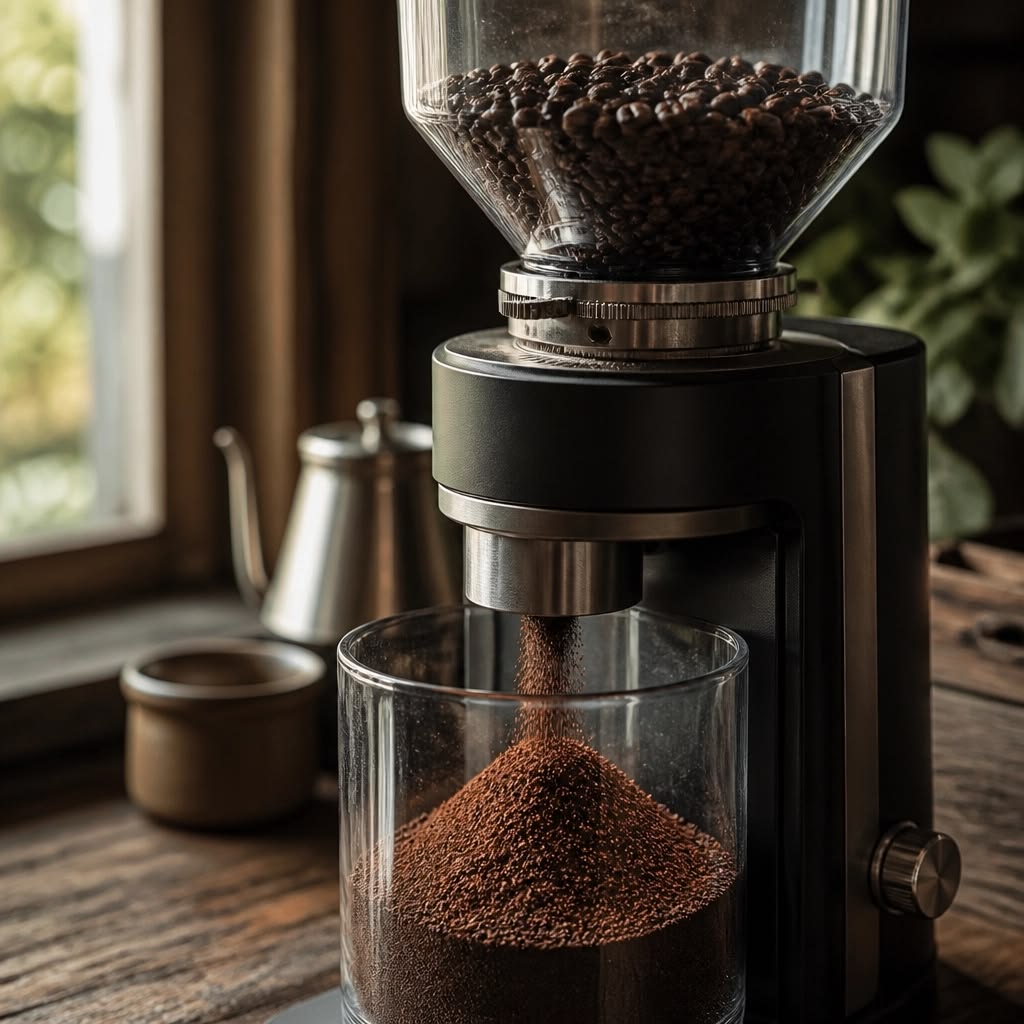
Upgrading to a burr grinder usually comes with high expectations. You have read that grind consistency is the single biggest improvement a home brewer can make, you have unboxed your new machine, and you are ready for café-quality coffee. Then the first few cups arrive tasting sour, muddy, or oddly bitter, and it is hard to know what went wrong.
The truth is that a burr grinder is a precision tool, and precision tools reward good habits. Small mistakes in setup, timing, cleaning, and bean selection can cancel out much of the advantage you paid for. The encouraging part is that each of these mistakes is easy to spot and simple to fix once you know what to look for. This guide is written for home brewers who have just moved on from pre-ground coffee or a blade grinder, pour-over and espresso hobbyists trying to dial in their recipes, and busy households that simply want the same reliable cup every morning. Each section below covers a common error, explains why it hurts flavor, and walks through a practical correction.
Why Burrs Raise the Bar in the First Place
Before looking at mistakes, it helps to understand what makes burrs different. Instead of a spinning blade that smashes beans at random, a burr grinder feeds beans between two textured surfaces, one stationary and one rotating. The distance between them sets the maximum particle size, so beans are crushed down to a predictable range rather than chopped into a mix of dust and chunks. Conical burrs use a cone inside a ring, while flat burrs use two parallel discs; both aim for the same uniformity.
That uniformity is why a well-made burr coffee grinder gives you real control over extraction. When particles are similar in size, water pulls flavor from all of them at roughly the same rate, producing a cup that tastes balanced and clear. The flip side is that the grinder will faithfully reproduce whatever setting and routine you give it, including the wrong ones. Good technique matters because the machine is no longer hiding anything.
Using One Setting for Every Brew Method
One of the most frequent mistakes is finding a setting that seems reasonable and leaving it there regardless of how you brew. Different methods expose coffee to water for very different lengths of time, and each needs its own grind range. Using a pour-over setting for French press, for example, produces a cup that is bitter and silty, while using it for espresso leads to a watery shot that runs far too fast.
Think of your grinder’s dial as a spectrum rather than a single point, and use these broad starting zones:
- Espresso: fine, similar to powdered sugar with a slight grit.
- Moka pot: fine but a touch coarser than espresso.
- Pour-over and drip: medium, like coarse sand.
- French press and cold brew: coarse, like breadcrumbs or sea salt.
From there, let taste guide you. Sour, thin coffee usually means you need to go finer, while harsh bitterness suggests going coarser. Make one small adjustment at a time.
Grinding Too Far Ahead of Brewing
It is tempting to grind a full day’s worth of coffee in the morning, or even a week’s worth on the weekend, to save time. Unfortunately, ground coffee loses aromatic compounds quickly because so much more surface area is exposed to air. Within a short time, the bright, fruity, and floral notes that made you buy specialty beans begin to fade. Grinding immediately before brewing is the easiest flavor upgrade available, and it costs nothing. If mornings are rushed, weigh out whole beans the night before into a small container, then grind just before the kettle boils.
Ignoring Retention and Static
Every grinder holds onto a small amount of coffee in the burr chamber and exit chute. If you do not account for this, the first portion of each new batch contains stale grounds from yesterday, and if you just changed settings, those grounds are also the wrong size. Many home brewers never notice, but it can explain inconsistent results from one day to the next.
The fix is a simple purge. After changing the grind setting or when the grinder has been idle, run a small amount of beans through and discard it. Tapping the chute or the hopper gently at the end of grinding helps release particles that are hanging on.
A Quick Fix for Clumping and Mess
Static causes grounds to cling to the catch cup and scatter across the counter. A popular trick is to add a single drop of water to your dosed beans and stir before grinding. The tiny bit of moisture reduces static charge noticeably, so grounds fall cleanly into the container and retention drops as well.
Adjusting the Dial at the Wrong Moment
Many owners change the grind setting while the grinder is off and still loaded with beans. With some designs, moving to a finer setting this way can jam beans between the burrs and strain the motor. Your manual is the best reference here, but a common recommendation is to make finer adjustments while the grinder is running or after the chamber is empty. Moving coarser is usually less of a concern. Building this habit protects the burrs and keeps your setting accurate.
Skipping Regular Cleaning
Coffee beans contain oils that slowly coat the burrs and chamber. Over time, those oils turn rancid and pass stale, unpleasant flavors into fresh coffee. Built-up residue can also clog the chute and make particle size less consistent. Because the change is gradual, many people do not realize how much flavor they have lost until after a thorough clean.
A simple routine keeps things in check. Brush out the chute and catch cup weekly. Every few weeks, unplug the grinder, empty the hopper, and remove the upper burr according to the instructions so you can brush both burr surfaces clean. Whether you own a SHARDOR model or another brand, the manual will show exactly how the burr assembly lifts out and goes back in. Avoid washing burrs with water unless the manufacturer allows it, and make sure every part is completely dry before reassembly. Grinder cleaning tablets can help remove oils between deep cleans.
Expecting the Grinder to Rescue Stale Beans
Even the most consistent grind cannot restore flavor that is already gone. Beans bought without a roast date, stored in a clear jar on a sunny counter, or left open for weeks will taste flat no matter how carefully you grind them. Look for a roast date on the bag, buy amounts you will finish within a few weeks, and store beans in an airtight, opaque container away from heat. Very dark, oily roasts also tend to clog burrs faster, so they call for more frequent cleaning.
Rushing the Dial-In Process
Finally, many brewers change too many things at once. They adjust the grind, switch the coffee-to-water ratio, and try a new pouring technique in the same morning, then cannot tell which change made the difference. Treat dialing in like a small experiment. Keep the dose, water temperature, and method steady, adjust only the grind, and taste the result. A short note on your phone recording the bean, setting, and outcome turns trial and error into a reliable recipe you can repeat whenever you buy that coffee again.
Small Fixes, Noticeably Better Cups
A burr grinder can transform your home coffee, but only when the habits around it support the precision it offers. Most disappointing cups trace back to a handful of avoidable mistakes: using one setting for every method, grinding too early, overlooking retention and static, adjusting the dial carelessly, letting oils build up, relying on stale beans, and changing too many variables at once.
Each fix is simple. Match the grind to your brew method and let taste guide adjustments. Grind just before brewing, purge after changes, and use a drop of water to tame static. Clean the burrs on a regular schedule, buy fresh beans and store them properly, and change one variable at a time while you dial in. Put these habits together and your grinder will deliver what you hoped for when you bought it: consistent, balanced coffee that tastes clearer and sweeter, cup after cup, without guesswork.