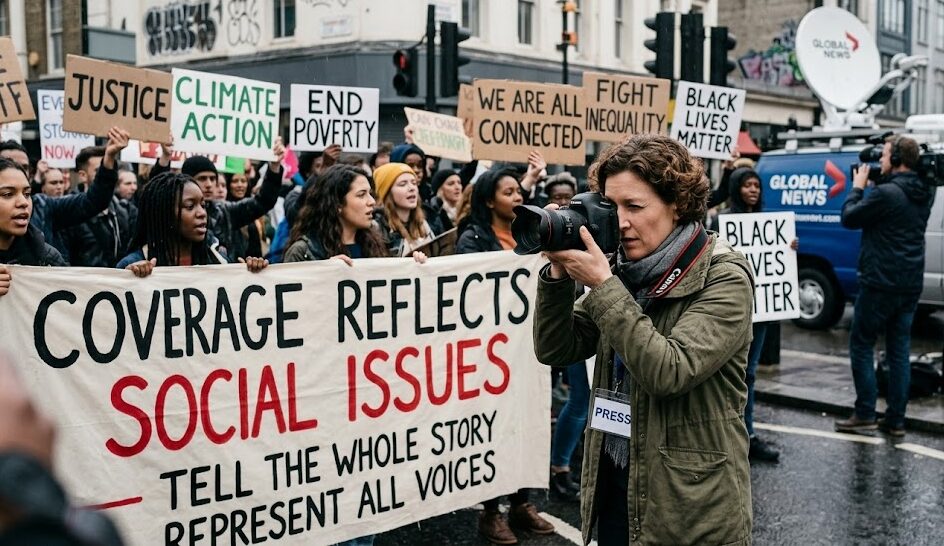
In today’s fast-paced world, news media plays a crucial role in shaping our understanding of the society we live in. Every headline, every story shared, and every image broadcasted has the power to influence public perception and ignite conversations around pressing social issues. From politics to health care, from climate change to inequality, what makes it into our news feeds often reflects the pulse of current societal challenges. This connection between news coverage reflects social issues is not just coincidental; it’s a mirror reflecting both our triumphs and struggles as a community. As we delve deeper into this topic, we’ll uncover how media narratives shape not only awareness but also action within society.
News coverage and its impact on social issues
News coverage reflects social issues plays a pivotal role in shaping societal narratives. It brings pressing issues to the forefront, influencing how communities respond. When media outlets spotlight certain topics—like racial inequality or climate change—they draw public attention. This amplification can lead to increased awareness and activism, impacting legislation and community actions. Conversely, underreported issues may fade into obscurity. If news organizations choose not to cover vital topics like mental health or poverty adequately, these social challenges remain invisible. The selection of stories by journalists can sway public perception significantly. What is covered shapes what society considers important, often leading to collective action or complacency based on that focus.
The relationship between news coverage and public perception
The connection between news coverage and public perception is profound. Media shapes how we view the world around us, influencing our thoughts on pressing social issues. When stories break, they often dictate the narrative that society follows. For instance, extensive reporting on poverty can spark a sense of urgency among citizens to advocate for change. Conversely, neglecting certain topics can lead to apathy. Moreover, sensationalism in news can skew perceptions dramatically. When crime dominates headlines without context, communities may develop unwarranted fears or biases against specific groups. Social media adds another layer to this dynamic. Headlines can go viral quickly, amplifying both positive and negative perceptions almost instantaneously. As people consume information daily from various sources, their understanding evolves based on what is highlighted or ignored in news coverage.
Case studies of news coverage influencing social issues
One notable case study is the coverage of the Black Lives Matter movement. Media outlets brought attention to systemic racism and police brutality, sparking nationwide protests. The images and stories shared on social media transformed public dialogue. Another example involves climate change reporting. As news agencies highlighted extreme weather events, public awareness surged. People began advocating for policy changes with increasing urgency. The #MeToo movement also illustrates this dynamic. Journalists exposed powerful figures accused of sexual misconduct, prompting a societal shift in how such issues are perceived and addressed. These instances show that when news media spotlight specific social issues, they can mobilize communities and influence legislative actions. Awareness grows as discussions evolve around these pivotal topics, thus reinforcing the notion that coverage reflects social issues profoundly.
Criticisms and controversies surrounding news coverage of social issues
Criticisms of news coverage often center around bias and sensationalism. Many believe that media outlets prioritize eye-catching headlines over factual reporting. This can distort public understanding of critical social issues. Controversies arise when certain topics receive disproportionate attention. For instance, violent crime may dominate headlines while systemic poverty is largely ignored. Such imbalances shape societal perceptions in misleading ways. Moreover, the role of editorial choices cannot be overlooked. Editors decide what stories are deemed important, which can lead to a narrow lens on complex issues like race or gender inequality. The rise of digital platforms has also blurred lines in journalism ethics. Misinformation spreads quickly, further complicating how audiences engage with social narratives. These challenges highlight the need for rigorous standards in reporting on sensitive matters that affect communities deeply and broadly alike.
The responsibility of journalists in covering social issues fairly and accurately
Journalists hold a crucial responsibility in shaping the narrative around social issues. Their role extends beyond mere reporting; it involves ethical considerations and a commitment to truth. Accuracy is paramount. Misinformation can perpetuate stereotypes or incite fear, leading to further societal division. Journalists must verify facts before presenting them to the public. Fairness also plays a key role in this process. Diverse voices need representation, ensuring that marginalized communities are not overlooked or misrepresented. By including various perspectives, journalists foster understanding and empathy among audiences. Moreover, sensitivity matters when covering delicate topics like mental health or crime. Thoughtful language can influence how society perceives these issues and those affected by them. Journalists have the power to inform and educate their audience while promoting social justice through responsible coverage of vital societal concerns.
Conclusion:
News coverage plays a crucial role in shaping our understanding of social issues. It acts as both a mirror and a catalyst, reflecting the complexities of society while also influencing public attitudes and behaviors. From highlighting systemic injustices to bringing attention to pressing humanitarian crises, media coverage shapes narratives that can drive change. The intricate relationship between news reporting and public perception cannot be overstated. How stories are framed affects what people believe about various social matters. For instance, sensationalized headlines may instill fear or misinformation, while balanced reporting promotes informed discussions. Case studies illustrate this dynamic vividly. Coverage Reflects Social Issues of movements like Black Lives Matter has sparked widespread dialogues on racial justice. Similarly, reports on climate change have prompted policy changes at multiple levels—showing how responsible journalism can mobilize collective action. Yet not all representations in the media are constructive; there are significant criticisms surrounding biases in news coverage. Selective reporting can distort reality, contributing to societal divides rather than healing them. This underscores the vital responsibility journalists hold when addressing sensitive topics. Ethical and accurate representation is paramount for journalists who aim to cover social issues effectively. Their work should strive for fairness and depth rather than mere sensationalism or superficiality. As we reflect on the intertwining nature of news coverage with social realities, it becomes clear that media has an immense power that must be wielded wisely—for better understanding, dialogue, and ultimately progress within our communities.