The Digital Transformation of Proof of Work in Modern Field Services
In the competitive landscape of American field services, scalability is often hindered by a single, persistent obstacle: the information gap between the office and the job site. As a service company expands from a handful of technicians to a large-scale operation, the “honor system” that worked in the early days begins to fracture. Without a unified system to capture, verify, and store field data, business owners find themselves trapped in a cycle of reactive management, relying on fragmented text threads and anecdotal reports to make critical financial decisions.
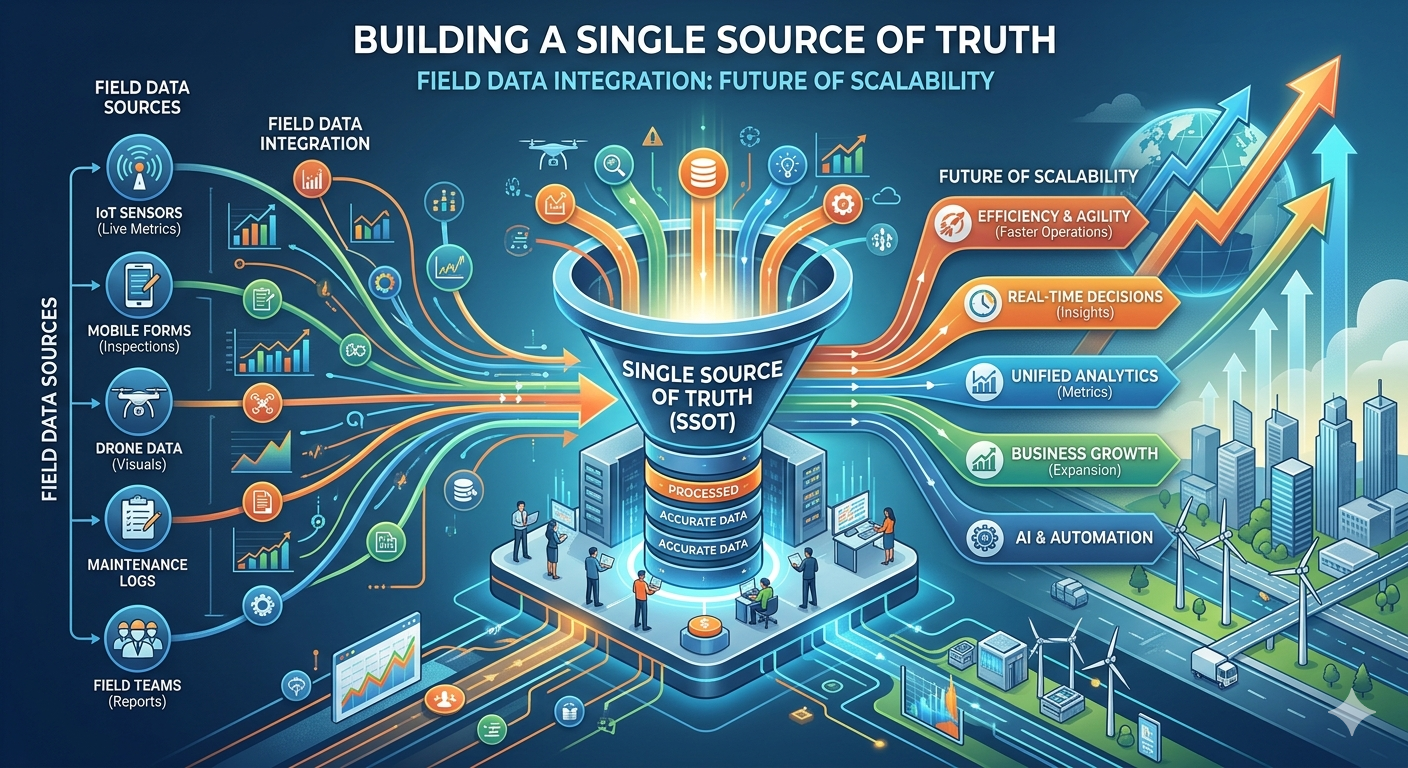
Achieving true scalability requires more than just hiring more crews; it requires the establishment of a “Single Source of Truth” (SSOT). This concept, long a staple in software development and high-level logistics, is now becoming the gold standard for construction, HVAC, cleaning, and maintenance firms across the United States.
The Problem with Fragmented Data Silos
Most field service operations suffer from “Data Silos” – valuable information that is trapped in individual smartphones, paper work orders, or the memories of site supervisors. When a client disputes an invoice or a project hits a delay, the office staff often spends hours “investigating” what actually happened on the ground.
These silos create friction in several key areas:
- Administrative Overhead: High-salaried managers spending a significant portion of their week chasing down photo updates or verifying arrival times.
- Billing Disputes: “Verification delays” where clients withhold payment because they lack documented proof of service.
- Operational Blind Spots: The inability to see real-time progress across multiple territories, leading to inefficient scheduling and wasted resources.
The Architecture of a Single Source of Truth
An effective SSOT isn’t just a storage folder; it’s a verified stream of data that flows directly from the field into the company’s decision-making engine. For a modern American contractor, this architecture relies on three pillars: Geospatial Verification, Visual Evidence, and Timestamped Metadata.
When data is captured at the source, it eliminates the “telephone game” where information is distorted as it moves up the chain of command. By integrating a professional Remote Monitoring Tool into the daily workflow, companies can ensure that every task completed is backed by a digital audit trail. This transition from “reported work” to “verified work” is the fundamental shift that allows a business to operate with surgical precision, regardless of the owner’s physical location.
Why Visual Evidence is Your Most Valuable Asset
In the US market, visual documentation is no longer a luxury; it is a core business asset. For industries like roofing, restoration, or electrical work, the most critical components are often hidden behind drywall or underground. If those stages aren’t documented in high resolution at the moment of installation, the company carries a long-term liability risk that cannot be mitigated later.
A robust SSOT system treats photos as structured data. Instead of being lost in a gallery, images are automatically tagged with GPS coordinates and timestamps. This level of detail provides an irrefutable record that protects the firm during audits or insurance renewals. More importantly, it builds immense brand equity. When a property manager receives a professional report with visual proof of every line item, the “trust barrier” is removed, and the relationship moves from a vendor-client dynamic to a strategic partnership.
Scaling Without Adding “Management Bloat”
The traditional way to scale a service business was to add more middle managers to watch over the field crews. However, this creates a heavy overhead that eats into margins. A data-integrated approach allows for “Management by Exception.”
Instead of checking in on every crew, managers only intervene when the system flags an anomaly – such as a delayed check-in or a missing photo requirement. This allows a single supervisor to effectively oversee a significantly larger number of crews compared to traditional methods. By automating the routine aspects of oversight, the leadership team can focus on high-level strategy and customer acquisition.
The Economic Impact: ROI and Cash Flow
The move toward integrated field data is an ROI-driven business move. Companies that implement an SSOT model typically see immediate improvements in operational efficiency:
- Reduced Payroll Leakage: Eliminating time-tracking errors by using GPS-stamped start and end times.
- Accelerated Billing Cycles: The ability to generate an invoice with proof of work attached the moment a technician leaves the site.
- Lower Liability Risks: Better documentation leads to fewer disputes and a stronger position during insurance evaluations.
Data as Infrastructure
The infrastructure of a successful field service company is no longer just its vehicles and equipment – it’s its data. The “Single Source of Truth” is the ultimate competitive advantage in a crowded market. It provides the transparency that clients demand, the protection that the legal environment requires, and the efficiency that scalability necessitates.
Contractors who continue to rely on fragmented communication will find themselves outpaced by leaner, more agile competitors who have embraced a digital reality. Integrating an automated management system is the final step in turning a local service provider into a professional, national-scale operation.