Key Takeaways
- Doctors decide how to manage a thyroid nodule based on imaging features and behaviour, not size alone.
- ENT specialists manage nodules that cause airway or swallowing problems.
- Thyroid specialists manage nodules that affect hormone levels or show abnormal cells.
Introduction
A thyroid nodule usually enters a patient’s life quietly. A scan for another reason reveals a lump in the neck, and the report lists measurements and unfamiliar terms. At that point, patients in Singapore often ask a practical question rather than a medical one: Who handles this next? Some nodules stay under ENT care, while others move to a thyroid specialist. This handover does not happen by routine or preference. Doctors base it on what the nodule does inside the body. Some nodules change hormone levels. Others press against nearby structures. A few raise concerns under the microscope. Understanding this division of responsibility helps patients follow the right path without confusion or delay.
1. How Doctors Assess Risk After Discovery
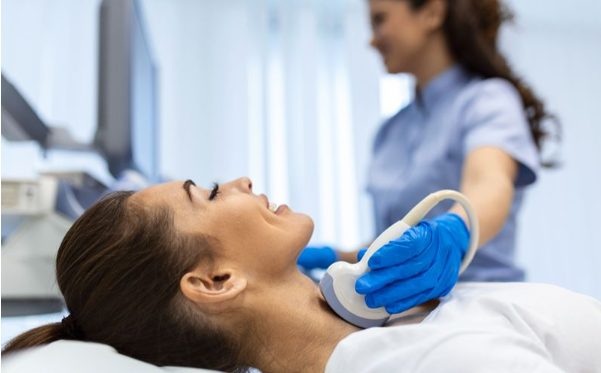
Doctors begin with ultrasound imaging. The scan does more than confirm the presence of a lump. It describes shape, texture, margins, and internal features. These details allow doctors to classify risk using established criteria such as TI-RADS.
A smooth, solid nodule with uniform appearance usually signals low risk. In such cases, an ENT specialist in Singapore often continues follow-up with scheduled imaging. The goal is stability, not intervention. A nodule with irregular borders, internal calcifications, or mixed composition raises different concerns. Those features increase the likelihood of abnormal cells, which trigger referral to a thyroid specialist in Singapore for further evaluation.
2. Where Fine Needle Aspiration Fits
Doctors recommend fine needle aspiration when imaging crosses specific thresholds. The procedure collects cells through a thin needle under ultrasound guidance. It does not treat the nodule. It clarifies what the cells look like.
ENT specialists frequently perform the procedure because they work directly with neck anatomy and ultrasound guidance. The sample then goes to pathology. Once results return, the thyroid specialist steps in to interpret what those findings mean for overall health. A benign result may require observation. Indeterminate results may need repeat sampling or molecular testing. Malignant findings shift care toward definitive treatment planning.
3. Nodules That Alter Hormone Levels
Some nodules produce thyroid hormones independently. Blood tests reveal suppressed TSH levels alongside symptoms such as palpitations, heat intolerance, or unexplained weight loss. Imaging may label these nodules as “hot” or hyperfunctioning.
In these cases, the thyroid specialist in Singapore leads management. Treatment focuses on controlling hormone output through medication, radioactive iodine, or targeted intervention. Surgery may enter the discussion later, but hormone control remains the first priority. The ENT specialist plays a secondary role unless physical compression develops.
4. Nodules That Cause Physical Obstruction
Other nodules stay hormonally silent but grow large enough to affect swallowing or breathing. Patients report a choking sensation, voice changes, or discomfort when lying flat. Imaging confirms tracheal deviation or compression.
This scenario shifts care toward the ENT specialist in Singapore. The problem involves space rather than cells or hormones. Surgical evaluation focuses on airway safety and structural relief. Even benign nodules require removal when they interfere with daily function. After surgery, thyroid specialists monitor hormone levels to ensure normal gland activity continues.
5. Ongoing Monitoring Without Immediate Treatment
Most thyroid nodules never require surgery or medication. Doctors track them through scheduled ultrasounds and blood tests. This process demands coordination rather than urgency.
The thyroid specialist monitors hormone balance and reviews lab trends. The ENT specialist reviews changes in size, shape, and neck anatomy. Each visit answers a specific question. Has the nodule changed? Has hormone output shifted? Has pressure developed? This shared approach avoids unnecessary intervention while maintaining safety.
Conclusion
Thyroid nodule care does not follow a single route. Doctors assign responsibility based on how the nodule behaves rather than who discovered it. ENT specialists manage structural and surgical concerns. Thyroid specialists manage hormonal and cellular risks. Patients benefit most when they understand this division and follow care where it leads. With proper assessment and coordinated follow-up, most nodules remain controlled and predictable rather than disruptive.
Have you been diagnosed with a thyroid nodule? Contact Dr Leslie Koh to clarify risk, next steps, and long-term follow-up planning.