White Label SEO Agency: Scalable White-Label Solutions for Digital Agencies
You can scale SEO services without hiring a full team by partnering with a white label SEO agency that delivers fulfillment under your brand. A reliable white label SEO Agency partner handles technical audits, content, link building, and reporting so you keep client relationships and margins while they handle execution.
Choosing the right partner means evaluating expertise, transparency, and how their systems integrate with yours. This article walks you through what a white label SEO agency does, what to vet in a partner, and how to maintain quality control so your agency grows profitably.
What Is a White Label SEO Agency?
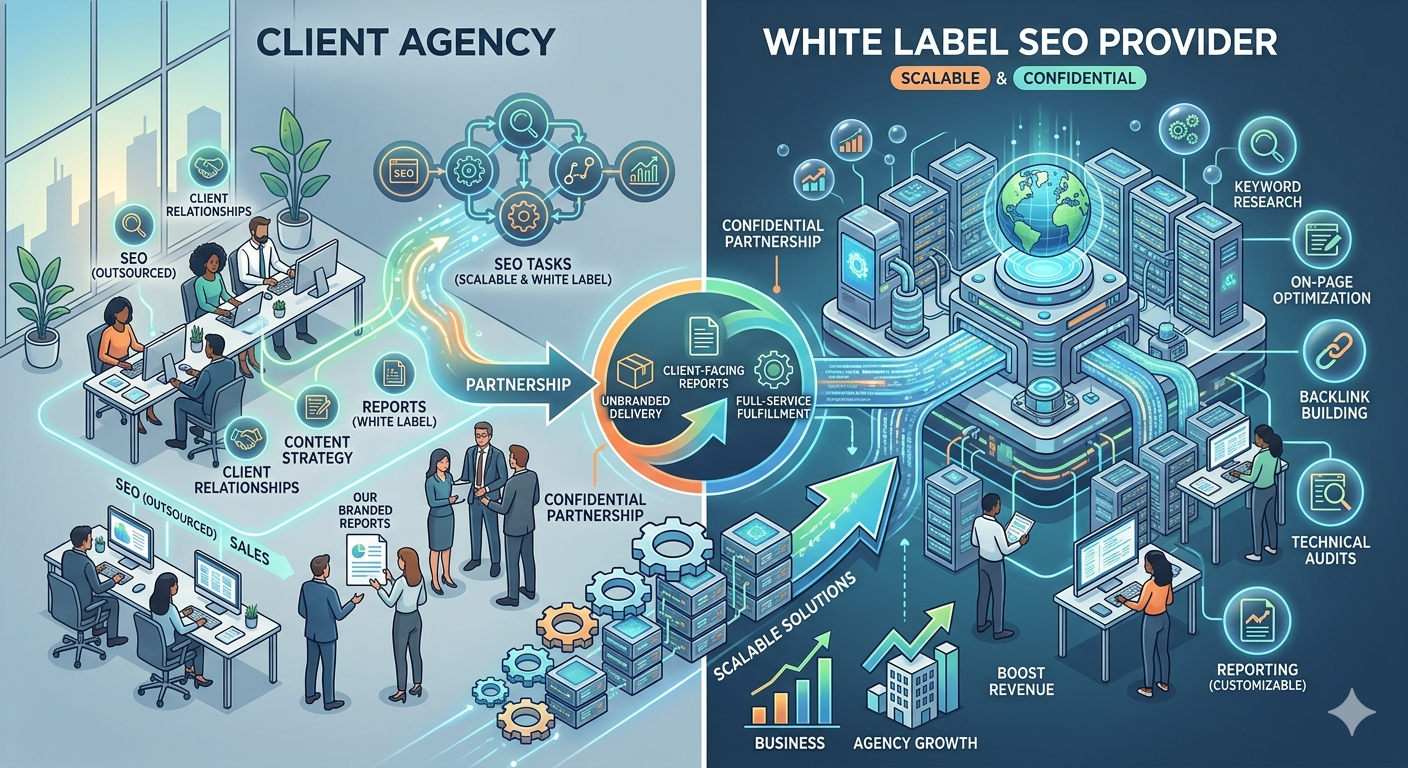
A white label SEO agency performs SEO work that you brand and sell as your own. They handle technical tasks, content, and reporting behind the scenes so you can focus on client relationships and strategy.
Core Services Offered
White label SEO agencies typically provide a modular set of services you can resell under your brand. Expect on-page optimization (meta tags, header structure, schema markup), technical SEO audits (crawlability, site speed, indexation), and site architecture recommendations.
Content services often include keyword-driven blog posts, landing page copy, and content briefs for your writers. Link-building packages range from outreach and guest posts to digital PR campaigns, with clear scopes and link quality metrics.
Reporting and analytics come ready-branded: ranking reports, organic traffic trends, conversion tracking setups, and monthly performance summaries. Many providers also offer ongoing strategy, competitor analysis, and local SEO (Google Business Profile management) as add-ons.
How White Label SEO Differs from Traditional SEO
With white label SEO, you outsource delivery while retaining client-facing ownership. You control pricing, client strategy, and communication; the provider executes the work.
Traditional in-house SEO requires hiring specialists, managing workflows, and investing in tools — white label reduces those overheads and speeds time-to-market.
Service-level agreements (SLAs), turnaround times, and content approval processes define the partnership. You should verify transparency on methodologies, link acquisition tactics, and reporting granularity to avoid misaligned expectations or SEO risks.
Industries Benefiting from White Label SEO
White label SEO works well for agencies servicing niches where SEO demands vary by scale. Local businesses (law firms, medical practices, home services) benefit from local citation work and GBP optimization you can resell.
Ecommerce brands need product SEO, category optimization, and technical fixes for crawling and faceted navigation; white label partners often provide scalable solutions for SKU-heavy sites.
B2B firms and SaaS vendors benefit from content-led strategies: pillar pages, technical whitepapers, and link outreach to industry publications. Marketing, PR, and web design shops also use white label SEO to expand service portfolios without hiring full-time specialists.
Choosing the Right White Label SEO Partner
You need a partner that reliably delivers technical execution, transparent reporting, and predictable pricing. Focus on providers that match your service level, client types, and growth plans.
Key Criteria for Selection
Assess technical skill and service scope first. Verify experience with on-page SEO, technical audits, content creation, link building, and local SEO when applicable. Ask for case studies showing measurable KPIs such as organic traffic growth, keyword rankings, and conversion lifts for clients in industries similar to yours.
Demand transparent processes and SLAs. Confirm turnaround times for tasks, revision policies, and how they handle algorithm updates. Review pricing models — per-project, monthly retainer, or white-label bundles — and ensure margins remain healthy for your agency.
Check tools and security. Confirm access to standard SEO platforms (e.g., GA4, Search Console, SEMrush/Moz/Ahrefs) and that they use agency-level accounts or provide client-branded reports. Verify data handling, NDAs, and client ownership of content and analytics accounts.
Onboarding and Collaboration Process
Define a documented onboarding checklist. Include steps for account access, brand guidelines, content briefs, sitemap and indexation reviews, and a 30/60/90 day plan. Require a named account manager and a single point of contact for escalation.
Set communication cadence and channels. Agree on weekly or biweekly status calls, Slack or email workflows for task assignments, and a shared project board (Asana, Trello, or Monday). Specify response times and approval windows to avoid bottlenecks.
Standardize deliverables and templates. Use a content brief template, technical audit checklist, and reporting dashboard layout. Insist on your branding in client-facing materials and control over final client messaging to preserve the relationship.
Evaluating Results and Performance
Define measurable KPIs before work begins. Track organic sessions, ranking positions for target keywords, click-through rate (CTR), pages indexed, and conversion metrics tied to SEO landing pages. Set baseline values and target timelines (e.g., 3-, 6-, and 12-month milestones).
Use dashboards and monthly reports. Require automated dashboards (GA4 + Search Console + keyword tracker) and a concise monthly report highlighting wins, risks, and next-month priorities. Ask for raw data access so you can validate numbers independently.
Audit quality regularly. Perform quarterly content and backlink audits, review technical fixes implemented, and spot-check deliverables against agreed standards. If performance lags, require a remediation plan with specific actions, deadlines, and impact estimates.