



Winter can be a challenging season not only for people, but also for our pets. As temperatures drop across much of the United States, homes are sealed tighter, heaters run longer, and indoor air becomes noticeably drier. While humans may experience dry skin or irritated sinuses, cats and dogs are just as affected by changes in indoor temperature and humidity, often in ways that are easy to overlook.
Understanding how winter conditions impact pets, what the ideal indoor environment looks like, and how to monitor and adjust it can make a big difference in your pet’s comfort, health, and overall well-being. This guide explains why temperature and humidity matter for cats and dogs in winter, what ranges are ideal, and how simple tools like an indoor hygrometer can help you create a pet-friendly home.
Why Winter Indoor Conditions Matter for Pets?
During winter, cold outdoor air holds very little moisture. When that air is heated indoors, relative humidity drops even further. In many American homes, indoor humidity levels can fall below 20%, far lower than what’s comfortable or healthy for pets.
Unlike humans, cats and dogs can’t tell us when the air feels too dry or when temperature swings make them uncomfortable. However, their bodies react in noticeable ways. Dry indoor air, combined with fluctuating temperatures, can affect their skin, coat, respiratory system, joints, and even behavior.
Pets spend most of their time indoors during winter, their exposure to dry air is constant, making indoor environmental control especially important for pet owners.
How Winter Temperature Affects Cats and Dogs?
Cats and dogs are generally more sensitive to cold than many people realize, especially smaller breeds, short-haired pets, and senior animals.
When indoor temperatures drop too low, pets may experience stiffness in joints, reduced mobility, and discomfort, particularly dogs with arthritis or older cats. On the other hand, overheating a home can also cause problems. Excessively warm air combined with dryness can lead to dehydration, lethargy, and poor sleep quality.
For most cats and dogs, a comfortable indoor temperature range in winter is 65°F to 75°F (18°C to 24°C). Maintaining a stable temperature within this range helps pets regulate body heat and rest comfortably throughout the day and night.
What’s the Hidden Impact of Low Humidity on Pets?
Humidity plays an equally important role in pet comfort, yet it’s often ignored. Dry winter air can lead to several health issues for cats and dogs:
- Dry, flaky skin and dull coats
- Increased shedding and itchiness
- Cracked paw pads and sensitive noses
- Irritated airways and coughing
- Worsened allergy or asthma-like symptoms
Just like humans, pets rely on moisture in the air to keep their skin and respiratory systems healthy. When humidity drops too low, their natural defenses weaken, making them more prone to irritation and infection.
What Is the Ideal Humidity for Cats and Dogs in Winter?
Veterinarians and indoor air experts generally agree that the ideal indoor humidity range for both cats and dogs is 30% to 50%.
- Below 30%: Air becomes too dry, increasing skin irritation and respiratory discomfort
- Above 50%: Risk of mold, dust mites, and bacteria increases
Keeping humidity within this range helps protect your pet’s skin, coat, nose, and lungs while also improving overall comfort for everyone in the household.
Why Guessing Humidity Isn’t Enough?
Many pet owners try to judge humidity by how the air feels, but this method is unreliable. Dry air can feel warm, and humid air can feel cool, making it difficult to tell whether conditions are truly comfortable for pets.
Seasonal weather changes, heating cycles, and even daily activities like cooking or showering can cause humidity levels to fluctuate significantly throughout the day. Without proper monitoring, it’s easy to over-humidify or under-humidify a space—both of which can cause problems.
That’s why accurate temperature and humidity monitoring is essential, especially in winter.
How to Use a Hygrometer to Protect Your Pets?
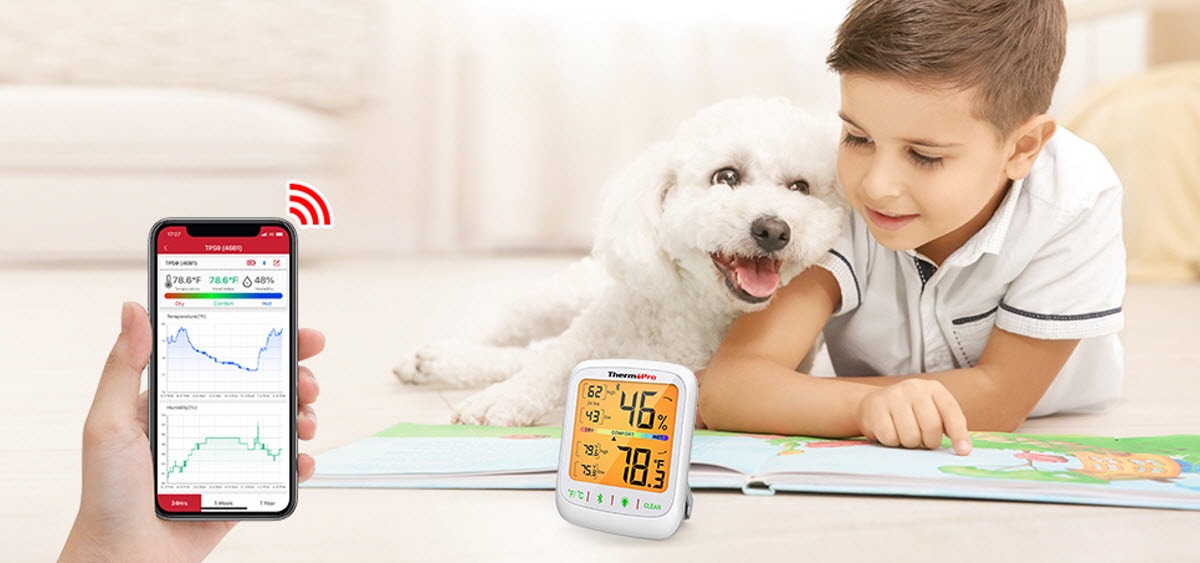
A digital hygrometer thermometer gives you real-time data about your indoor environment, allowing you to make informed adjustments for your pets’ comfort. The ThermoPro TP359 Bluetooth Indoor Hygrometer Thermometer is especially well-suited for pet owners who want an easy, reliable way to monitor indoor conditions.
Key Features That Make It Ideal for Pet Homes
The ThermoPro TP359 accurately measures both temperature and humidity and displays the readings clearly. What truly sets it apart is its Bluetooth connectivity, which allows you to monitor indoor conditions remotely on your smartphone.
- Remote Bluetooth Monitoring (Up to 260ft): Pets often have their favorite “spots”, a crate in the laundry room, a bed in the nursery, or a perch in the sunroom. These areas can have very different humidity levels than your main hallway. With the ThermoPro TP359, you can place the sensor exactly where your pet sleeps and monitor the data from your smartphone while you’re in the kitchen or even in bed.
- High-Precision Sensors with 10-Second Updates: The ThermoPro TP359 uses professional-grade Swiss-made sensors, delivering top-tier accuracy, ±0.9°F for temperature and ±2%RH for humidity. In the winter, when the furnace kicks on, humidity can drop in minutes. The ThermoPro TP359 ensures you are seeing the current reality, not data from an hour ago.
- Smart App Alerts for Proactive Care: The accompanying app allows you to set a “Comfort Zone.” For example, if the humidity in your dog’s room drops below 35%, your phone will send you a notification. This allows you to turn on a humidifier before your pet starts coughing or scratching.
- Historical Data for Vet Visits: If your pet is struggling with allergies or asthma, your vet will ask about the home environment. The ThermoPro TP359 stores 1-year data and displays it in easy-to-read graphs. You can show your vet exactly how the temperature and humidity fluctuated over the last 24 hours, the last week, or the last year.
- Clear display and flexible placement: The device usually has a simple, easy-to-read display with large numbers. It can often stand on a table, attach with a magnet to a fridge, or hang on a wall, so you can put it where it will measure accurately, away from direct heat, drafts, or strong sunlight.

This is especially helpful for pet owners who use humidifiers, dehumidifiers, or space heaters. Instead of guessing when to turn them on or off, you can rely on accurate data to make precise adjustments.
How Monitoring Helps You Adjust Humidity Correctly
When you know your home’s exact humidity level, you can respond appropriately. If humidity drops below 30%, adding moisture with a humidifier can help relieve dry skin and irritated airways in pets. If humidity climbs too high, using a dehumidifier or improving ventilation can prevent mold growth that may trigger allergies.
The ThermoPro TP359 makes this process easier by showing real-time changes on your phone. You can quickly see how turning on a humidifier affects the room and stop once you reach a healthy range, preventing over-humidification.
Creating a Pet-Friendly Winter Environment
Beyond monitoring, there are several ways to maintain a comfortable environment for cats and dogs during winter.
Using a humidifier in rooms where pets sleep or relax can significantly improve air moisture. Placing water bowls away from heat sources prevents rapid evaporation and helps pets stay hydrated.
Maintaining consistent temperatures, rather than frequent ups and downs, also reduces stress on pets’ bodies. Draft-proofing windows and doors helps keep both warmth and humidity inside, creating a more stable environment.
Regular grooming is another important step. Brushing helps distribute natural oils across your pet’s coat, reducing dryness and itchiness caused by low humidity.
Special Considerations for Senior Pets and Puppies
Older pets and young animals are especially sensitive to environmental changes. Senior dogs may experience worsened joint pain in cold, dry conditions, while kittens and puppies can struggle to regulate body temperature.
For these pets, maintaining proper humidity and temperature is not just about comfort, but it’s about health. Monitoring tools like the ThermoPro TP359 allow you to keep conditions consistent, even when outdoor temperatures fluctuate dramatically.
Why Pet Owners Benefit from Smart Monitoring
Modern pet care goes beyond food and exercise. Creating a healthy indoor environment is an essential part of responsible pet ownership, especially during winter.
The ThermoPro TP359 Bluetooth Indoor Hygrometer Thermometer fits seamlessly into this routine. Its ease of use, accuracy, and smartphone access make it ideal for busy pet owners who want peace of mind without constant manual checks.
By knowing exactly what your pets are experiencing, you can make timely adjustments that improve their comfort and well-being every day.
Final Thoughts: A Healthier Winter for Your Pets
Winter doesn’t have to be uncomfortable for cats and dogs. By understanding how temperature and humidity affect your pets and taking steps to monitor and control indoor conditions, you can create a home environment that supports their health all season long.
Maintaining an indoor temperature of 65-75°F and humidity between 30-50% provides a balanced environment where pets can rest, play, and thrive. Tools like the ThermoPro TP359 Bluetooth Indoor Hygrometer Thermometer make it simple to achieve this balance, helping you care for your pets with confidence and precision.
With the right knowledge and the right tools, winter can be just as comfortable for your furry companions as it is for you.