You’ll find the right summer camp whether you want action-packed days, creative projects, or a quiet nature escape. Summer camps gives your child focused skills, new friendships, and structured fun in a safe setting—often in a local community centre, museum, club, or outdoor program.
This post will help you compare camp types, weigh practical benefits like social growth and skill development, and pick a program that fits your schedule and goals. Expect clear guidance on day versus overnight options, specialty themes, and what to look for in staff, facilities, and registration.
Types of Summer Camps
You’ll find camps that fit different schedules, intensity levels, and skill focuses. Choose based on your child’s age, daily routine needs, and which specific skills or experiences you want them to gain.
Day Camps
Day camps run during daylight hours and return children home each evening. They suit families who want structured activity without overnight stays and work well for ages 5–14.
Typical day-camp offerings include sports leagues, arts and crafts sessions, swim instruction, nature exploration, and STEM labs. You can expect drop-off/pick-up windows, single-week or multi-week enrollment, and optional before/after care for working parents.
Look for staff-to-child ratios, certified lifeguards for swim programs, and clear medical/medication policies. Ask whether transportation, lunch, and field trips are included, and check refund and weather-closure policies before registering.
Overnight Camps
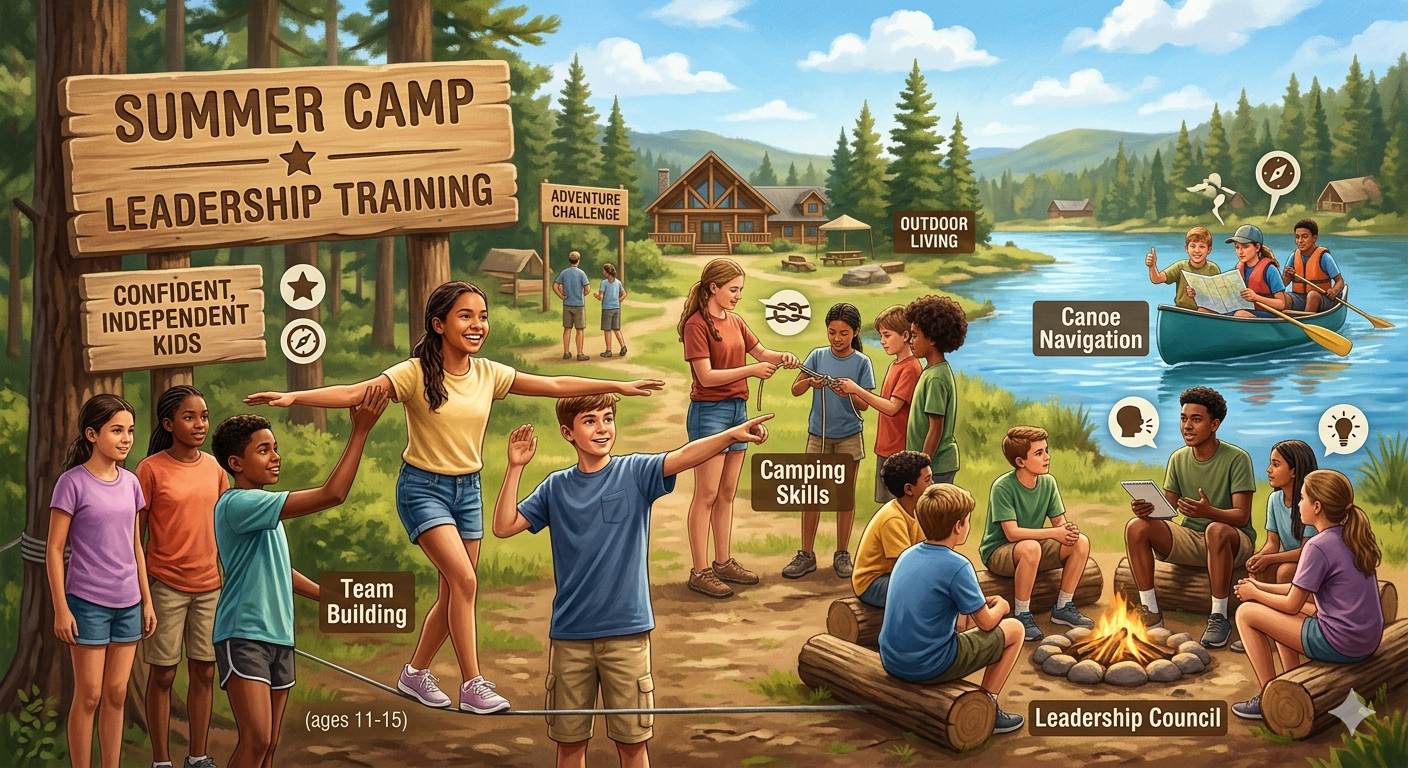
Overnight (sleepaway) camps house campers on-site for one or more week-long sessions. They provide immersive outdoor experiences like canoeing, archery, campfires, and cabin life that build independence and social skills.
Programs vary from rustic wilderness camps to well-equipped residential campuses with specialist instructors for horseback riding, sailing, or ropes courses. Meals, lodging, medical care, and evening programming are typically included; confirm counselor training and emergency procedures.
Consider session length, visiting policies, and homesickness supports. Check accreditation or state licensing, sample daily schedules, and equipment lists so you can prep your child and verify safety standards.
Specialty Camps
Specialty camps focus intensely on a single area such as STEM, performing arts, coding, competitive sports, or camps for children with special needs. They suit kids who want accelerated skill development or concentrated practice.
Curricula may include project-based STEM labs, audition-style theater rehearsals, elite-skill sports training, or therapeutic programming with adapted equipment and trained support staff. Many offer showcases, competitions, or portfolios at session end.
When choosing, review instructor credentials, class size, progress assessment methods, and required materials. Confirm whether the camp offers beginner-to-advanced tracks and if they provide ongoing support or resources after the session ends.
Benefits of Attending Summer Camp
You gain practical social skills, hands-on independence, and exposure to activities that build specific competencies and confidence. Each area offers measurable, everyday gains you can notice during and after camp.
Social Skill Development
Camp places you in small, supervised groups where you practice conversational skills, conflict resolution, and teamwork through real tasks like cabin chores or group challenges. You learn to read social cues—tone, body language, turn-taking—because activities require coordination, such as pitching tents or organizing a skit.
Structured moments (meal lines, activity rotations) and free time both matter. In structured settings you practice following group norms and leadership roles; in unstructured time you initiate games and manage peer dynamics. These repeated interactions help reduce social anxiety and expand your comfort with diverse peers.
Building Independence
At camp you handle daily responsibilities without parental prompts: packing, following a schedule, managing hygiene, and making simple decisions about activities. That repeated practice strengthens practical executive skills—planning, time management, and self-monitoring—that transfer to school and home.
Supervisors provide safety and guidance while letting you attempt tasks first, then step in if needed. This balance helps you test limits and recover from small setbacks, like resolving a roommate disagreement or fixing a mispacked bag, which increases resilience and self-reliance.
Learning New Activities
Camp exposes you to specific skills—rock climbing belays, canoe strokes, archery safety, nature identification, or drama techniques—often taught by specialists and practiced under supervision. You get immediate feedback and repeated practice, so you progress faster than trying the same activities casually at home.
You also discover interests you might not encounter locally. Trying an activity across several sessions lets you judge whether to pursue it further. Practical takeaways include measurable skills (knot types, swim strokes, campsite setup) and a clearer idea of what you enjoy and want to develop.