You want more visibility, more qualified traffic, and measurable growth — and a good SEO agency helps you get there without wasting time or budget. An effective SEO agency diagnoses what’s holding your site back, builds a practical plan to fix it, and delivers measurable improvements in search visibility and leads.
This article explains what an SEO-agency does, how those services translate into real business results, and how to pick the right partner for your goals. Expect clear criteria for evaluating agencies, signs of honest expertise, and practical questions to ask before you commit.
What Is an SEO Agency?
An SEO agency helps your website rank higher in organic search, drive targeted traffic, and convert visitors into customers. You get technical fixes, content strategy, link-building, and performance measurement tailored to your business goals.
Core Services Provided
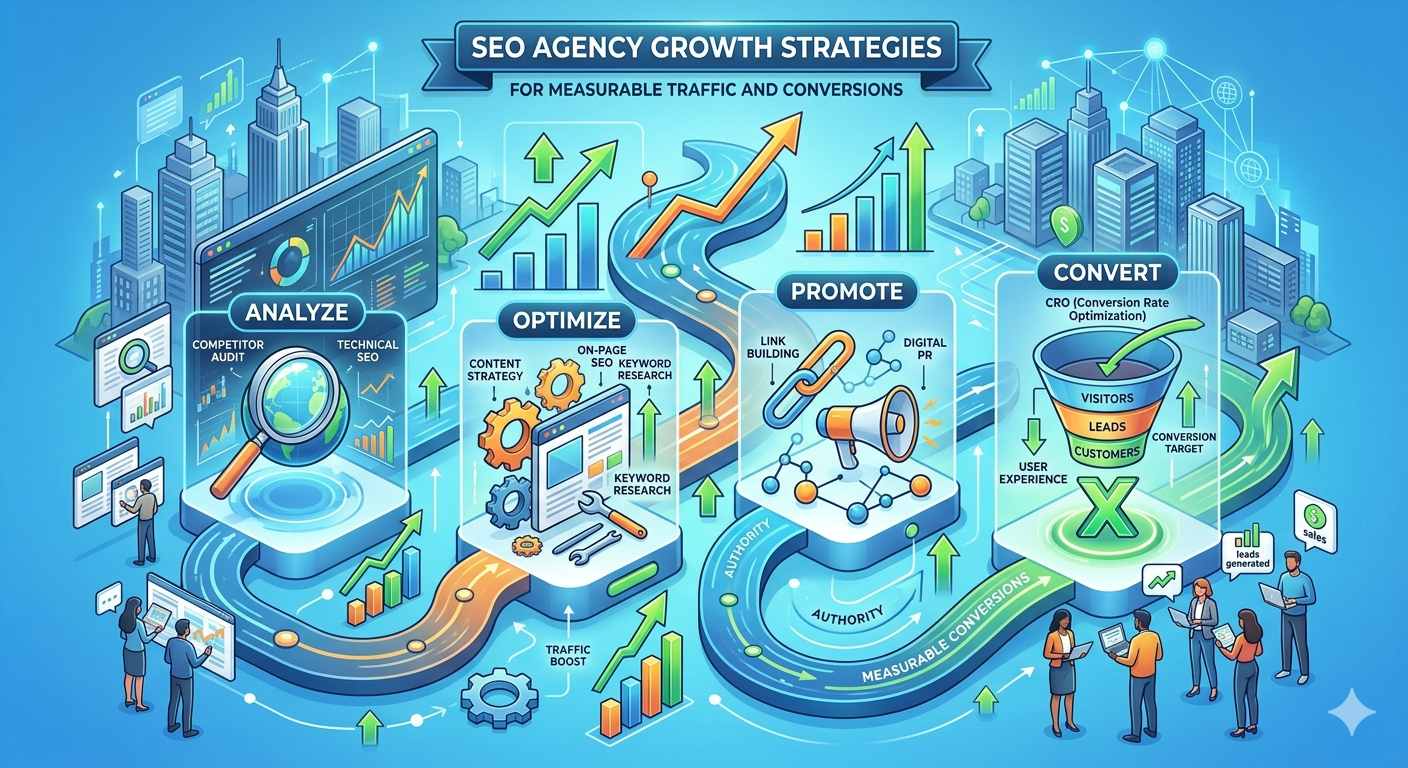
An SEO agency offers four core service areas you will typically use: technical SEO, on-page optimization, content strategy, and off-page (link) building.
Technical SEO addresses site speed, mobile usability, crawlability, XML sitemaps, and structured data so search engines can index your pages correctly. Fixes often include improving Core Web Vitals, resolving crawl errors, and implementing canonical tags.
On-page optimization covers metadata, header structure, keyword mapping, and internal linking to align individual pages with target queries. Agencies also run content audits and rewrite or optimize pages to increase relevance and CTR.
Content strategy creates topic clusters, editorial calendars, and pillar content aimed at buyer stages. Off-page work focuses on acquiring authoritative backlinks, digital PR, and relationship outreach to boost domain authority and referral traffic.
How SEO Agencies Operate
You’ll begin with an SEO audit that benchmarks organic traffic, keyword rankings, technical issues, and backlink profile. The agency uses that audit to create a prioritized roadmap with quarterly or monthly milestones tied to KPIs like organic sessions, ranking improvements, and conversions.
Execution splits into strategy, implementation, and measurement. Strategy defines targets and keyword scope. Implementation can include in-house teams or outsourced writers, developers, and outreach specialists.
Measurement uses analytics and rank-tracking tools to report on progress; reputable agencies provide regular dashboards and actionable recommendations rather than just raw data. Contracts may be project-based, retainer, or performance-linked depending on the scope and your risk tolerance.
Types of Clients Served
Agencies work with a range of clients: local businesses, e-commerce stores, SaaS companies, publishers, and enterprises.
Local businesses require local SEO—Google Business Profile optimization, local citations, and review management—to drive foot traffic and calls. E-commerce clients need category and product-page optimization, site architecture fixes, and conversion rate improvements to increase transactions.
SaaS companies focus on organic demand generation through content that targets high-intent keywords and supports trial signups. Publishers and media sites prioritize scalable content, crawl budget management, and ad-tech considerations.
Enterprise work often involves cross-team coordination, international SEO, and complex technical fixes at scale, while smaller businesses usually need a more hands-on, cost-sensitive approach.
Choosing the Right SEO Agency
You need an agency that matches your goals, budget, and technical needs. Focus on measurable outcomes, clear processes, and direct lines of communication.
Factors to Consider
Assess the agency’s core capabilities against your priorities: on-page SEO, technical audits, content strategy, link building, local SEO, or ecommerce SEO. Ask for specific examples of work in your industry or with similar traffic/scale, and verify whether they handle strategy in-house or outsource tasks.
Check pricing models and contract terms. Prefer monthly retainers with defined deliverables or performance-based clauses tied to agreed KPIs. Confirm tools they use (e.g., Search Console, Ahrefs, Screaming Frog) and whether you’ll get direct access to reports.
Evaluate team experience and roles. Know who will run audits, who writes content, and who manages technical fixes. Require a single point of contact and regular check-ins to avoid fragmented ownership.
Reviewing Case Studies and Results
Request 3–5 case studies with verifiable KPIs: organic sessions, keyword ranking improvements, conversion lift, and timeline. Look for baseline metrics, the strategy applied, and clearly attributed outcomes rather than vague percentage claims.
Demand evidence: screenshots of analytics, before/after ranking reports, or client testimonials that include measurable results. Prefer case studies showing sustained growth over at least 6–12 months, not only short-term spikes from one-off campaigns.
Ask how they isolated SEO impact from other channels. Good case studies explain testing methods, attribution models used, and whether results relied on technical fixes, content work, or link acquisition.
Evaluating Transparency and Communication
Insist on a clear reporting cadence and format. Monthly reports should include organic traffic, keyword movements, technical issues resolved, and next-month priorities. Ask for access to raw data (Google Analytics / GA4, Search Console) rather than only summarized slides.
Clarify escalation paths and response times. Define SLA expectations for urgent issues (e.g., site crashes or major traffic drops) and typical turnaround for routine requests. Confirm who approves content and technical changes and how you’ll sign off on major recommendations.
Verify ethical practices. Require the agency to outline link-building tactics, avoid black-hat shortcuts, and provide a written policy for dealing with penalties or algorithm updates.