In modern industrial systems, motion accuracy is no longer judged only by how precisely a machine can move once. It is judged by whether that movement can be repeated thousands or millions of times without drift, unexpected variation, or loss of confidence in the measurement itself. In production environments where downtime is costly and tolerance stacks are tight, even small inconsistencies in position feedback can cascade into quality issues, rework, or equipment stress.
Linear position sensing sits at the core of this challenge. Engineers are expected to design systems that maintain stable feedback across long operating cycles, changing environmental conditions, and varying load profiles. Accuracy, repeatability, and signal stability are not abstract performance claims; they directly affect how reliably a machine behaves over time. Magnetic linear sensing has become a common choice in this context because of how it balances these three performance characteristics under real-world constraints.
How Magnetic Linear Sensors for Position Detection Applications Address Core Performance Requirements
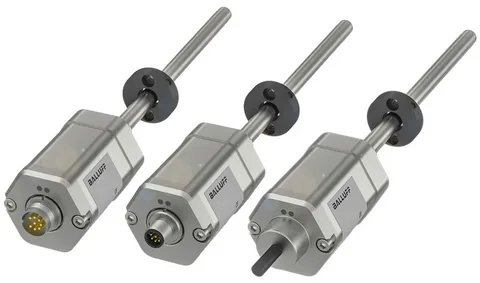
Magnetic Linear Sensors for Position Detection Applications are designed to measure linear displacement by detecting changes in a magnetic field along a defined sensing path. A magnet is attached to the moving element, and the sensor interprets the magnetic field variation as position data. This non-contact method has important implications for accuracy, repeatability, and long-term signal behavior.
Unlike contact-based or optical systems, magnetic linear sensors are not dependent on physical engagement or line-of-sight. This separation between the sensing element and the moving component reduces several common sources of measurement degradation, particularly in industrial environments where contamination, vibration, and mechanical wear are unavoidable.
Accuracy in the Context of Industrial Motion Systems
Accuracy describes how closely a measured position corresponds to the actual physical position. In industrial automation, accuracy must be evaluated in context. Absolute laboratory accuracy is less valuable if it cannot be maintained under operating conditions.
Magnetic linear sensors achieve practical accuracy by:
- Providing predictable response over the defined measurement range
- Maintaining consistent output despite environmental exposure
- Avoiding mechanical wear that alters calibration
Because the sensing principle does not rely on friction or optical clarity, accuracy remains stable even as surrounding components age or accumulate contamination.
Why Repeatability Often Matters More Than Absolute Precision
In many industrial applications, repeatability is more critical than absolute accuracy. A system that consistently stops at the same point, even if that point is offset slightly from a theoretical ideal, can often be compensated for in control logic. A system that stops at a different point each cycle cannot.
Magnetic linear sensors support repeatability by:
- Eliminating contact-related hysteresis
- Maintaining stable signal characteristics over time
- Reducing sensitivity to minor mechanical changes
This repeatable behavior is particularly valuable in applications such as automated assembly, packaging, and material handling, where consistent motion matters more than extreme precision.
Signal Stability as a Foundation for Control Confidence
Signal stability refers to the consistency and cleanliness of the sensor output over time. Unstable signals introduce noise into control systems, forcing controllers to filter aggressively or tolerate uncertainty.
Magnetic linear sensors tend to deliver stable signals because:
- Magnetic fields are not affected by dust or light obstruction
- There is no physical contact to introduce intermittent behavior
- Sensor output remains predictable under vibration
Stable signals allow control systems to respond smoothly and reduce unnecessary corrective action.
Impact on Closed-Loop Control Performance
Closed-loop control systems depend on continuous, reliable feedback to adjust motion dynamically. Inconsistent feedback forces controllers to work harder, increasing mechanical stress and reducing efficiency.
With magnetic linear sensors:
- Feedback reflects actual motion consistently
- Controllers can apply smoother corrections
- Oscillation and hunting are reduced
Improved feedback quality translates directly into better motion control performance and longer equipment life.
Environmental Influences on Measurement Quality
Industrial environments expose sensors to temperature variation, moisture, oil mist, and debris. These factors often degrade measurement quality in optical and mechanical systems.
Magnetic linear sensors maintain performance because:
- Magnetic sensing is unaffected by surface contamination
- Sealed designs protect electronics from moisture
- Output remains stable across temperature changes
Environmental tolerance is a key contributor to long-term measurement reliability.
Long-Term Stability and Drift Resistance
Drift occurs when a sensor’s output changes over time without a corresponding change in actual position. Drift undermines trust in measurement data and complicates calibration.
Magnetic linear sensors resist drift by:
- Avoiding wear-prone mechanical interfaces
- Maintaining consistent magnetic characteristics
- Reducing dependency on fragile optical components
Lower drift rates reduce recalibration frequency and simplify maintenance planning.
Installation Tolerance and Its Effect on Accuracy
Sensors that require precise alignment often lose accuracy as mechanical structures shift over time. Vibration, thermal expansion, and routine maintenance can all affect alignment.
Magnetic linear sensors allow:
- Greater mounting tolerance
- Stable performance despite small positional shifts
- Reduced sensitivity to structural movement
This tolerance helps preserve accuracy and repeatability throughout the equipment’s service life.
Performance Under Vibration and Dynamic Loads
Vibration and changing loads are common in industrial motion systems. These conditions can introduce noise or intermittent behavior in some sensing technologies.
Magnetic linear sensors perform well because:
- There is no physical contact to bounce or wear
- Signal output remains continuous
- Measurement is not disrupted by mechanical resonance
Stable performance under dynamic conditions supports reliable automation.
Maintenance Implications of Stable Sensing
Maintenance teams rely on sensor data to diagnose issues accurately. Unstable or drifting signals complicate troubleshooting and increase downtime.
Clear, stable sensor output helps maintenance by:
- Confirming whether issues are mechanical or control-related
- Reducing unnecessary component replacement
- Supporting faster root-cause identification
Better signal quality leads to more efficient maintenance practices.
Supporting Standardization Across Systems
Consistency in sensing technology simplifies training, documentation, and spare-parts management. Magnetic linear sensors offer predictable behavior across installations.
This supports:
- Uniform configuration practices
- Consistent interpretation by operators
- Reduced variation between machines or lines
Standardization strengthens operational reliability at scale.
Comparison With Optical Linear Sensors
Optical linear sensors can achieve high resolution but are sensitive to contamination and alignment. Over time, environmental exposure often degrades their performance.
Magnetic linear sensors trade extreme resolution for:
- Greater environmental robustness
- Stable long-term behavior
- Lower maintenance demands
For many industrial applications, this tradeoff results in better overall performance.
Comparison With Mechanical Linear Sensors
Mechanical sensors offer simplicity but introduce wear, friction, and contact-related variability. These factors directly affect repeatability and stability.
Magnetic linear sensors avoid:
- Contact wear and fatigue
- Mechanical hysteresis
- Gradual loss of accuracy due to friction
This avoidance improves consistency over long operating cycles.
Role in Quality Assurance and Process Consistency
Consistent position feedback supports consistent product quality. Variations in motion often lead to variations in output.
Magnetic linear sensors contribute by:
- Maintaining repeatable movement
- Supporting tight process control
- Reducing variability caused by sensing errors
Reliable feedback reinforces quality assurance efforts.
Understanding Measurement Performance in Context
Position measurement performance must be evaluated as part of a system, not in isolation. General discussions of measurement accuracy and repeatability, such as those outlined in the Wikipedia overview of measurement accuracy, help explain why stable, repeatable sensing often matters more than theoretical precision in industrial environments.
Magnetic linear sensing aligns well with these principles by emphasizing consistency and reliability.
Avoiding Over-Specification in Sensor Selection
Selecting sensors based solely on maximum resolution can introduce unnecessary complexity. Over-specification often increases cost without improving real outcomes.
Magnetic linear sensors are well suited when:
- Repeatability is more important than extreme precision
- Environmental conditions are challenging
- Long-term stability is a priority
Matching sensor performance to application needs improves system balance.
Supporting Incremental System Improvements
Many facilities upgrade systems gradually. Sensors that integrate easily without redesign are valuable.
Magnetic linear sensors support incremental improvement by:
- Working with existing controllers
- Requiring minimal mechanical modification
- Improving feedback quality without disruption
This flexibility aligns with real operational constraints.
Conclusion: Performance That Holds Up Over Time
Accuracy, repeatability, and signal stability are inseparable in industrial motion control. A sensor that performs well on paper but degrades in operation ultimately undermines system reliability. Magnetic linear sensors for position detection applications deliver performance that holds up under real conditions by avoiding contact wear, tolerating environmental stress, and providing stable, repeatable feedback.
Their strengths lie not in extreme precision, but in consistency and durability. For engineers designing systems that must perform reliably over long service lives, magnetic linear sensing offers a practical balance between measurement performance and operational resilience.