


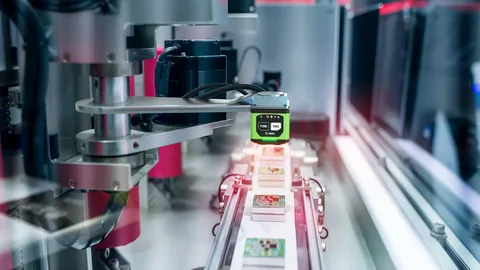
The manufacturing industry is increasingly relying on advanced technologies to improve accuracy, speed, and efficiency. One of the most significant innovations in recent years is the rise of vision measurement systems manufacturers. These systems provide unprecedented precision in the measurement and inspection of parts, enabling manufacturers to produce higher-quality products faster and more cost-effectively.
In this trend report, we will explore how vision measurement systems are transforming the world of precision manufacturing, offering valuable insights for manufacturers adopting these advanced technologies to stay competitive in the evolving market.
Vision measurement systems manufacturers are at the forefront of the revolution, helping manufacturers achieve new levels of precision and efficiency in their production lines.
1. Precision and Accuracy at Unmatched Levels
One of the defining features of vision measurement systems is their ability to deliver extraordinary levels of precision. These systems use high-resolution cameras, lasers, and optical sensors to capture detailed images and measurements of parts down to micrometers. The ability to measure parts with such fine accuracy has allowed manufacturers to achieve tolerances that were once unthinkable with traditional methods.
In precision manufacturing, even the smallest error can result in product defects or malfunctioning components. Vision measurement systems help ensure that each part meets stringent specifications, drastically reducing the risk of errors and defects in the final product.
Precision Benefits:
- Micrometer-level accuracy: Vision systems can measure parts with extraordinary precision, ensuring conformity to strict tolerances.
- Faster inspections: These systems can perform high-precision measurements quickly, reducing inspection times.
- Reduced error rates: Automated measurements eliminate human error, resulting in more consistent and reliable products.
2. Increased Efficiency and Speed
Manufacturers are constantly looking for ways to increase throughput and reduce production times. Vision measurement systems play a crucial role in accelerating the inspection and measurement process. Unlike traditional manual methods that require operators to physically measure parts one by one, vision measurement systems can capture and analyze multiple dimensions of a part in a fraction of the time.
By integrating vision systems into the production line, manufacturers can speed up quality control processes without compromising on precision, leading to faster production cycles and higher output.
Efficiency Gains:
- Faster inspections: Vision systems provide real-time feedback on measurements, enabling faster production and fewer delays.
- Automation: With automated inspections, manufacturers can handle higher volumes of parts without the need for additional labor.
- Increased throughput: Vision systems increase the speed of the measurement process, allowing for more parts to be inspected in less time.
3. Improved Product Quality and Consistency
Product quality is one of the most critical factors in competitive manufacturing. Vision measurement systems help ensure that each part meets the required specifications, leading to more consistent product quality. These systems can automatically detect even the smallest defects, such as dimensional errors, surface imperfections, or alignment issues, which might be missed by human inspectors.
By identifying quality issues early in the production process, manufacturers can take immediate corrective action, reducing defects, scrap rates, and costly rework. This improves the overall quality of the final product and enhances customer satisfaction.
Quality Control Advantages:
- Early defect detection: Vision systems can identify defects during the production process, preventing faulty parts from progressing down the line.
- Consistent product quality: Vision systems ensure that every part meets quality standards, reducing variation between products.
- Cost reduction: By preventing defects and reducing scrap, vision systems help manufacturers save on material and labor costs.
4. Reducing Human Labor and Enhancing Workforce Efficiency
Traditional measurement methods often require a significant amount of manual labor, which can slow down production and increase the likelihood of errors. Vision measurement systems replace the need for manual inspection by automating the measurement and inspection process. This reduces the need for operators to physically measure parts, allowing them to focus on higher-value tasks.
In addition to improving efficiency, reducing manual labor helps improve worker safety by eliminating repetitive motion tasks that can lead to strain or injury.
Labor and Efficiency Benefits:
- Automated measurements: Vision systems automate inspections, reducing the need for human intervention.
- Labor cost savings: By replacing manual inspections, manufacturers can reduce labor costs and reallocate workers to more complex tasks.
- Improved safety: Reducing manual inspections reduces the physical strain on workers and the risk of injury.
5. Seamless Integration into Smart Manufacturing Systems
As manufacturing becomes increasingly automated and data-driven, vision measurement systems are playing a key role in the transition to smart manufacturing. These systems can be integrated into existing production lines and connected to larger industrial networks, enabling real-time monitoring, data collection, and analysis.
The data collected by vision systems can be used to make informed decisions about production, quality control, and process optimization. This integration supports a more efficient and responsive manufacturing environment, where adjustments can be made in real-time to ensure optimal performance.
Integration with Smart Manufacturing:
- Data-driven decisions: Vision systems collect valuable data that can be analyzed to improve production processes and quality control.
- Real-time monitoring: These systems provide continuous feedback on part quality and production efficiency, allowing for immediate adjustments.
- Connected systems: Vision systems can integrate with other smart manufacturing technologies, providing a comprehensive view of the production process.
Closing Perspective: Vision Measurement Systems Are Shaping the Future of Manufacturing
As vision measurement systems manufacturers continue to innovate, these technologies are transforming the precision manufacturing landscape. By providing unmatched precision, increasing efficiency, improving product quality, and reducing costs, vision measurement systems are enabling manufacturers to remain competitive in an increasingly fast-paced and quality-driven market.
Embracing vision measurement systems not only improves current production processes but also sets manufacturers on the path to future success. With the ability to automate inspections, enhance precision, and collect valuable data, these systems are revolutionizing manufacturing and shaping the future of the industry.