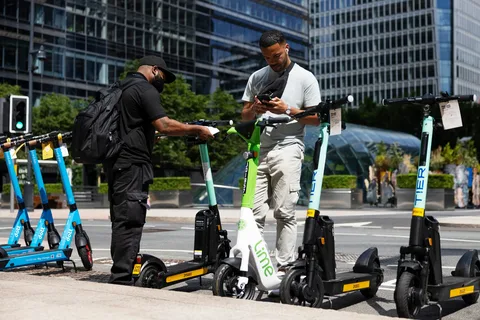
Urban mobility startups are reshaping how people move within cities. Faced with rising congestion, environmental concerns, and changing commuter expectations, these startups are turning to electric scooters as a flexible and sustainable solution. At the heart of this transformation lies scooter rental software development, which provides the digital backbone needed to launch, operate, and scale modern mobility businesses.
This blog explores how scooter rental software is enabling urban mobility startups to innovate faster, operate smarter, and compete effectively in a rapidly evolving transportation landscape.
The Emergence of Scooter-Based Urban Mobility
Cities across the globe are struggling to balance population growth with limited road infrastructure. Traditional transportation systems often fail to address short-distance travel needs efficiently. Electric scooters fill this gap by offering an affordable, on-demand, and eco-friendly alternative for last-mile connectivity.
Urban mobility startups are particularly drawn to scooter rentals because they offer:
- Lower entry barriers compared to car-based mobility services
- Faster deployment in dense urban environments
- Alignment with sustainability goals
- Strong appeal to tech-savvy, younger users
However, managing hundreds or thousands of scooters across a city is not feasible without advanced software solutions.
Why Software Is the Core of Scooter Rental Startups?
Scooter rental businesses are fundamentally technology-driven. The physical scooter is only one part of the equation; the real value lies in the software that connects users, vehicles, and operators in real time.
Scooter rental software enables startups to:
- Automate rentals and payments
- Track scooter locations and usage
- Monitor battery health and maintenance needs
- Analyze user behavior and demand patterns
- Ensure compliance with local regulations
Without a reliable software platform, even the most well-funded mobility startup will struggle to deliver a consistent and profitable service.
Key Components of Scooter Rental Software
A robust scooter rental system typically consists of multiple interconnected components designed to support both users and operators.
User Applications
The customer-facing mobile app is the primary touchpoint for riders. It must be intuitive, fast, and reliable.
Core user features include:
- Account registration and verification
- Real-time scooter discovery via GPS maps
- QR code scanning to unlock scooters
- Ride start, pause, and end functionality
- Secure in-app payments
- Ride history and digital receipts
- Notifications for safety, promotions, and ride status
A smooth user experience directly impacts adoption and retention rates.
Operator and Admin Panels
Behind the scenes, startups rely on powerful dashboards to manage daily operations.
Key admin features include:
- Live fleet tracking and status updates
- Battery level monitoring and charging insights
- Maintenance and repair scheduling
- Pricing and tariff management
- Geo-fencing for parking and riding zones
- Analytics and performance reports
This is where scooter rental management software becomes critical, helping startups maintain operational efficiency as they scale.
The Role of Scooter Rental Software Development in Scaling
For urban mobility startups, scalability is not optional; it is a necessity. A successful pilot in one neighborhood can quickly expand to multiple cities or even countries. Scooter rental software must be built with this growth in mind.
Scalable software architecture allows startups to:
- Add new scooters without system strain
- Support growing numbers of concurrent users
- Expand into new regions with minimal reconfiguration
- Integrate third-party services such as payment gateways or mapping APIs
Startups that invest early in flexible and modular software platforms gain a significant competitive advantage.
Data-Driven Decision Making
One of the most powerful benefits of scooter rental software is access to real-time and historical data. Urban mobility startups can use this data to make smarter decisions across all aspects of their business.
Software analytics help answer critical questions such as:
- Where is demand highest at different times of day?
- Which scooters are underutilized or overused?
- How pricing changes affect ride frequency
- When and where maintenance resources are needed
By leveraging data insights, startups can optimize fleet distribution, reduce downtime, and improve overall profitability.
Monetization Models Enabled by Software
Scooter rental software supports a wide range of revenue models, allowing startups to adapt to different markets and customer preferences.
Common monetization strategies include:
- Pay-per-minute or pay-per-ride pricing
- Unlock fees for starting a ride
- Subscription plans for frequent users
- Corporate or campus partnerships
- Promotional credits and referral programs
The ability to quickly test and adjust pricing models is essential for startups operating in competitive urban environments.
Addressing Challenges Through Technology
Urban mobility startups face several challenges, many of which can be mitigated through thoughtful software design.
- Regulatory compliance: Software can enforce speed limits, parking zones, and usage rules
- Fraud prevention: Identity verification and usage monitoring reduce misuse
- Operational efficiency: Automated alerts minimize scooter downtime
- User safety: In-app guidelines and ride reminders encourage responsible behavior
A well-built software platform transforms these challenges into manageable processes rather than operational bottlenecks.
Choosing the Right Development Approach
For startups, choosing between off-the-shelf solutions and custom development is a critical decision. While prebuilt platforms may offer faster launch times, they often lack flexibility and differentiation.
Custom scooter rental software development allows startups to:
- Align features with unique business goals
- Build a distinct brand experience
- Integrate seamlessly with hardware and third-party services
- Maintain control over future enhancements
This is where experienced mobility technology providers such as eazyride play an important role, helping startups move from concept to market-ready solutions efficiently.
Conclusion
As urban mobility continues to evolve, scooter rental software will become even more intelligent. Future platforms will incorporate artificial intelligence for demand forecasting, predictive maintenance, and dynamic pricing. Integration with public transportation systems and smart city infrastructure will further enhance the role of scooters in urban ecosystems.
Startups that invest early in advanced, scalable software platforms will be better positioned to adapt to these changes and lead the next wave of urban mobility innovation.
In conclusion, scooter rental software is not just a supporting tool; it is the foundation upon which successful urban mobility startups are built. By leveraging the right technology, data, and development expertise, startups can create efficient, user-friendly, and sustainable mobility solutions. With partners like eazyride, urban mobility innovators can confidently navigate growth challenges and power the future of city transportation.