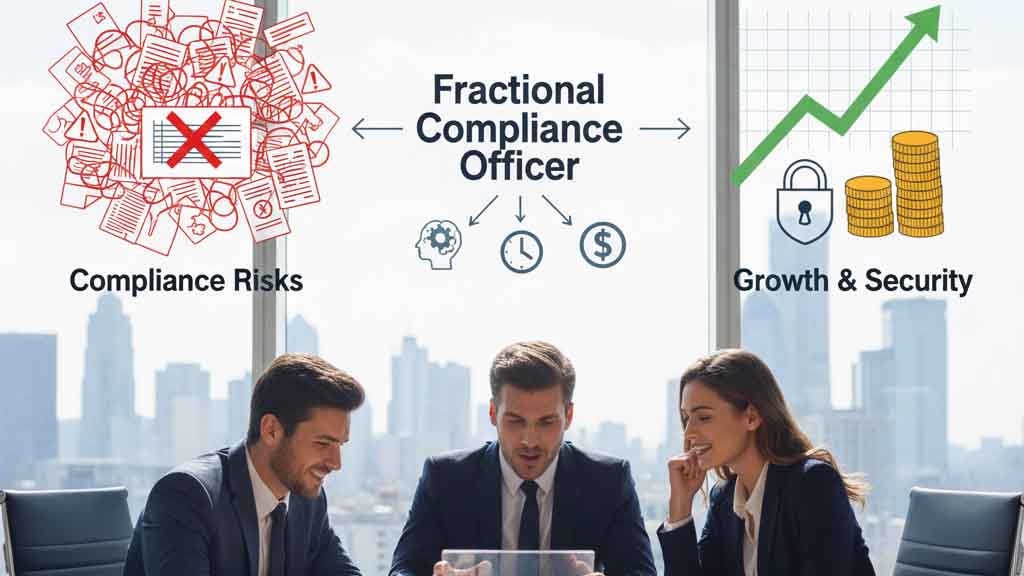
Why Hiring a Fractional Compliance Officer Is the Smartest Move for Growing Companies
Compliance has evolved from a background function to a core business priority. For growing companies, regulatory requirements are expanding faster than internal teams can keep up. Whether it is data protection, anti-money laundering, or environmental governance, leadership must now address compliance not as a cost but as a strategic capability.
A report from the Society for Human Resource Management (SHRM) found that fractional executive roles increased by 18 percent between 2021 and 2022, with compliance and governance among the fastest-growing areas. This trend reflects how companies are rethinking leadership by engaging experienced professionals through flexible partnerships.
A fractional compliance officer is one of those roles that brings structure, oversight, and expertise to businesses that need governance but are not ready for a full-time hire. This partnership-driven approach helps companies scale sustainably while maintaining accountability and trust.
The Changing Face of Compliance
The regulatory landscape is no longer static. Data privacy laws, ESG mandates, financial transparency rules, and cybersecurity standards are being introduced or updated every year. For fast-growing firms, it is easy to lose track of these changes while focusing on expansion.
Without dedicated leadership, compliance tasks become fragmented. Teams might implement isolated policies but miss systemic risks such as third-party data misuse or inconsistent internal reporting. This is where partnering with a fractional compliance officer can make a difference.
Rather than reacting to incidents, the officer helps build preventive frameworks. They work as part of the leadership team, guiding decisions through the lens of governance and integrity. The result is a company that grows confidently, knowing its systems are defensible and audit-ready.
Why Companies Partner Instead of Hire
Hiring a full-time Chief Compliance Officer is expensive. For small and mid-sized businesses, the salary, benefits, and infrastructure required for such a role can exceed current needs. On the other hand, neglecting compliance leadership is even costlier in the long run, as it can lead to penalties or reputational loss.
The fractional model solves this problem. It gives companies access to seasoned executives who work part-time or on a retainer basis. This approach brings flexibility, cost-efficiency, and expertise to organizations that are scaling or entering regulated industries.
Unlike short-term consultants, a fractional compliance officer becomes an ongoing strategic partner. They align governance with the company’s goals, ensuring that compliance enhances growth instead of slowing it down.
What Makes a Fractional Compliance Officer Different
A fractional compliance officer’s value lies in integration. They are not external advisors observing from a distance. Instead, they work directly with leadership, employees, and stakeholders to ensure every process aligns with ethical and regulatory expectations.
Key responsibilities often include:
- Conducting compliance risk assessments and developing governance frameworks.
- Implementing policies for data protection, whistleblower programs, and internal audits.
- Training employees and executives on compliance awareness.
- Coordinating with legal and finance teams for regulatory reporting.
- Monitoring laws and industry standards to ensure ongoing alignment.
Because they often work with multiple organizations, fractional officers bring cross-industry experience and tested best practices. Their perspective helps companies avoid mistakes common to first-time compliance implementations.
How the Partnership Works
A fractional compliance partnership usually follows a structured path.
- Discovery and Assessment
The officer begins with a compliance audit, reviewing policies, contracts, vendor relationships, and reporting mechanisms. They identify where the organization stands and where improvements are needed.
- Strategy and Framework Design
Next, the officer collaborates with leadership to create a compliance roadmap. This includes defining responsibilities, risk categories, and escalation procedures.
- Implementation
The compliance framework is rolled out across departments. Training and documentation ensure that employees understand both the “what” and the “why” of compliance.
- Monitoring and Improvement
The officer periodically reviews systems, updates policies, and ensures readiness for audits or new regulations. This stage focuses on maintaining agility while preserving compliance integrity.
This ongoing collaboration ensures that compliance is never treated as a one-time project but as an evolving business function.
Advantages of Partnering with a Fractional Compliance Officer
A partnership model brings tangible business value.
- Scalable Expertise
Companies pay for expertise that matches their growth stage. The officer’s involvement can expand or reduce as operations change.
- Faster Maturity
Instead of building systems from scratch, companies leverage established frameworks that fractional officers have refined through prior experience.
- Objective Oversight
Because they are not tied to internal politics, fractional officers provide neutral risk assessments that leadership can act on confidently.
- Cost Efficiency
Businesses gain executive-level leadership without the overhead of a full-time position, allowing capital to be invested elsewhere.
- Improved Stakeholder Trust
Having a recognized compliance partner signals professionalism to investors, regulators, and customers. It demonstrates that governance is being taken seriously.
- Risk Prevention
Through regular reviews and training, the officer ensures potential compliance issues are detected before they escalate into violations.
When to Consider This Partnership
Partnering with a fractional compliance officer becomes critical when:
- The company is expanding into new states or countries with different regulations.
- It handles sensitive customer data or financial transactions.
- Investors or partners demand evidence of compliance readiness.
- Internal audits reveal recurring control gaps.
- The organization is preparing for certification or merger due diligence.
At these stages, compliance maturity directly influences growth potential. Having the right partner ensures the company is prepared for scrutiny while maintaining agility.
Building a Compliance Culture Together
Compliance cannot thrive in isolation. It must be supported by the company’s culture. The fractional compliance officer plays a central role in building this culture through education, communication, and accountability.
They ensure that compliance is not perceived as a barrier but as a shared responsibility. This includes conducting workshops, simplifying policies for better understanding, and aligning departmental goals with compliance metrics.
As teams internalize these practices, compliance becomes an everyday habit rather than a checklist item. The partnership transforms governance from enforcement to empowerment.
The Long-Term Business Impact
Engaging a fractional compliance officer delivers more than operational benefits. It changes how a company approaches growth.
- Operational Consistency: Clear systems and reporting structures reduce confusion and overlap between teams.
- Audit Readiness: Having documented and tested controls ensures faster, smoother audits and investor reviews.
- Stronger Reputation: Businesses known for ethical practices attract more clients and long-term partnerships.
- Employee Confidence: Transparent rules and fair enforcement improve workplace trust and morale.
- Strategic Agility: As regulations evolve, companies can adjust faster without starting over each time.
By embedding compliance expertise within leadership, businesses gain a competitive edge built on trust and stability.
Why the Model Is Growing in Popularity
The rise in fractional leadership is part of a broader shift toward flexible expertise. Companies are realizing that governance requires seasoned judgment but not necessarily full-time presence.
This approach benefits both parties. Organizations get access to leaders who have managed complex compliance challenges before. Meanwhile, officers can focus on high-impact strategic work across several clients instead of routine administrative tasks.
For industries such as fintech, healthcare, and education, where regulations evolve rapidly, this flexibility ensures compliance never falls behind innovation.
Selecting the Right Partner
Choosing a fractional compliance officer should be treated like selecting a long-term business ally. Consider these factors:
- Experience: Look for professionals who have managed compliance in your industry or with similar regulatory exposure.
- Strategic Vision: They should understand both governance and growth, ensuring compliance aligns with business goals.
- Communication Style: A partner who can explain complex regulations in practical terms helps teams stay engaged.
- Adaptability: The officer should tailor frameworks to your organization’s culture and operational maturity.
- Proven Track Record: Seek evidence of successful partnerships or testimonials from prior clients.
A well-matched officer integrates seamlessly into your leadership environment and enhances internal collaboration.
Sustaining the Partnership
Compliance partnerships thrive on clarity and continuity. Successful collaborations share these characteristics:
- Defined Metrics: Both sides agree on what success looks like—fewer audit findings, stronger documentation, or faster response to policy updates.
- Regular Check-Ins: Quarterly reviews help align strategies and address changes in regulation or business operations.
- Transparency: The officer provides open reporting, helping leadership make informed decisions.
- Knowledge Transfer: Over time, internal teams learn from the officer, reducing dependence and improving capacity.
- Long-Term View: Even after the initial goals are achieved, maintaining the partnership ensures compliance systems remain strong as the business evolves.
This sustained collaboration transforms compliance into a living, adaptive function that grows with the organization.
Conclusion
Every growing company eventually reaches a point where spreadsheets, ad-hoc policies, and reactive risk management are no longer enough. Governance must become strategic.
A fractional compliance officer offers that transition point. By partnering with an experienced leader, companies gain oversight that scales with their ambitions. The officer’s integration into leadership ensures that compliance, ethics, and operational efficiency move together.
In a business environment where investors, regulators, and customers all demand transparency, this model delivers more than compliance; it delivers confidence.
The smartest companies are not just hiring for growth. They are partnering for resilience, ensuring that every step forward is supported by structure, accountability, and trust.