Industrial facilities are designed around load, movement, and repeatability. Raw materials arrive in bulk, components are staged for production, and finished goods are stored under pressure to move quickly and safely. In these environments, storage is not a background consideration. It shapes how space is used, how people work, and how reliably operations can scale without introducing risk.
As manufacturing and distribution operations grow more complex, storage systems are expected to handle higher loads, tighter layouts, and more frequent interaction with material-handling equipment. Light-duty or improvised solutions that may work in early stages often fail under sustained industrial use. This is why steel-based storage systems engineered for heavy-duty applications have become a standard foundation in industrial facilities rather than a specialized upgrade.
How Heavy Duty Steel Storage Functions in Industrial Environments
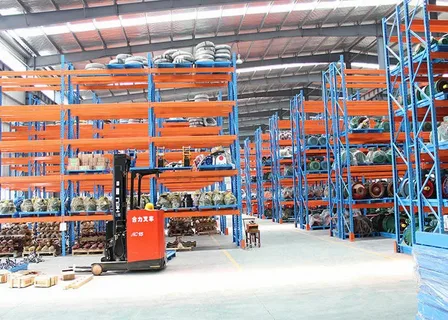
A heavy duty steel storage overview begins with understanding that these systems are engineered infrastructure, not modular furniture. Heavy-duty steel storage refers to storage systems designed to support sustained high loads, repeated access, and long service life in manufacturing plants, warehouses, and distribution centers.
These systems are typically constructed from reinforced steel components and designed to integrate with forklifts, pallet jacks, conveyors, and automated handling equipment. Load paths, anchoring points, and structural connections are defined intentionally so that weight is distributed safely and predictably. In practice, this allows facilities to store dense, heavy, or critical materials without compromising safety or workflow stability.
Why Steel-Based Storage Becomes a Structural Requirement
In industrial settings, storage systems behave like structural elements. They carry continuous loads and are exposed to vibration, impact, and uneven weight distribution. Materials that bend, fatigue, or degrade under these conditions introduce instability into daily operations.
Steel is used because its behavior under load is predictable. When properly designed, steel storage systems maintain alignment, resist deformation, and support defined load ratings over long periods of use. This predictability allows engineers and facility managers to plan layouts around known limits rather than relying on conservative workarounds that reduce usable capacity.
Load Capacity and Operational Planning
Load capacity is not only a safety concern. It is a planning constraint that defines how much inventory can be stored in a given footprint. Underrated storage systems force facilities to spread inventory horizontally, increasing travel distance and handling time.
Heavy-duty steel storage supports operational planning by:
- Allowing confident use of vertical space
- Supporting dense storage layouts without sagging or instability
- Enabling consistent loading practices across shifts
When load capacity is clearly defined and reliable, facilities can plan inventory flow more efficiently.
Storage Strength and Workplace Safety
Storage failures in industrial environments carry real consequences. A compromised rack or shelf can result in material damage, equipment collisions, or injury. As inventory density increases, the margin for error narrows.
Steel-based storage systems reduce safety risk by:
- Maintaining structural integrity under sustained load
- Resisting deformation caused by impact or vibration
- Providing predictable behavior during normal and abnormal loading
When storage behaves as expected, safety procedures are easier to enforce and less dependent on individual caution.
Supporting High-Frequency Material Handling
Industrial storage systems are accessed repeatedly throughout the day. Forklifts, reach trucks, and automated equipment interact with storage structures thousands of times over their service life. Materials that cannot tolerate this interaction degrade gradually, often without obvious warning.
Heavy-duty steel storage is designed to:
- Absorb minor impacts without structural compromise
- Maintain alignment despite repeated mechanical contact
- Support consistent access geometry for handling equipment
This durability is essential in facilities where downtime disrupts production schedules and delivery commitments.
Workflow Efficiency and Facility Layout
Storage layout directly influences how materials move through a facility. Poorly designed systems create congestion, increase travel distance, and introduce unnecessary handling. Over time, these inefficiencies compound.
Steel storage systems support efficient workflows by:
- Maintaining consistent aisle spacing
- Allowing predictable pick and replenishment paths
- Reducing manual repositioning of materials
When storage aligns with process flow, throughput improves without requiring additional labor or floor space.
Adapting to Changing Inventory Profiles
Few industrial operations remain static. Product mixes change, order volumes fluctuate, and storage density requirements evolve. Storage systems must accommodate these shifts without requiring complete replacement.
Steel-based systems are often modular, allowing:
- Adjustment of shelf heights and beam positions
- Expansion as inventory volumes grow
- Reconfiguration to support new handling methods
This adaptability extends the useful life of storage infrastructure and protects capital investment.
Integration With Automation and Advanced Handling Systems
As facilities introduce automation, storage systems must meet tighter dimensional and stability requirements. Automated retrieval systems, conveyors, and shuttles depend on consistent alignment and predictable load behavior.
Heavy-duty steel storage is commonly used in automated environments because it:
- Maintains dimensional stability required for automation
- Supports integration with mechanized systems
- Reduces the risk of misalignment over time
Without stable storage infrastructure, automation initiatives struggle to deliver expected gains.
Environmental Conditions and Material Performance
Industrial environments expose storage systems to dust, moisture, temperature variation, and, in some cases, chemical exposure. Materials that degrade under these conditions introduce reliability risks.
Steel storage systems are selected for their ability to:
- Maintain structural properties under environmental stress
- Resist wear when properly treated
- Deliver consistent performance across varied conditions
Environmental resilience is a key reason steel storage is favored in industrial facilities.
Inventory Visibility and Control
Storage systems influence how accurately inventory can be tracked. Deformation or misalignment undermines labeling, scanning, and location accuracy, leading to picking errors and reconciliation issues.
Consistent steel storage supports:
- Reliable positioning of inventory locations
- Accurate use of barcode or RFID systems
- Reduced discrepancies during audits
Inventory accuracy becomes increasingly important as facilities scale and order volumes rise.
Compliance and Risk Management
Industrial facilities operate under safety standards, building codes, and internal risk management frameworks. Storage systems must support compliance rather than create exceptions that require special procedures.
Steel-based storage systems support compliance by:
- Providing defined load ratings and documentation
- Supporting anchoring and bracing requirements
- Allowing consistent inspection and maintenance practices
Embedding compliance into storage design reduces regulatory exposure and simplifies safety management.
Maintenance and Long-Term Reliability
All industrial systems require inspection, but the frequency and effort involved depend on design quality. Storage systems that loosen or deform under load require constant attention.
Heavy-duty steel storage reduces maintenance burden by:
- Maintaining geometry over time
- Allowing visual inspection of critical components
- Minimizing the need for corrective reinforcement
This reliability lowers operational overhead and reduces unplanned downtime.
Structural Principles Behind Steel Storage Systems
Steel’s widespread use in load-bearing applications is rooted in its mechanical properties and predictable behavior under stress. General explanations of why steel is widely used in structural systems, such as those provided by the American Institute of Steel Construction, help explain its role in industrial infrastructure.
In storage systems, these principles translate into defined load paths, controlled deflection, and repeatable performance over long service lives.
Avoiding Operational Fragility at Scale
As operations grow, fragile systems become limiting factors. Operators compensate by underloading, slowing workflows, or relying on temporary fixes. These behaviors reduce capacity and increase risk.
Robust steel storage reduces fragility by:
- Allowing systems to be used as intended
- Supporting full load utilization
- Eliminating the need for workarounds
This reliability allows facilities to operate closer to planned capacity.
Storage as Infrastructure, Not Equipment
At a certain scale, storage systems function as part of the facility itself. They influence safety outcomes, workflow stability, and expansion potential for years after installation.
Steel storage earns this role by providing:
- Structural reliability under load
- Consistent performance over time
- Adaptability to operational change
Decisions made at this level shape facility performance long term.
Conclusion: Why Steel Storage Remains Foundational
Industrial and warehouse operations depend on systems that perform predictably under pressure. Storage failures create safety risks, disrupt workflows, and introduce hidden costs that compound over time. As inventory density and handling frequency increase, the tolerance for inconsistency disappears.
This heavy duty steel storage overview explains why steel-based storage systems are relied upon across industrial environments. By delivering strength, durability, and adaptability, they provide a stable foundation for safe operations and sustainable growth. In facilities where reliability is non-negotiable, steel storage is not a convenience—it is essential infrastructure.