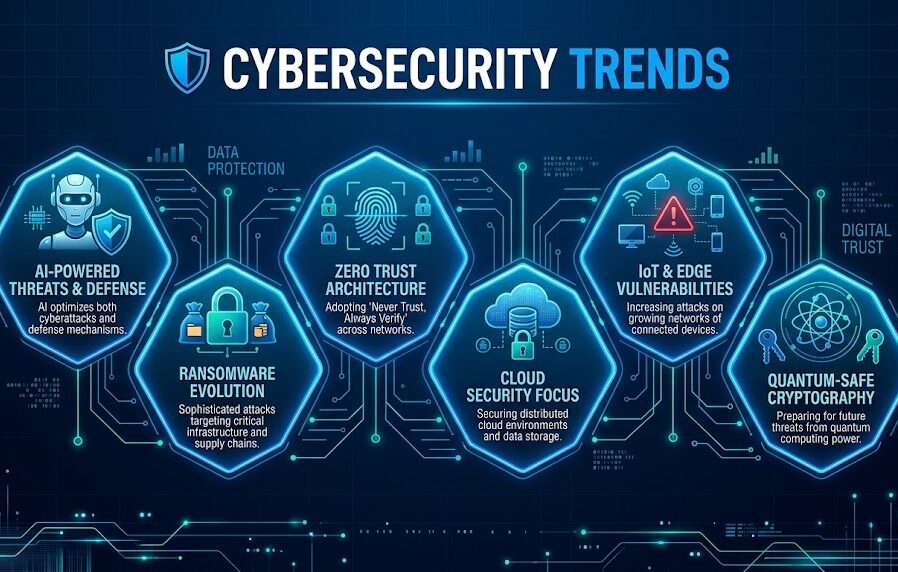
Ransomware attacks have become a prevalent threat in today’s digital landscape, with ramifications that can significantly affect businesses of all sizes. Ransomware attacks is a category of malicious software that encrypts a victim’s files, rendering them inaccessible until a ransom is paid to the attacker. The attacks are typically carried out through phishing emails, malicious downloads, or exploiting vulnerabilities in software. Once the ransomware infiltrates a system, it spreads across networks, causing widespread damage. According to cybersecurity experts, there has been an alarming increase in Ransomware attacks incidents over the past few years. In 2022 alone, it was reported that approximately 85% of organizations worldwide experienced some form of ransomware attack. Additionally, the average ransom demanded by cybercriminals has escalated, often reaching hundreds of thousands or even millions of dollars. High-profile cases, such as the Colonial Pipeline incident and the JBS Foods breach, illustrate the dire consequences that ransomware can impose, leading to significant financial losses and operational disruptions.
The financial implications go beyond the ransom itself, as businesses must also grapple with lost productivity, costs related to recovery, and potential breaches of customer trust. Rebuilding reputational damage after a ransomware attack can take significant time and resources. In light of this ongoing threat, it is critical for businesses to adopt preventative measures to fortify their defenses. These can include regular system backups, implementation of robust cybersecurity policies, employee training on recognizing phishing attempts, and the utilization of advanced threat detection technologies.
By staying informed about ransomware trends and enhancing their security infrastructures, organizations can mitigate the risks associated with these disruptive attacks and better protect their sensitive information.
The Importance of Zero Trust Security Models
The Zero Trust security model represents a significant paradigm shift in how organizations approach cybersecurity. Unlike traditional security frameworks that often rely on perimeter defenses, Zero Trust operates on the assumption that threats may originate both inside and outside the network. This principle compels businesses to adopt a more robust security posture, ensuring that no user or device is inherently trusted, regardless of its location.
At the core of the Zero Trust approach is the concept of least privilege access. This means that users and devices are granted the minimal level of access required to complete their tasks. By limiting access, organizations aim to reduce the potential attack surface and contain any breaches that may occur. Additionally, Zero Trust employs continuous verification and monitoring to assess user behavior and device security status, making it more difficult for malicious actors to exploit vulnerabilities.
The increasing complexity of cyber threats has prompted many businesses to implement Zero Trust models as a means of fortifying their defenses. Beyond merely addressing external threats, it acknowledges the reality of insider threats, emphasizing the importance of monitoring and managing access controls. As cyberattacks become more sophisticated and persistent, the adoption of Zero Trust is proving essential for businesses seeking to safeguard their sensitive information and maintain operational integrity.
To transition towards a Zero Trust framework, organizations should begin by conducting a thorough assessment of their existing security posture. This involves identifying critical assets, understanding user roles, and analyzing potential vulnerabilities within their systems. Furthermore, businesses can leverage technologies such as identity and access management (IAM), multi-factor authentication (MFA), and endpoint security solutions to reinforce their Zero Trust initiatives. The benefits of this comprehensive approach lead to enhanced security resilience and greater assurance against the evolving threat landscape.
Growing Demand for Cybersecurity Skills
The landscape of cybersecurity is rapidly evolving, leading to a significant increase in the demand for skilled professionals in this domain. As businesses and organizations are becoming more reliant on digital infrastructure, the necessity for robust cybersecurity measures is paramount. This growing reliance has made it essential to fill various roles within this sector, creating a competitive job market that prioritizes qualified candidates.
Among the common roles in cybersecurity are Information Security Analysts, Penetration Testers, and Chief Information Security Officers (CISOs). These roles not only require technical expertise in areas such as network protection, incident response, and risk management but also a solid understanding of regulatory compliance and organizational behavior. Employers are increasingly looking for candidates who possess specialized skills and relevant qualifications, which can give them a competitive edge.
To meet this demand, continuous professional development has become crucial. Cybersecurity professionals are encouraged to stay updated with the latest trends, threats, and technologies through workshops, webinars, and conferences. Furthermore, acquiring certifications such as Certified Information Systems Security Professional (CISSP), Certified Ethical Hacker (CEH), or CompTIA Security+ is highly regarded in the industry. These credentials not only validate an individual’s skills but also enhance their employability in a crowded job market.
Moreover, educational pathways such as degrees in Cybersecurity, Information Technology, or related fields are increasingly relevant for those looking to enter this profession. Many universities and colleges now offer specialized programs focusing on cybersecurity, providing essential theoretical and practical training. As the demand for cybersecurity professionals continues to grow, businesses must prioritize filling these critical roles with well-qualified individuals to safeguard their operations and data.
Emergence of AI and Machine Learning in Cybersecurity
The adoption of artificial intelligence (AI) and machine learning (ML) technologies in cybersecurity is swiftly gaining momentum, fundamentally transforming how organizations defend against cyber threats. These sophisticated technologies enable enhanced threat detection by analyzing vast amounts of data at remarkable speeds, effectively identifying anomalies that may signify potential breaches or attacks. For instance, AI algorithms can learn from historical attack patterns, allowing them to recognize evolving threats and adapt security measures accordingly.
Moreover, the integration of AI in cybersecurity solutions has significantly reduced response times. Automated systems can quickly evaluate and react to incidents, often without human intervention, ensuring that threats are contained promptly. This capability not only mitigates potential harm but also alleviates the burden on cybersecurity teams, allowing them to focus on more strategic initiatives. AI-enhanced tools, such as intrusion detection systems, have proven invaluable in pinpointing vulnerabilities in real-time and preemptively neutralizing them.
However, Ransomware attacks of AI in cybersecurity presents its own set of challenges. One notable concern is the possibility of AI-enhanced attacks, whereby malicious actors exploit AI technologies to develop more sophisticated and targeted threats. As AI tools become increasingly accessible, there is a risk that they could be utilized to automate attacks, creating a new battleground where traditional defenses may falter.
Case studies from various businesses illustrate the potency of AI and ML in building robust cybersecurity frameworks. Firms like Darktrace leverage AI-driven security solutions to autonomously detect threats, showcasing the practical application of these technologies in a corporate environment. As businesses continue to navigate the complex cybersecurity landscape, the focus on integrating AI and ML will undoubtedly play a crucial role in shaping the future of security strategies.