In regulated industries, material sourcing decisions extend well beyond availability and cost. Tubing used in aerospace, energy, chemical processing, and pressure systems is expected to perform predictably under strict compliance frameworks and long service cycles. Once installed, components may be difficult to access, inspect, or replace without disrupting operations. As a result, buyers evaluate not just materials, but the organizations responsible for producing and supplying them.
Grade 321 stainless steel is often specified in these environments because of its stability at elevated temperatures and its resistance to intergranular corrosion. However, even when the alloy grade is fixed, outcomes vary widely depending on who supplies the material. Supplier capability, consistency, and accountability directly influence whether tubing performs as expected in regulated use cases.
What a 321 Seamless Tubing Suppliers Overview Reveals About Supplier Responsibility
A 321 seamless tubing suppliers overview is most useful when it clarifies how suppliers function as risk-bearing participants in regulated supply chains. In these environments, suppliers are not interchangeable vendors. They are custodians of material integrity, documentation accuracy, and long-term consistency.
Reliable suppliers are defined less by marketing claims and more by how they operate over time. Their role includes maintaining stable production practices, ensuring traceability, and supporting buyers during audits, investigations, and lifecycle assessments. In regulated industries, this operational reliability is often as important as the material itself.
Why Regulated Industries Place Greater Scrutiny on Suppliers
Regulated sectors impose strict controls because material failure carries consequences that extend beyond cost. Safety incidents, compliance violations, and system shutdowns can all result from sourcing variability. As a result, buyers assess suppliers based on their ability to reduce uncertainty.
Supplier scrutiny typically increases when:
- Tubing operates at elevated temperature or pressure
- Replacement access is limited or disruptive
- Systems fall under third-party or government oversight
- Long-term service performance must be documented
In these contexts, suppliers are expected to demonstrate consistency rather than one-time compliance.
Supplier Consistency as a Measure of Reliability
Consistency is one of the strongest indicators of a dependable supplier. In regulated environments, it is not enough for a supplier to deliver conforming material once. Buyers need confidence that repeat orders will behave the same way in fabrication and service.
Consistent suppliers demonstrate:
- Stable production methods over time
- Minimal variation between batches
- Predictable delivery of mechanical and dimensional characteristics
This consistency reduces requalification effort and supports long-term system stability.
The Importance of Seamless Tubing From a Supplier Perspective
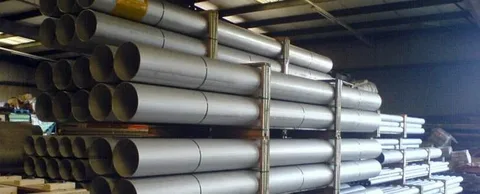
Seamless tubing is often specified in regulated applications to eliminate variability introduced by weld seams. From a supplier standpoint, this shifts responsibility squarely onto their production controls. There is no seam to inspect or explain; the entire tube must perform uniformly.
Suppliers supporting regulated industries are expected to:
- Maintain tight control over forming and sizing operations
- Deliver uniform wall thickness and geometry
- Avoid hidden variability that complicates inspection or service
Seamless construction simplifies qualification, but only when supplier discipline is strong.
Supplier Accountability for Material Behavior in Service
In regulated industries, buyers expect suppliers to stand behind material behavior, not just certificates. Tubing that meets specification at delivery but degrades prematurely in service creates long-term risk.
Reliable suppliers understand how their material is used and take responsibility for:
- Long-term stability under heat and load
- Predictable response during fabrication
- Compatibility with downstream processes
This accountability separates reliable suppliers from transactional sellers.
Documentation and Traceability as Supplier Obligations
Traceability is a core requirement in regulated environments. When issues arise years after installation, buyers must be able to identify material origin and production context.
Trusted suppliers support this need by maintaining:
- Clear heat and batch identification
- Consistent material test reporting
- Documentation aligned with quality systems
This level of record-keeping allows buyers to respond confidently to audits and investigations.
Supplier Role in Audit and Compliance Readiness
Regulated industries are subject to recurring audits. Material suppliers are often evaluated indirectly through buyer documentation and directly during supplier audits.
Suppliers who support audit readiness typically:
- Maintain consistent documentation formats
- Respond clearly to technical inquiries
- Demonstrate stable internal quality controls
This cooperation reduces audit friction for buyers and strengthens long-term supplier relationships.
Long-Term Supply Stability and Program Continuity
Many regulated programs span years or decades. A supplier’s ability to maintain consistent practices over time is critical.
Buyers assess suppliers based on:
- Organizational stability
- Continuity of production methods
- Ability to support repeat orders without requalification
Supplier churn introduces risk, even when materials remain nominally equivalent.
Avoiding Commodity Thinking in Regulated Sourcing
Treating regulated-grade tubing as a commodity often introduces hidden risk. Suppliers competing primarily on price may meet minimum standards while allowing greater variability.
Common consequences include:
- Increased inspection effort
- Reduced confidence in long-term performance
- Higher lifecycle cost despite lower unit price
Regulated buyers often prioritize predictability over short-term savings.
Standards as a Baseline, Not a Supplier Guarantee
Material standards define minimum requirements but do not ensure suitability for regulated service. Supplier practices determine how closely delivered material aligns with the intent of those standards.
Translating the definitions of stainless steel types into reliable, repeatable product; depends on supplier discipline rather than specification alone.
Evaluating Suppliers Through a Risk Management Lens
In regulated industries, supplier evaluation is part of risk management. Buyers look beyond capability to assess reliability over time.
Evaluation often focuses on:
- Historical consistency
- Documentation quality
- Responsiveness during technical review
- Alignment with regulated industry expectations
This approach reduces uncertainty throughout the system lifecycle.
Supplier Relationships as Long-Term Assets
Reliable suppliers become long-term partners rather than interchangeable sources. Their familiarity with application requirements and compliance expectations reduces friction over time.
Strong supplier relationships support:
- Faster issue resolution
- Reduced audit burden
- Greater confidence in material performance
In regulated environments, this stability has tangible operational value.
Conclusion: Why Supplier Reliability Defines Material Reliability
In regulated industries, tubing performance cannot be separated from supplier behavior. Grade 321 stainless steel offers properties suited to demanding environments, but those properties only translate into reliable systems when suppliers operate with consistency, accountability, and long-term discipline.
A clear 321 seamless tubing suppliers overview highlights that reliable suppliers are defined not by claims or certifications alone, but by their ability to deliver predictable material, maintain traceability, and support compliance over time. For buyers and engineers, selecting the right supplier is not a procurement detail—it is a foundational decision that shapes system reliability for years to come.